
...

By Jesus Mesa
Reporter
0
Share
Newsweek is a Trust Project member
See more of our trusted coverage when you search.Prefer Newsweek on Googleto see more of our trusted coverage when you search.
Ed. Note 5/6/25 1:30 p.m. ET: The new pope is Leo XIV, formerly Cardinal Robert Prevost, an American whose choice is seen as a major surprise. Read about him here.
With the passing of Pope Francis on April 21, the Catholic Church is preparing for a transition that will determine its direction for the foreseeable future. As the first Latin American pope, Francis brought significant change as Bishop of Rome, focusing on social justice, environmental issues and a more inclusive Church.
Now, the College of Cardinals prepares to gather at the Vatican for a conclave that will shape the Church's future. Their choice won't just name the next leader of 1.37 billion Catholics—it will set the course for doctrine, transparency and the Church's outreach to its flock.
Read More
Pope Francis Dies at 88 As Trump Set To Attend Funeral1 min read

Pope Francis’ Final Acts: Easter Message, Meeting with JD Vance5 min read

Pope Francis Obituary: Humble Reformer Who Clashed with Conservatives12 min read

Will the next pope continue Francis's progressive reforms, or will the cardinals pivot back toward theological conservatism? The answer will be clear when the symbolic white smoke rises from the Sistine Chapel.
Francis's Influence on the Election
The next pope will face a Church shaped by Francis's appointments and reforms. His tenure saw major structural changes, including the decentralization of the Vatican's power and the appointment of more non-European cardinals than any of his predecessors.
However, his governance style has also left the College of Cardinals in an uncertain position. "He selected the majority of the cardinals who possess the right to vote," said Ulrich Lehner, professor of theology at the University of Notre Dame.
"However, his approach to governance, characterized by unilateral decisions made without consultation with the College of Cardinals, has made it impossible to form interpersonal relationships among them."
...
A key issue for the conclave will be Francis's handling of sexual abuse cases, which has divided Church leaders. "Most importantly, can the voters trust that the person they elect is not a sexual predator who could be exposed?" Lehner asked.
According to Michelle Dillon, dean of the College of Liberal Arts at the University of New Hampshire, "Francis was consistently trying to bring much greater transparency and professionalism to the Curia." Yet, she also noted that some cardinals remain skeptical about his openness to secular engagement, fearing that the Church could lose its unique identity.
How the Next Pope Is Chosen
The election of a pope follows centuries-old Vatican traditions. The College of Cardinals, composed of those under 80 years old, will vote in secret ballots inside the Sistine Chapel. A two-thirds majority is required to elect a new pope. If no consensus is reached, additional rounds of voting will continue until a candidate emerges with the necessary support. When a round of voting does not reach consensus, ballots are burned and the black smoke that appears from the Sistine Chapel chimney signals to those watching on television and in St. Peter's Square that the conclave continues.
When white smoke appears, a new pope has been chosen.
Dillon emphasized that the days leading up to the conclave will be crucial.
"There will be plenty of time and many face-to-face interpersonal opportunities during the mourning period for bishops and cardinals to informally confer with one another about their goals and desires for the conclave and its outcome," she said.
Who Are the Leading Candidates?
As speculation builds, several high-ranking cardinals have emerged as top contenders. According to Vatican observers and bookmakers, the following candidates have the strongest odds. Here is a closer look at each of them.
Luis Antonio Tagle (Philippines)
Currently the betting favorite at 3:1 odds, Cardinal Luis Antonio Tagle, 67, is considered a strong contender to continue Pope Francis's progressive agenda. Tagle, an advocate for inclusion and evangelization, has significant experience leading the Congregation for the Evangelization of Peoples and was a trusted figure in Francis's inner circle.

...
"Overall, I think the fact that by my count over 100 of the eligible papal electors were appointed by Francis could have a profound effect on the outcome," said Cristina Traina, a professor at Fordham University. "That is, we may not get a pendulum swing away from Francis' priorities."
Tagle's Asian heritage also makes him a compelling choice, as Catholicism is growing rapidly on the continent, particularly in the Philippines.
Pietro Parolin (Italy)
At 4:1 odds, Cardinal Pietro Parolin, 70, is one of the most experienced Vatican officials. In his role as the Vatican's Secretary of State since 2013, he has played a major part in diplomatic affairs, including sensitive negotiations with China and Middle Eastern governments.

...
Parolin is seen as a moderate theological candidate, someone who could provide stability while still maintaining some of Francis's reforms. His deep ties to Vatican bureaucracy make him a strong contender for those who favor continuity.
Peter Turkson (Ghana)
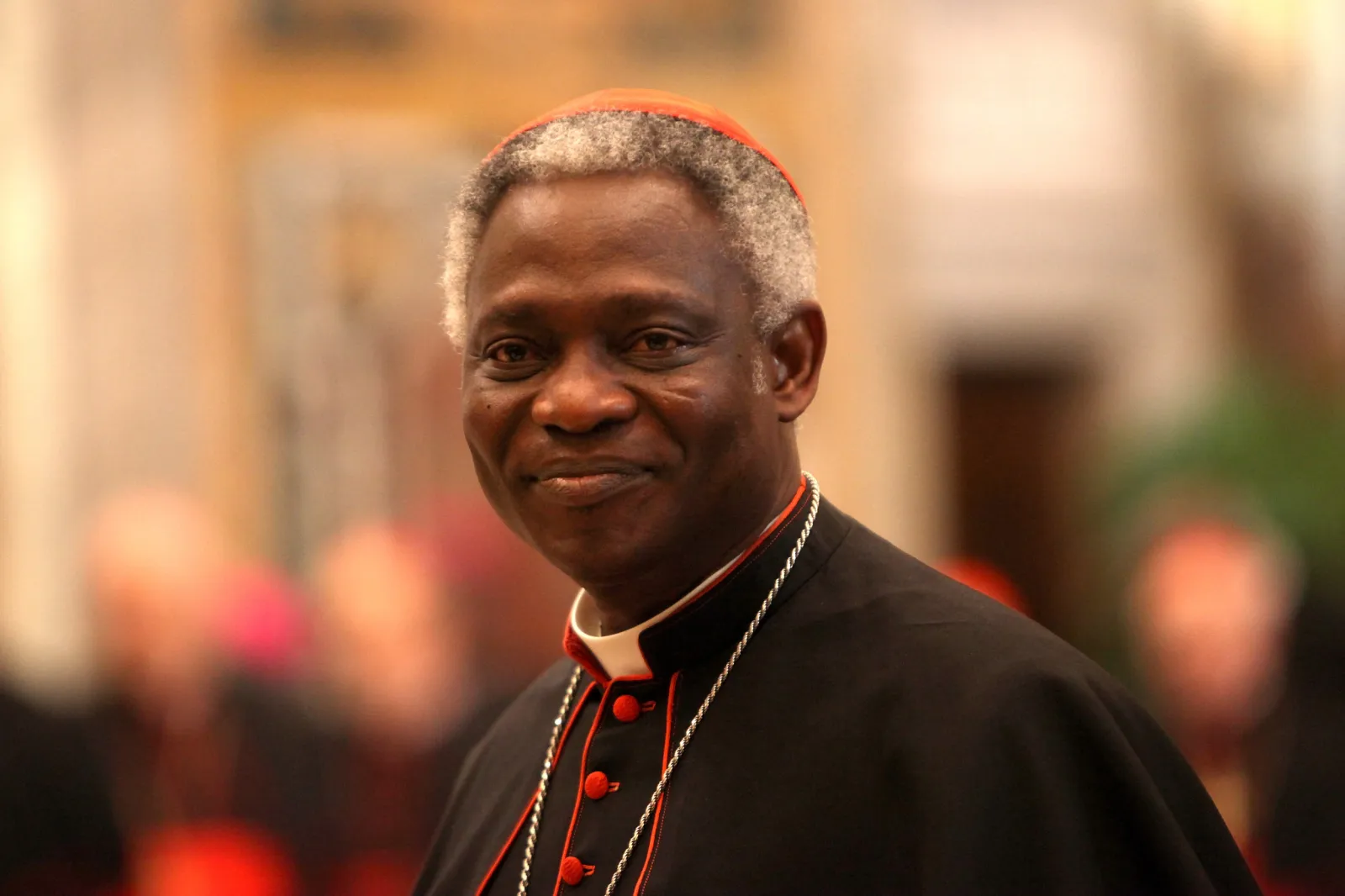
Currently at 5:1 odds in betting markets, Cardinal Peter Turkson, 76, is a well-known figure in the Church's social justice circles. As former head of the Dicastery for Promoting Integral Human Development, Turkson has been vocal on issues such as climate change, poverty and economic justice.
...
Turkson's election would mark a historic moment as the first African pope in centuries. The most recent African pontiff was Pope Gelasius, who served from 492 to 496 AD. Born in Rome to African parents, Gelasius was known for his extensive theological writings and strong advocacy for charity and justice for the poor.
Peter Erdő (Hungary)
A leading conservative candidate, Cardinal Peter Erdő, 72, is currently at 6:1 odds. A respected canon law scholar, Erdő has been a strong advocate for traditional Catholic teachings and doctrine. He previously served as head of the Council of European Bishops' Conferences and has emphasized theological orthodoxy.

...
For those seeking a return to the conservatism of John Paul II and Benedict XVI, Erdő would represent a major shift away from Francis's approach.
Angelo Scola (Italy)
At 8:1, Cardinal Angelo Scola, 82, is a long-standing papal contender. He was among the favorites in the 2013 conclave that ultimately elected Pope Francis. Scola, a former Archbishop of Milan, has deep theological roots and appeals to those who support a more centralized and hierarchical Church.

...
His traditionalist stance makes him a strong candidate for those looking to pivot away from Francis's reforms, but his age may work against him.
What Happens Next?
A papal conclave typically begins between 15 and 20 days after a pope's death. That time allows for the funeral rites, a nine-day mourning period known as the novemdiales, and provides time for cardinals worldwide to travel to Vatican City. The outcome will remain uncertain until a pope is chosen behind the closed doors of the Sistine Chapel, as ideological factions within the Church will weigh their options between continuity and a more conservative shift.
The next pope will inherit a Church at a crossroads—one grappling with declining influence in Europe and North America, growth in the Global South and ongoing internal debates about its future.
Corrected, 04/22/25 at 1:17 p.m.: This report has been updated to correct that Traina is a professor at Fordham University.
View 0 Comments
Submit Correction
View Editorial & AI Guidelines