...

By Theo Burman
Live News Reporter
0
Share
Newsweek is a Trust Project member
See more of our trusted coverage when you search.Prefer Newsweek on Googleto see more of our trusted coverage when you search.
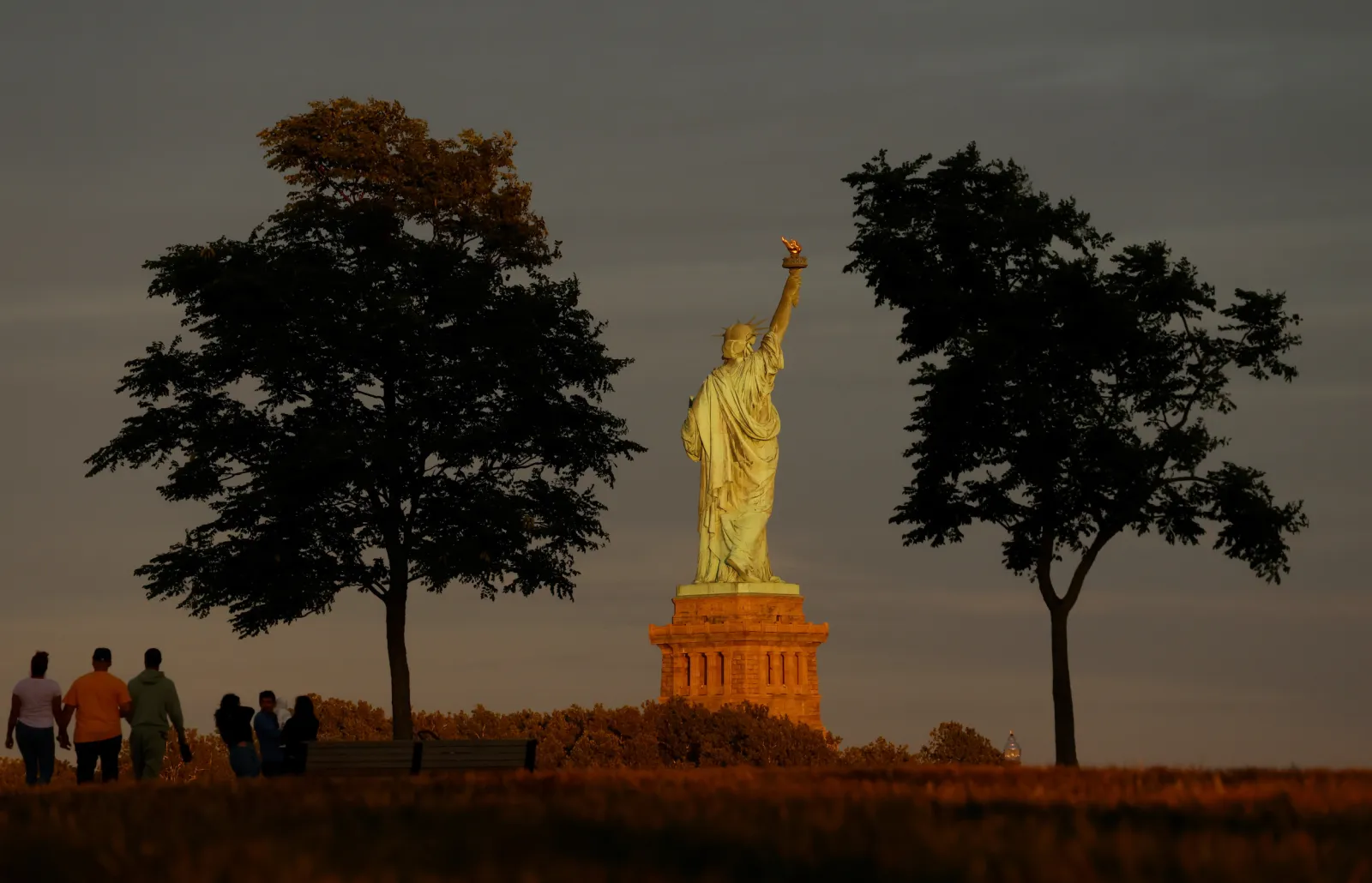
A video showing what the Statue of Liberty might look like if it were polished has gone viral for its imagination, but experts told Newsweek that such a move would be damaging in reality.
The video, which was AI-generated, quickly racked up over 10 million views on X, showing the statue being returned to a shiny bronze rather than its oxidized green.
Read More on News
However, experts have said the green coating is a protective layer and that polishing it away would damage the structure and leave it exposed to the wear and tear of the ocean environment.
Erika Doss, the chair in art history professorship at the University of Texas' Edith O'Donnell Institute of Art History, told Newsweek: "The green patina is what protects the statue's very, very thin copper skin.
"And it is very, very thin: a thickness of less than 2.4 millimeters. The patina in some areas is over a millimeter thick."
...
Taking away this coating by polishing the statue would mean that the metal underneath would be thinner and weaker. What's more, the oxidizing process would simply start again, and the entire structure would turn green again in a few short years.
This is why authorities at the National Park Service, which maintains the statue, have repeatedly rejected any notion of polishing away the green covering.
"Exposed to the elements, copper oxidizes and turns the familiar green patina over time," a National Park Service spokesperson told amNewYork in 2018.
"It is a protective layer that shields the statue from the extreme elements of New York Harbor, like high winds, salt water and air pollution," they added.
Read *Newsweek'*s full interview with Erika Doss below:
Q: Other experts we have spoken with have said that polishing the statue would remove a protective layer and leave it exposed. Is this true, and how damaging would this process be?
Doss: The issue here is one of misinformation about sculpture materials and issues of permanence. People don't understand the chemical reactions that occur when bronze and copper sculptures are placed outside. "Cleaning" the statue by polishing it would actually be like stripping off its outer layer of skin.
The statue was the color of a copper penny when it was erected in New York Harbor in 1886.
By 1906, its surface had transformed into a protective green layer called brochantite. Patinas form naturally on copper and bronze when those materials are exposed to the elements, to atmospheric conditions like New York's weather and acid rain.
The green patina is what protects the statue's very, very thin copper skin. And it is very, very thin: a thickness of less than 2.4 millimeters. The patina in some areas is over a millimeter thick.
Q: What color would the statue be if it were polished as envisioned? How long would a process like that take?
Doss: Polishing it to some shiny bronze tone, and removing the patina, would further reduce its thin skin and threaten its structural integrity. It would require repeated applications of sealants and other coatings, which would take months to apply. And it wouldn't last anyway.
Most people are fine with the Statue of Liberty's green color, so the question is why some people today want to polish her up. I guess it follows on the "gilt-ification" aesthetic adopted by the Trump White House. I'd like to believe there's still a big difference between what the Statue of Liberty stands for and the gold-drenched decor of today's imperial presidency. I vote she stays green.
View 0 Comments
Submit Correction
View Editorial & AI Guidelines