...

By Marni Rose McFall
Reporter
0
Share
Newsweek is a Trust Project member
See more of our trusted coverage when you search.Prefer Newsweek on Googleto see more of our trusted coverage when you search.
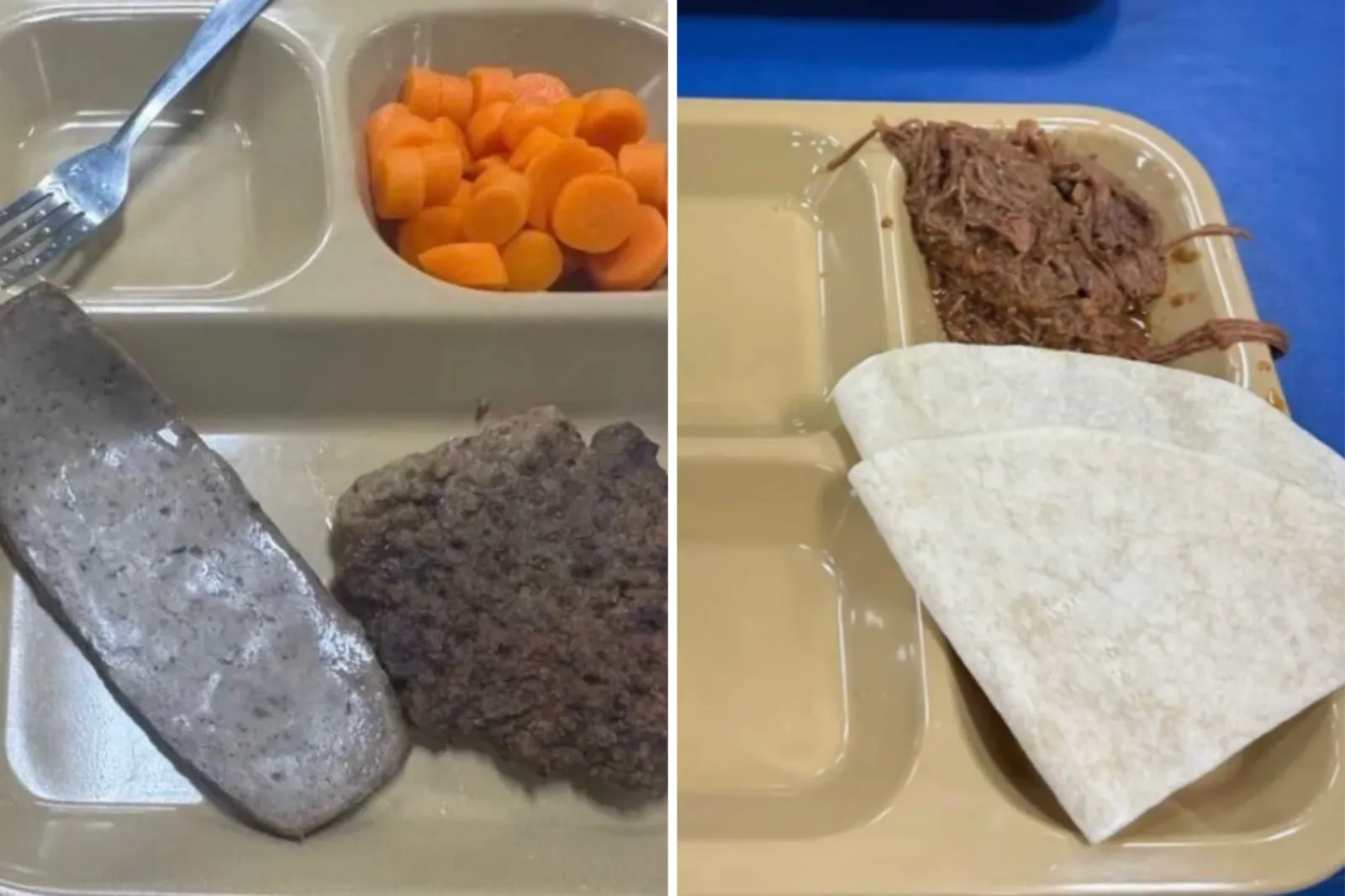
Images obtained by USA Today of poor-quality meals being served to U.S. service personnel in the Iran war have sparked alarm.
The images have highlighted concerns about the welfare of service members and the food being served to them while they are deployed, with the official account for the Democrats on social media dubbing the pictures “disgraceful.”
Newsweek has contacted the Pentagon for comment outside of regular working hours via email.
Read More on News
...
Why It Matters
The U.S. and Israel launched joint military strikes on Iran on February 28, in an operation dubbed Epic Fury. The U.S.-based rights group HRANA (Human Rights Activists News Agency) has said that 3,636 people have been killed since the beginning of the conflict.
President Donald Trump recently ordered a significant buildup of U.S. forces across the Middle East as Washington and Tehran edge toward the expiration of a fragile two‑week ceasefire. An estimated 50,000 U.S. service personnel are involved in operations countering Iran globally.
What To Know
One image of the meals published by USA Today shows a dry meat patty, a shiny gray slab of processed meat and boiled carrots. This was shared with the outlet by a man named Dan whose daughter is a Marine aboard the USS Tripoli.
The other photo shows a small scoop of shredded brown meat and a tortilla on a mostly empty lunch tray reportedly taken on the aircraft carrier USS Abraham Lincoln.
The images have quickly garnered hundreds of thousands of views online, with people expressing concern over the quality of the food. A post from the account @factpostnews, viewed over 145,000 times, reads: “New photos reveal small and unappetizing meals aboard U.S. ships in the Middle East. Troops face food shortages and are unable to receive packages due to logistical impacts from the Iran war.”
The Democrats, meanwhile, wrote on Facebook: “Trump sent our troops to the Middle East to fight his war with Iran. This is what he’s feeding them. Disgraceful."
Olivier Decottignies, the French ambassador to Armenia, responded to the photos with an image of food being prepared by the French navy.
USA Today reported that the families of members of the military are concerned they may be going hungry. It comes as mail to 27 military ZIP codes across the Middle East has been suspended as of April due to logistical issues rising from the Iranian War according to a USPS service alert. Packages in transit are in a state of limbo.
The discourse over the meals comes amid widespread criticism and discontent over the war in Iran, with everyone from prominent voices in MAGA like Tucker Carlson and Marjorie Taylor Greene, to Democrats and Pope Leo XIV having voiced opposition to the conflict.
It also followed reports that a few weeks back, troops were being served surf and turf. There is a widely recognized belief among service members that when steak and lobster appear in the dining facility, it is often a sign that a deployment or extended mission is in the pipeline.
What Are The U.S Military Food Standards?
The U.S. Deparment of Defence's Tri-Service Food Code establishes food safety standards for military food service operations. Under the Army Field Feeding System, the approved standard is three quality meals per day. This is typically two hot unitised group rations called UGRs and one individual ration when operationally feasible.
Calorie provision varies by ration type and conditions rather than a single fixed mandate. A standard MRE averages 1,250 calories; cold-weather rations provide approximately 4,500 calories per day. According to Defense Logistics Agency guidance, average daily field energy requirements range from 2,800–3,600 calories for men and 2,000–2,800 for women
What Happens Next
Attention is likely to remain on the U.S. military, both in terms of the welfare of troops and on any movements of the military amid diplomatic efforts aimed at containing escalation.
Developments in the region alongside any actions that involve Iran are expected to shape the next steps.
View 0 Comments
Submit Correction
View Editorial & AI Guidelines