
...

By Shane Croucher
Senior Editor
0
Share
Newsweek is a Trust Project member
See more of our trusted coverage when you search.Prefer Newsweek on Googleto see more of our trusted coverage when you search.
When three Stars and Stripes journalists sued the Pentagon on August 27 to stop their dismissals, the fight over alleged retaliation exposed a deeper contradiction at the center of the drama.
It is a long-running illusion, one successive administrations have sustained for decades. The newspaper’s editorial freedom, and its journalism, was genuine and important. But the firewall that supposedly shielded Stars and Stripes wasn’t.
How independent can a newsroom be when the institution it covers controls the machinery around it? Defense Secretary Pete Hegseth has supplied one clear answer. Whether it’s the decisive one now rests with a federal judge.
Read More on Analysis
Publisher Max Lederer, editor-in-chief Erik Slavin, and Middle East reporter Lara Korte received proposed separation notices on August 21 charging insubordination and other violations. The terminations were set to take effect five business days later.
They allege the Pentagon retaliated against protected speech defending the newspaper’s independence.
Specifically, against reporting on conditions endured by some 5,000 sailors aboard the USS Abraham Lincoln, a carrier at sea for more than 250 consecutive days as part of the war with Iran.
The complaint names Hegseth, chief Pentagon spokesman Sean Parnell, and Parnell’s principal deputy, Andrew Brey, in their official capacities.
Brey ordered Lederer to hand the notices to Slavin and Korte. Lederer refused and chose to retire instead. The Pentagon has declined to comment on the allegations.
The Firewall Has a Chain of Command
A Pentagon instruction that took effect on August 21, the same day as the notices, declares that Stars and Stripes will operate independently of the military chain of command and remain "free from censorship or propaganda."
Parnell approved it a week earlier.
The same document assigns his office policy and broad operational guidance over the newspaper, approval of the publisher and ombudsman hiring selections, and oversight of the paper’s compliance with its authorized functions.
The publisher reports to the director of the Pentagon body that houses Stripes.
It also cancels the 1993 directive that governed the paper for three decades. The older guarantee of a free flow of news without news management or censorship survives only in narrowed form.
The federal regulation underpinning the arrangement was withdrawn in January.
Related Story
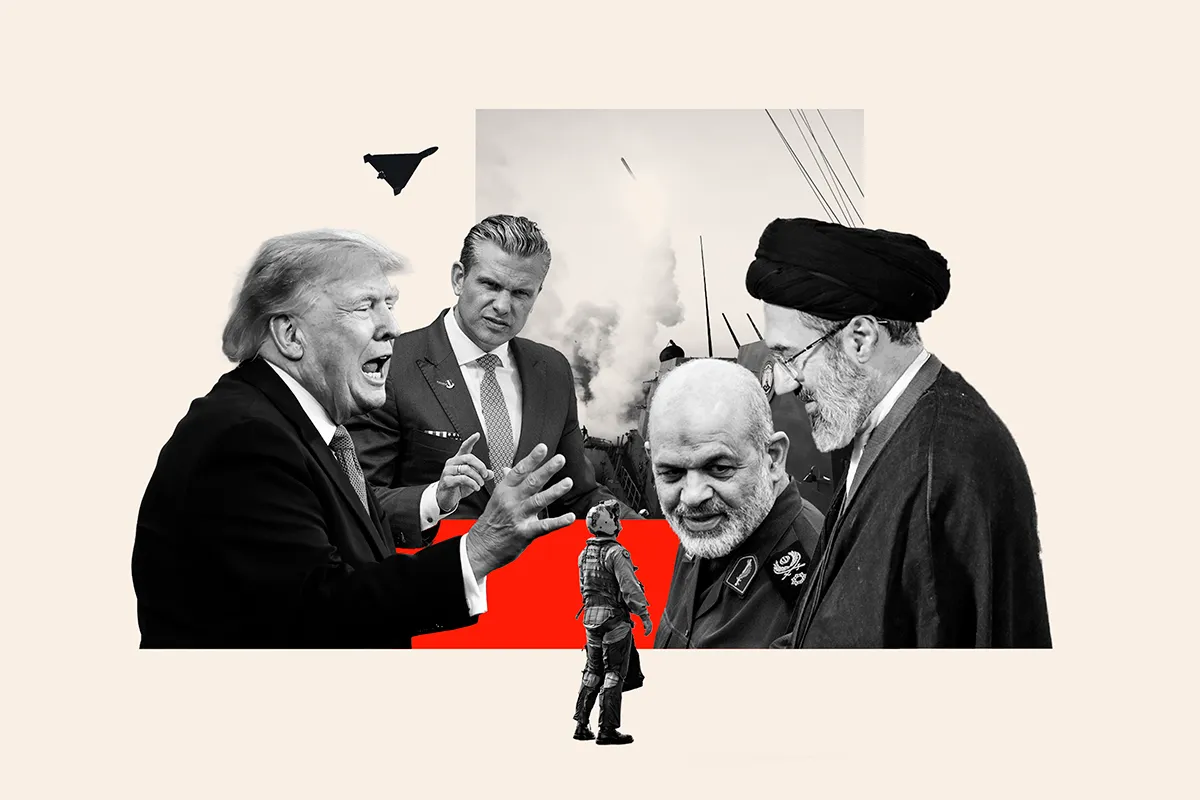
Trump’s Iran War at Six Months: 5 Scenarios for What Comes Next
Editorial independence means journalists make news decisions without commanders dictating coverage. But institutional independence asks a harder question: who controls employment, leadership, and administration when the newsroom and its overseers collide?
Stripes has long held the first. The dispute over the USS Abraham Lincoln puts the second one under severe pressure. The answer is, ultimately, who has the power in the relationship.
The tension on independence predates Hegseth by decades.
In testimony to Congress in 1989, the Government Accountability Office found that the Pentagon’s own effort to shield the papers from censorship and command influence had produced an "inherent conflict" between journalists’ speech rights and commanders’ duty to execute policy.
It reported conclusive evidence of censorship and improper news management at the Pacific edition, and said the conflict had to be acknowledged and managed rather than resolved.
Breakdown in Norms, Not a Fatal Flaw
Calling Stripes’ independence an illusion does erase an important part of its history.
After the controversies of the 1980s, Congress created an ombudsman reporting to the House Armed Services Committee on the free flow of information to troops. Successive rules restricted interference in editorial decisions.
The paper then reported independently for decades.
The new instruction is not uniformly restrictive, either. It requires administrative support to be delivered in a way that preserves editorial independence and prevents news management.
Related Story

The Next Target in China’s Secret War Against US Data Centers
Its limit on content that would damage readiness and safety expressly does not reach critical policy analysis or reporting on command climate, which is close to a description of the Lincoln story.
Navy Captain William Urban, installed this year as military deputy to the publisher, made that case strongly in an open letter to staff.
He had received repeated assurances of editorial independence from the Secretary’s office, he wrote, and the department had "plenty of time" to shut down the Lincoln coverage between the first report and the follow-ups. It did not.
Read that way, the confrontation is a breakdown in norms, not a fatal flaw in the design. The courts could strengthen that argument considerably.
The Court Is the Key Test
Lederer, Slavin, and Korte invoke the First Amendment and the Administrative Procedure Act, and seek emergency injunctive relief to prevent their removals.
They are not the first to try. The ombudsman was removed in April and sued in June; two advisory board members sued the same month over the Pentagon’s modernization drive.
The taboo against interference didn’t break on August 21. It has, in fact, been eroding all year.
If a judge blocks the dismissals, the firewall will be shown to rest on something firmer than Pentagon custom and the goodwill of serving officials, and the backstop will sit outside the building, in federal law.
But if emergency relief is denied, the vulnerability becomes difficult to argue with, whatever the instruction says on paper. Perceptions of independence, once punctured, are not easily restored.
Either outcome sharpens into focus the distinction this case has exposed. A newsroom can exercise genuine editorial freedom for generations while housed inside a structure capable of putting that liberty under extraordinary pressure.
A free newsroom and a securely independent institution are different achievements.
Stars and Stripes has held the first for a long time. Whether it has ever held the second is now a question for the court.
View 0 Comments
Submit Correction
View Editorial & AI Guidelines