Photo-illustration by Newsweek/Getty

By Jasmine Laws
Reporter
0
Share
Newsweek is a Trust Project member
See more of our trusted coverage when you search.Prefer Newsweek on Googleto see more of our trusted coverage when you search.
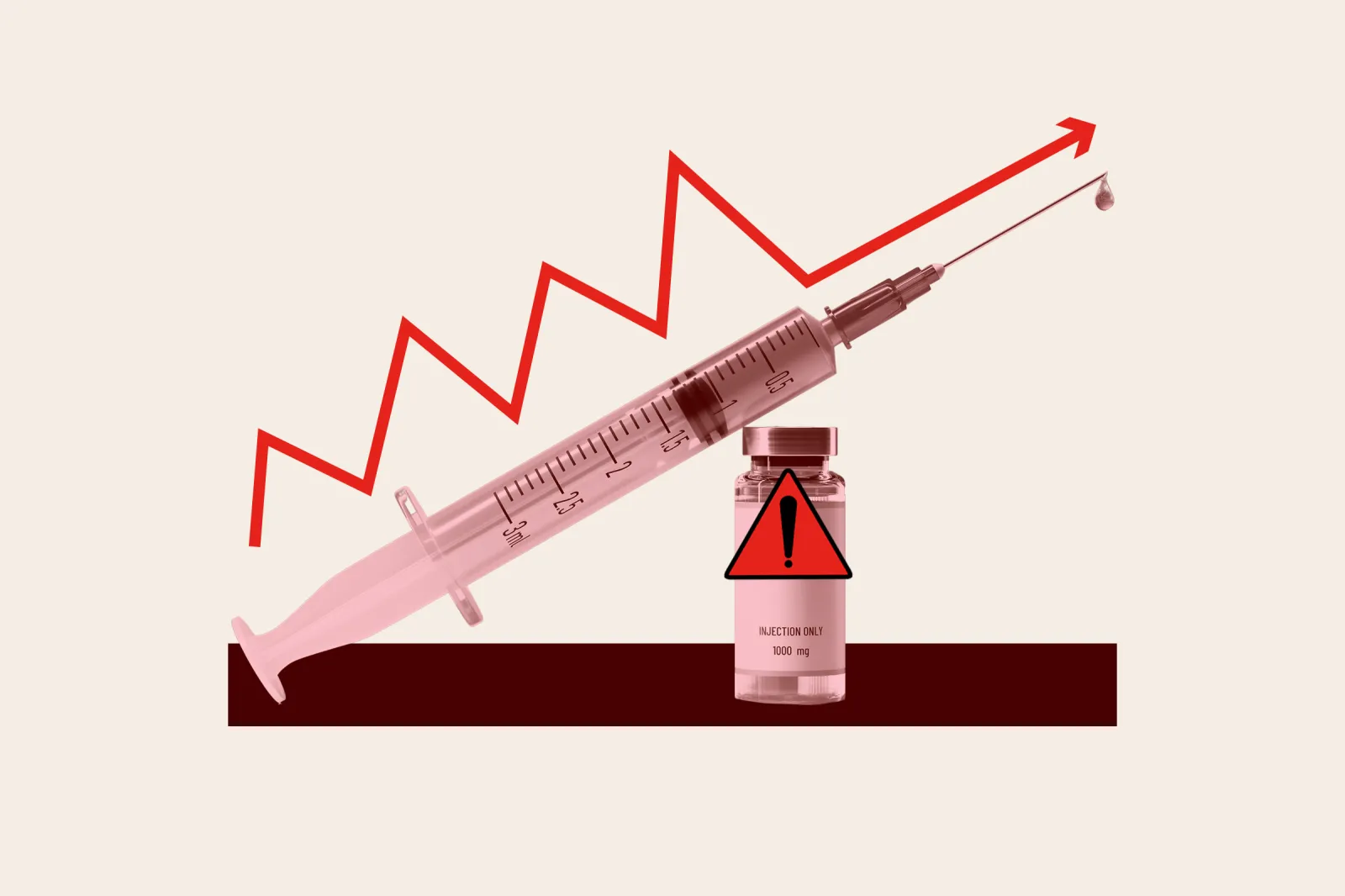
Injectable peptides that people use to build muscle, shed weight and appear younger, are on the rise in the U.S. and trending among influencers, celebrities and fitness coaches, despite the fact that they aren't approved by the Food and Drug Administration (FDA).
While they can be bought online for between $300 and $600 a vial, the products have not been extensively trialed or studied in humans, raising concerns among experts that they could pose certain unknown health risks.
Why It Matters
Peptides exist in the human body and are short chains of amino acids that carry out vital functions. Insulin is an example that controls blood sugar levels and helps break down food into energy, while GLP-1, or glucagon-like peptide, is another.
Read More on News
The expanding interest in peptides has likely been propelled in part by the rise in use of drugs like Ozempic and Wegovy for treating type 2 diabetes and obesity in recent years, but seems to have particularly ramped up this year, which could be because influential people like Joe Rogan, Jennifer Anniston and even Health Secretary Robert F. Kennedy Jr have advocated for their use.
Even though many of the various kinds of peptides have not been approved by the FDA for use, it is not necessarily a new thing that peptides are used for off-label purposes, but this latest trend seems to be particularly focused on using peptides for improving skin complexion, longevity, and many other wellness-focused uses.
Photo-illustration by Newsweek/Getty
What To Know
Some of the kinds of peptides that are gaining traction include BPC-157, thymosin alpha, GHK-Copper and many more, but several of them, such as BPC-157 and TB-500, are banned by international sports authorities as doping substances.
It is likely that what's driving the expanding use of peptides is a combination of them being "actively promoted by MAHA and other influencers," the fact that there is "growing distrust of the pharmaceutical industry" prompting Americans to seek alternatives and the success of GLP-1s, Margaret Riley, a professor of law at the University of Virginia, told Newsweek.
The FDA has been trying to crack down on the use of peptides in non-approved contexts by writing warning letters to various clinics that promote these products and tightening regulations for over two dozen peptides. It means that many of the peptides being promoted online currently are being sold illegally in the country.
As part of his 'Make America Healthy Again' campaign, Kennedy vowed to end the "FDA's war" on peptides and other alternative treatments, and some of his aides, such as self-proclaimed longevity expert Gary Brecka, are among the biggest proponents of using peptides for a wider range of health benefits.
However, experts are concerned about this growing trend, given that not all the peptides in use have been approved, and at this stage, it's not known what side effects these drugs could have.

...
Safety also depends on how these drugs are taken. If they're ingested, then the peptides will "simply be broken down in the gut into its constituent amino acids," Riley said, with the biggest risk likely being economic in that "they don't do much," or any risks associated with what other substances are included in the drug.
In the case of injection, the risks are much more unknown. "It would be dependent on the peptide and what it does. In many cases, they are so understudied, that it isn't possible to know the risks," Riley said. "Some may be helpful, some may be dangerous, some may be innocuous. We don't really know."
The reason many of these peptides aren't approved is likely because the manufacturers or promoters of the products "have not engaged in the approval process, which can be quite expensive and requires extensive clinical study to prove safety and effectiveness," Riley said.
She added that this can be "a long process" and some manufacturers "may not succeed."
"To the extent peptides are marketed as preventing, curing, mitigating or treating diseases or conditions, they are unapproved drugs," she said. "They have not proved safety or effectiveness for the intended marketed use."
It is because of the fact that these products have not undergone rigorous testing for use in the contexts in which they are now being widely taken that experts are becoming increasingly concerned about their safety.
What People Are Saying
Margaret Riley, a professor of law at the University of Virginia, told Newsweek: "I generally believe in the drug approval process as the best way to bring effective and safe treatments to market. It may be that most peptides are not harmful; it may be that some are effective for the uses they are promoted for - the problem is that we don't really know. There is risk to that. There is also societal risk in undermining the drug approval process generally. We depend on it."
What Happens Next
When asked if it is likely the FDA will approve more peptides in the future, in light of their growing popularity, Riley said that some may be, but there are multiple economic decisions involved, such as "whether FDA will continue enforcement discretion, whether there are indications of real efficacy, in which case someone might seek approval to corner the market...there are issues of patentability, and then the costs of clinical study."
Ultimately, she said it was "hard to guess at this point."
This article contains reporting from the Associated Press.
View 0 Comments
Submit Correction
View Editorial & AI Guidelines