10
Loading video...

By Emma Marsden
Reporter
0
Share
Newsweek is a Trust Project member
See more of our trusted coverage when you search.Prefer Newsweek on Googleto see more of our trusted coverage when you search.
Pennsylvania has launched a public map allowing residents to track proposed data centers seeking environmental permits.
The expansion of artificial intelligence infrastructure is becoming an increasingly prominent issue ahead of the 2026 U.S. midterm elections.
The Pennsylvania Data Center Permit Tracker is operated by the Pennsylvania Department of Environmental Protection (DEP). It shows proposed data center projects that have come to the agency’s attention and allows residents to monitor their progress through the environmental permitting process.
Read More on News
"The tracker was part of Governor Shapiro’s Executive Order 2026-05 – Protecting Pennsylvania Consumers from Data Center Impacts," the DEP told Newsweek on Wednesday. "The info in the tracker is pulled from DEP databases, so as those are updated the tracker is as well. The map shows data center projects that either have permit applications in house or projects that have met with DEP about the proposed data center."
The tool is part of a wider response from Democratic Governor Josh Shapiro’s administration to concerns about the AI industry’s impact on electricity costs, water supplies, the environment and local communities.
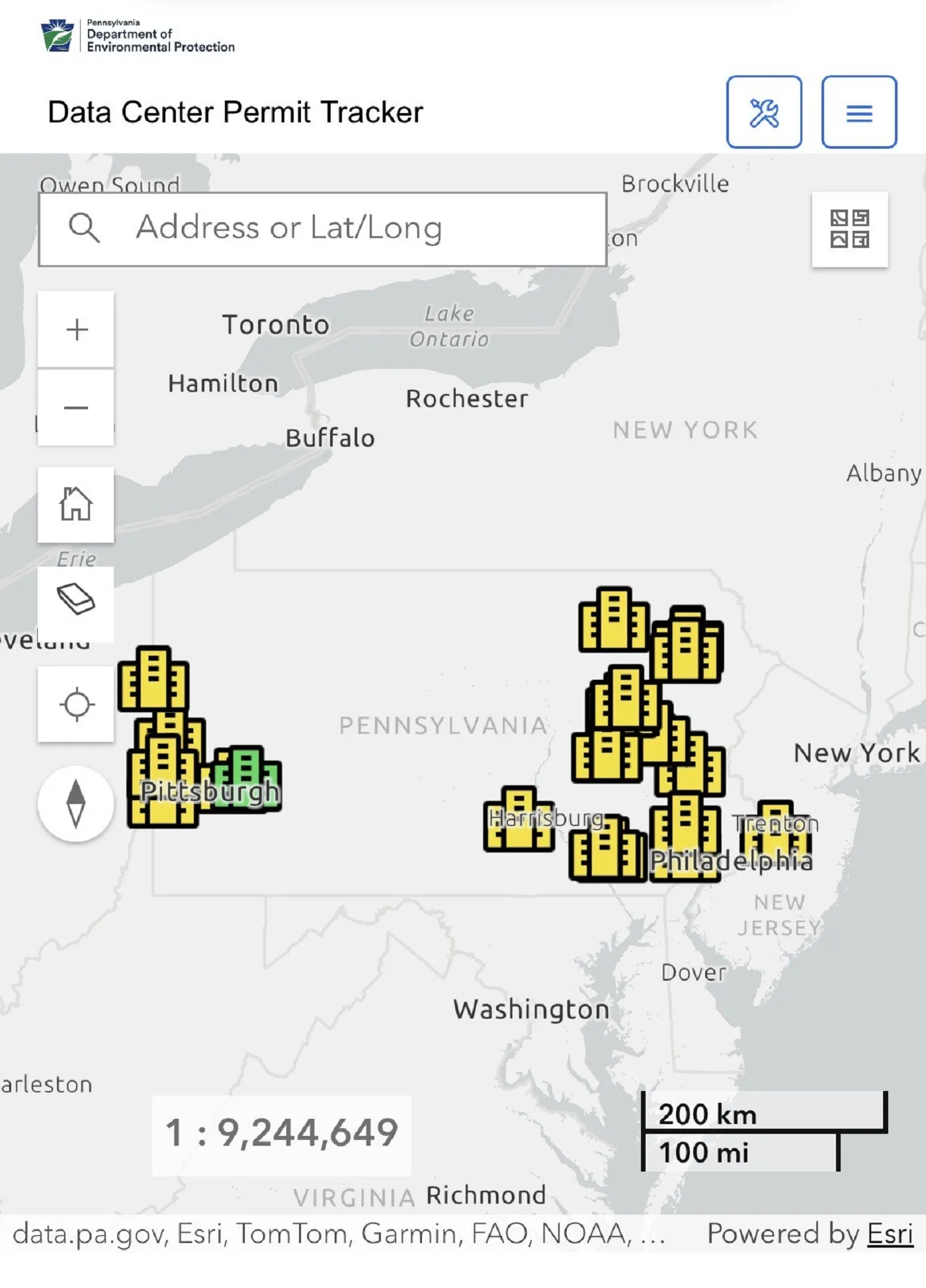
Source: Pennsylvania Department of Environmental Protection, Data Center Permit Tracker.
What Pennsylvania's Data Tracker Shows
The Shapiro administration advised Newsweek that the governor directed the DEP to develop the data center permit tracker under his GRID Requirements executive order. This is so residents can follow proposed projects and the status of their environmental permit applications.
The tracker includes potential data center projects that have engaged with DEP and will be updated as the department becomes aware of new proposals, the governor’s office said.
"This interactive map shows the locations of proposed data center projects in the Commonwealth of PA with a list of environmental permits for each project and their status."
The map also includes the locations of other unconfirmed data center projects. These can be found under the "Layers" tab. Environmental permits commonly associated with large-scale data centers include those covering air quality, stormwater management, wetlands and waterways, sewage facilities planning and clean water, according to the administration.
However, the tracker does not cover every aspect of the development process. "DEP does not have a role in local zoning decisions and does not track local ordinances and permitting," the administration said.
Depending on the location of a proposed project, restrictions on water withdrawals and regulations from the Susquehanna River Basin Commission or Delaware River Basin Commission may also apply.
Shapiro's office advises using DEP's permit tracker to track the status of a permit authorization.
The Rapid Expansion of Data Centers
The launch comes amid a data center boom, with supporters citing jobs, investment and AI competitiveness. Critics warn of rising energy and water demand and pressure on local communities. Scott Taylor, president for Protect Elizabeth Township in Pennsylvania, said of a proposed data center campus: "We don’t want it."
Virginia Marcille-Kerslake, senior organizer for Food & Water Watch, said to Inside Climate News: "We’ve seen the devastating impact of these hyper-scale data centers in other states."
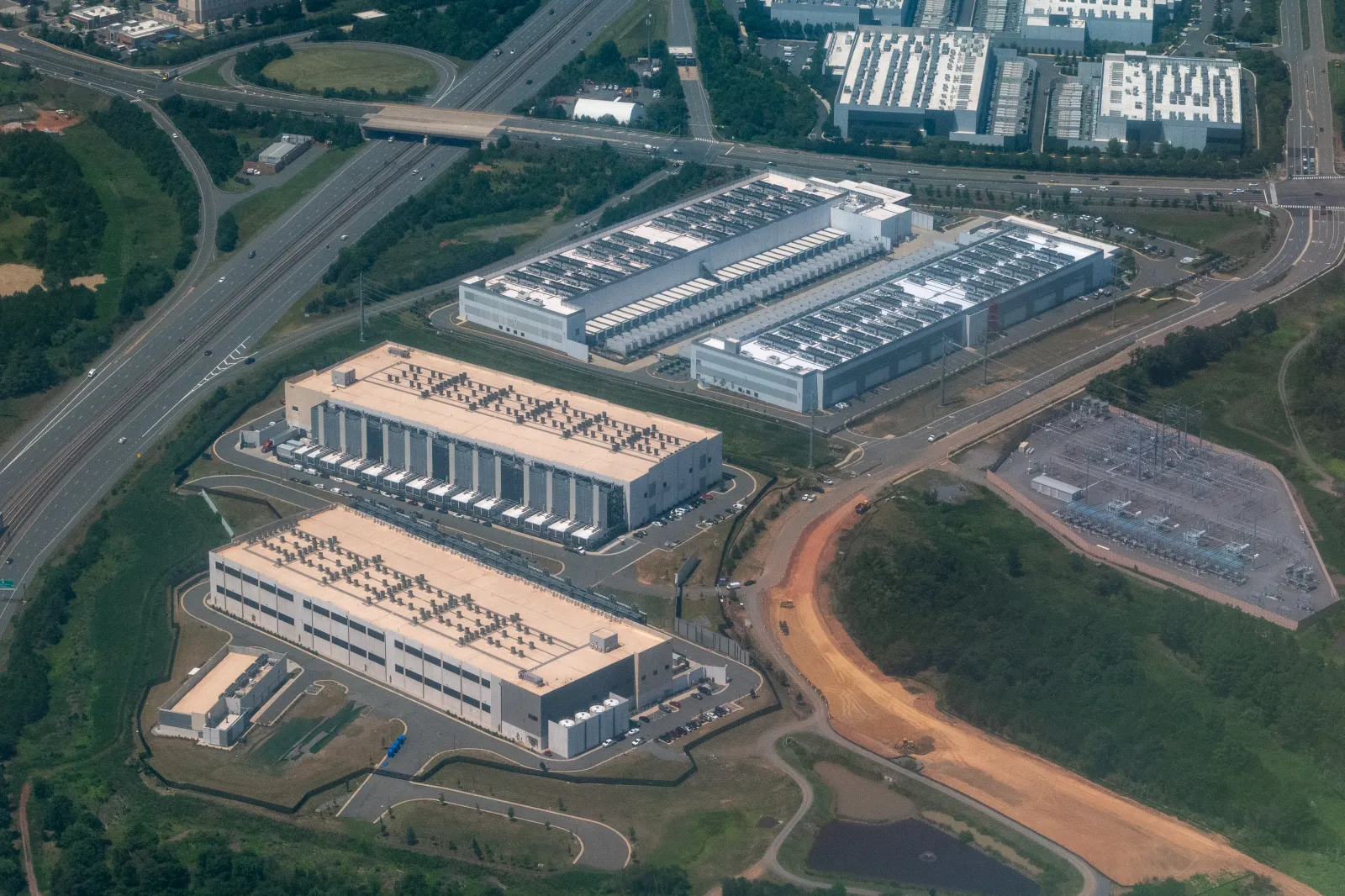
Pennsylvania is not the only state where residents can find information about data center development. But its tracker is notable for connecting a public-facing map directly to environmental permitting.
...
Virginia, one of the country's largest data center markets, has an interactive map identifying existing and proposed facilities. However, the Virginia data center map is a crowdsourced resource rather than an equivalent state environmental permit tracker.
Independent projects also track development nationally. The Data Center Record map provides information on projects at different stages, including operating, proposed and under-construction facilities.
Data Centers Emerge as an Election Issue
The launch of Pennsylvania’s tracker map comes as AI and data center development become more prominent issues ahead of the November 3 midterm elections. Candidates are increasingly being pressed to explain how they would balance the economic benefits of AI investment against concerns about energy prices, environmental impacts and the pace of development, with the upcoming election dubbed the data center election.
As communities across the U.S. grapple with the rapid expansion of AI infrastructure, Pennsylvania’s new map taps into a growing national debate over the costs and benefits of the data center boom. Technology companies are racing to build facilities to power artificial intelligence, cloud computing and digital services, while critics raise concerns about electricity demand, water use, environmental impacts and local development.
As previously reported by Newsweek, in opinion polls, local opposition to data centers is broad and rising. A Gallup survey released in May found roughly seven in 10 Americans oppose the construction of an AI data center in their own community—more than oppose the idea of a nearby nuclear plant.
An Annenberg Public Policy Center survey released in August put opposition to a local data center at 61 percent, 12 percentage points higher than earlier in the year, with majorities of Democrats, Republicans and independents against. It is one of the few AI questions where majorities of voters in both parties are firmly in agreement.
Some politicians emphasize the importance of attracting technology investment and competing with China, while others call for tighter safeguards or greater scrutiny of projects. Local opposition has also put pressure on elected officials to explain who will bear the costs of new infrastructure.
President Donald Trump has been a vocal advocate of data centers.
A Reuters/Ipsos poll published on October 7 found that 84 percent of voters see AI as a threat to American workers, with 69 percent agreeing that America needs stricter AI regulation. Fifty-six percent of registered voters supported limits on data center construction. The survey also found that many voters believed the Trump administration and Congress were not taking AI risks seriously enough.
The findings suggest that the debate extends beyond individual planning disputes to wider questions about how the technology should be developed and regulated.
What Newsweek’s AI Policy Scorecard Reveals
The growing political significance of AI is also reflected in Newsweek’s AI Policy Scorecard, which assesses members of Congress on their positions and records relating to the technology.
The project examines five areas: regulation and governance, data centers and energy, jobs and the economy, safety and privacy, and national security and China. Its methodology draws on congressional votes, bill sponsorship and lawmakers’ public statements.
The scorecard places lawmakers on a spectrum from AI skepticism to AI enthusiasm. It offers readers a way to compare their representatives’ approaches to a technology increasingly shaping economic and infrastructure policy.
For candidates, the challenge is increasingly to explain not simply whether they support AI, but how its infrastructure should be built, regulated and paid for.
Newsweek’s AI Policy Scorecard suggests Pennsylvania’s congressional delegation has a nuanced record on artificial intelligence, with most House representatives receiving a "mixed" rating across both Democratic and Republican parties.
Newsweek’s reporters and editors used Martyn, our AI assistant, to produce this story. Learn more about Martyn here.
Update, 10/13/2026 6:57 a.m. ET: this article was updated with comment from the Shapiro administration.
Update, 10/14/2026 4:33 p.m. ET: This article was updated with comment from the DEP.
Contact Newsweek editors on this story: Rebecca Flood, James Debens, Gray R. Thomas.
View 0 Comments
Submit Correction
View Editorial & AI Guidelines