

By Marni Rose McFall
Reporter
0
Share
Newsweek is a Trust Project member
See more of our trusted coverage when you search.Prefer Newsweek on Googleto see more of our trusted coverage when you search.
Newly released renderings show the Trump Administration’s plans for an overhaul of Penn Station. The images, unveiled by U.S. Transportation Secretary Sean Duffy, Amtrak, and Penn Transformation Partners, show soaring ceilings, a grand Eighth Avenue entrance, and a single-level concourse.
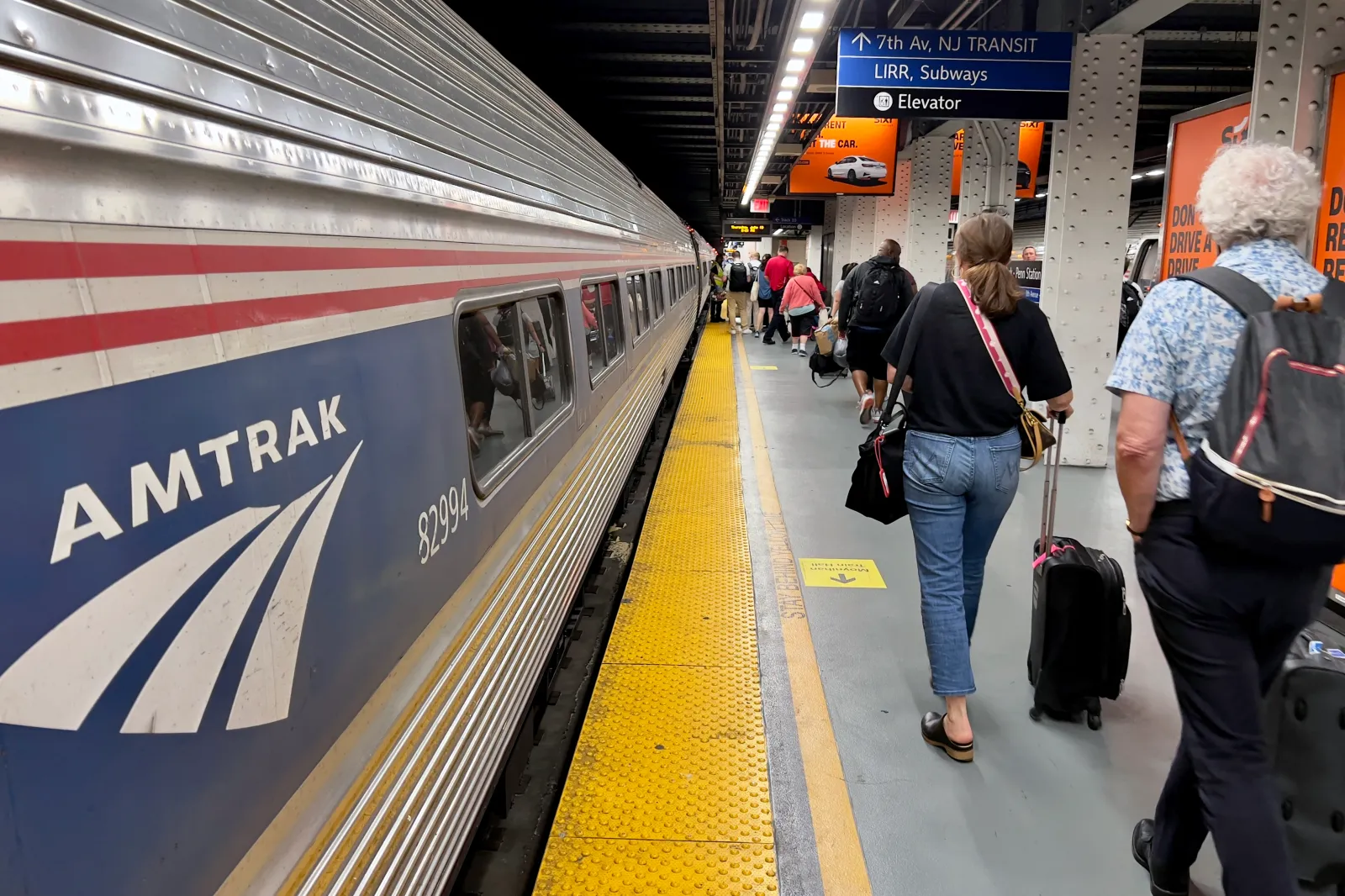
Penn Station handles roughly 100 million passenger trips a year across Amtrak, NJ Transit, and the Long Island Rail Road. For decades, commuters have endured cramped corridors, low ceilings, confusing wayfinding, and a general sense of decay.

...
Read More on News

...
“The Golden Age of Transportation is coming thanks to President Trump,” Duffy said in a press release. “He had a vision to transform this dirty, falling-apart station in the middle of his hometown into a state-of-the-art transit hub that millions can enjoy for generations to come. American families deserve a safe, efficient, and clean commute to their homes, jobs, and churches.”
But, will this redesign actually fix Penn Station’s biggest problems? Newsweek assesses the changes.
What the Redesign Promises
The plan, led by Penn Transformation Partners, is pitched as a once‑in‑a‑generation rebuild.

...

...
The press release shows:
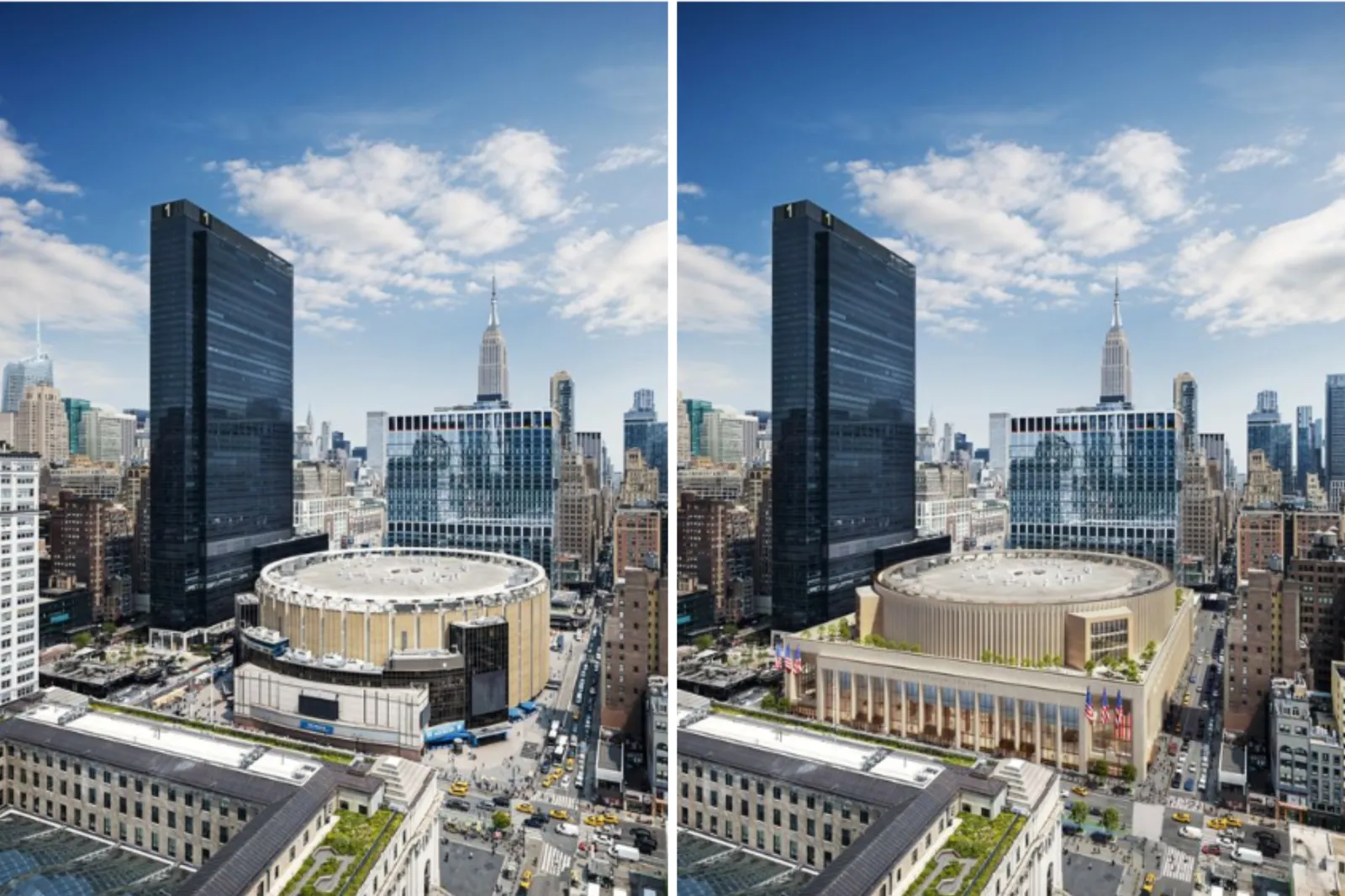
- A grand new entrance on Eighth Avenue will replace the Infosys Theater with a classic Art Deco façade.
- A single-level, ADA-compliant concourse will consolidate all public activity above the platforms, eliminating dead ends and improving visibility.
- Higher ceilings and wider concourses aim to reduce congestion and create a more intuitive passenger flow.
- Expanded track capacity, including “at least limited through-running,” could improve regional rail efficiency.
- New retail, bars, restaurants, and customer services will be integrated into the concourse.
- Madison Square Garden stays but wrapped in a new 90-foot-tall exterior structure that adds retail and utility space.
...
Deputy U.S. Transportation Secretary Steve Bradbury said in a press release that the department is “focused on developing an innovative and world-class station for the American people, complete with the potential for through-running and a grand entrance on Eighth Avenue that is sure to become a hallmark of this city.”
Bradbury added that the department has invested almost a quarter of a billion dollars to get the project off the ground and through the design and planning stages.
The release states that the project will overall be funded mainly through federal grants to Amtrak, alongside federal loans and private financing. Nearly $5 billion is being invested by USDOT into Amtrak’s Northeast Rail Corridor, with the goal of revitalizing major rail hubs across the nation, including Penn Station.
Will Passengers Actually Move Through the Station Faster?
Penn Station’s worst bottlenecks today occur at:
- Narrow, low-ceilinged passageways
- Platform stairs that force passengers into chokepoints
- Confusing, fragmented concourses split across multiple levels
The redesign directly targets these issues. The single-level concourse—the most significant architectural change—removes the layout that has been an issue since the 1960s.
The plan also calls for removing “scores of columns” at track level to improve sightlines and circulation. It will also look to improve accessibility through new entry points, passenger pickup and drop-off locations and expanded sidewalk zones.
The redesign is intended to improve passenger circulation, though the magnitude of those benefits will not be known until detailed engineering and operational plans are completed.
The real test will be whether the redesign can handle peak NJ Transit and LIRR surges, which often overwhelm the station today.
Will Train Capacity Increase?
The project outlines expanded track capacity and the introduction of limited through-running, a long-sought improvement that could allow trains to pass through Penn rather than terminate there.
Through-running is a common feature of high-capacity regional rail systems in cities such as London, Paris, and Tokyo. But the press release does not outline a commitment to full-scale implementation, meaning that bottlenecks could remain at Penn Station.

...
Is Madison Square Garden Staying?
For years, urban planners argued that one way to fix Penn Station was to move Madison Square Garden off the site entirely. The arena’s support columns and footprint constrain what can be built.
This redesign keeps MSG where it is. Instead, the plan wraps the arena in a new square structure that adds retail and utility space while “beautifying” the streetscape. It’s a political and logistical compromise — one that avoids a fight with MSG’s owners but limits the scope of what architects can do.
Didn’t Moynihan Train Hall Already Fix Penn Station?
Moynihan Train Hall, opened in 2021, created a new space for Amtrak and some LIRR passengers.
Though it significantly improved the experience for Amtrak riders and some LIRR users, most Penn Station passengers still rely on the older concourses that remain crowded and outdated.
This redesign is meant to address the core station—the part most commuters actually use.
...
When Will Commuters See the Changes?
While the renderings are here, the new (and finally finished) Penn Station is still years away.
The timeline for the changes is laid out over multiple years.
- 2025: The Trump administration restructured oversight of the project, placing greater responsibility on Amtrak and federal transportation officials.
- May 2026: Penn Transformation Partners selected as master developer.
- 2027: Planned groundbreaking.
- 2027–2030s: Construction, with the station and MSG remaining operational throughout.
Amtrak will conduct community engagement through 2026–2027, and the project still requires extensive design, permitting, and financing work.
What Happens Next
The design addresses many of the station’s long-standing flaws: low ceilings, confusing circulation, and lack of natural light. It promises more space, better flow, and a more dignified experience.
But how rail capacity and full through running will be implemented remains to be seen.
The renderings show that Penn Station may be set to become brighter, cleaner, and more navigable. However, whether it becomes the world-class transit hub New York has long needed will depend on decisions still to come.
View 0 Comments
Submit Correction
View Editorial & AI Guidelines