10
Loading video...

By Lilith Foster-Collins
News Reporter
0
Share
Newsweek is a Trust Project member
See more of our trusted coverage when you search.Prefer Newsweek on Googleto see more of our trusted coverage when you search.
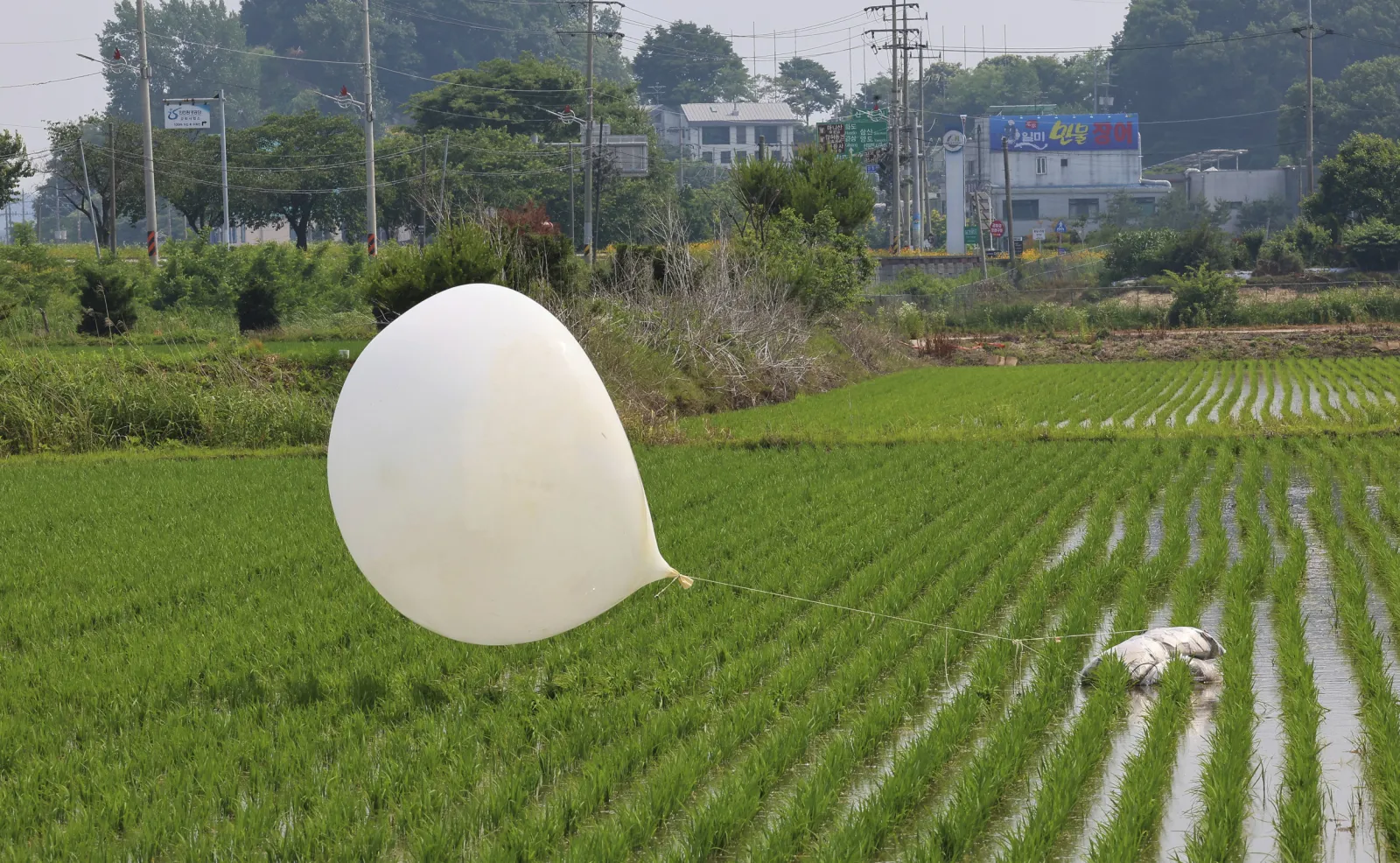
Parasites have been detected in some of the trash-laden balloons sent by North Korea to South Korea, officials in Seoul have said.
North Korea has sent more than 1,000 trash balloons toward South Korea over the last few weeks.
"Numerous parasites, such as roundworms, whipworms and threadworms, were found in the soil contained in the trash," the unification ministry said in a news release.
Read More on World
Parasites such as roundworms can embed themselves in the intestinal wall and cause nausea, vomiting, diarrhea, and abdominal pain. The parasites are believed to originate from human excrement.
...
South Korean activists responded to the balloons by sending their own, filled with anti-regime leaflets into the North.
Kim Yo Jong, the influential sister of Korea's leader Kim Jong Un, issued a threat to the South on Friday after South Korean activists reportedly sent 20 balloons carrying 300,000 propaganda leaflets, 5,000 USB sticks with South Korean pop songs and TV dramas, and U.S. one-dollar bills across the border.

...
Kim Yo Jong said, "When you do something you were clearly warned not to do, it's only natural that you will find yourself dealing with something you didn't have to."
The North Korean balloons, launched since late May, have carried various types of waste including manure, cigarette butts, and scrap materials, although no highly dangerous materials have been reported.
In response to North Korea's initial balloon campaign, South Korea's military redeployed large loudspeakers on June 9 along the border for the first time in six years, resuming anti-North Korean broadcasts. These broadcasts include popular K-pop songs, weather forecasts, and criticism of North Korea's policies.
North Korea views these broadcasts and the balloon leafleting as severe provocations, given its strict control over foreign information. Historically, such actions have led to exchanges of fire across the border, though no casualties have been reported.

...
The escalating tensions follow a significant defense agreement between North Korean leader Kim Jong Un and Russian President Vladimir Putin. The deal has alarmed international observers who fear it will embolden Kim to escalate action against South Korea.
Last Wednesday, during a meeting in Pyongyang, Kim and Putin agreed on mutual aid in case of attack and committed to enhancing cooperation.
Analysts suggest this represents the strongest alliance between the two nations since the Cold War.
The U.S. and partners believe North Korea has already been providing Russia with conventional arms for its war in Ukraine, in return for military and economic support.
South Korea, the U.S., and Japan issued a joint statement condemning the expanding military cooperation between Russia and North Korea. It said that U.S. commitments to the defense of South Korea and Japan "remain ironclad."
Last Saturday, a U.S. nuclear-powered aircraft carrier arrived in South Korea for a joint military exercise.
North Korea has previously called similar drills invasion rehearsals and responded with missile tests.
View 0 Comments
Submit Correction
View Editorial & AI Guidelines