
By Aristos Georgiou
Science and Health Reporter
0
Share
Newsweek is a Trust Project member
See more of our trusted coverage when you search.Prefer Newsweek on Googleto see more of our trusted coverage when you search.
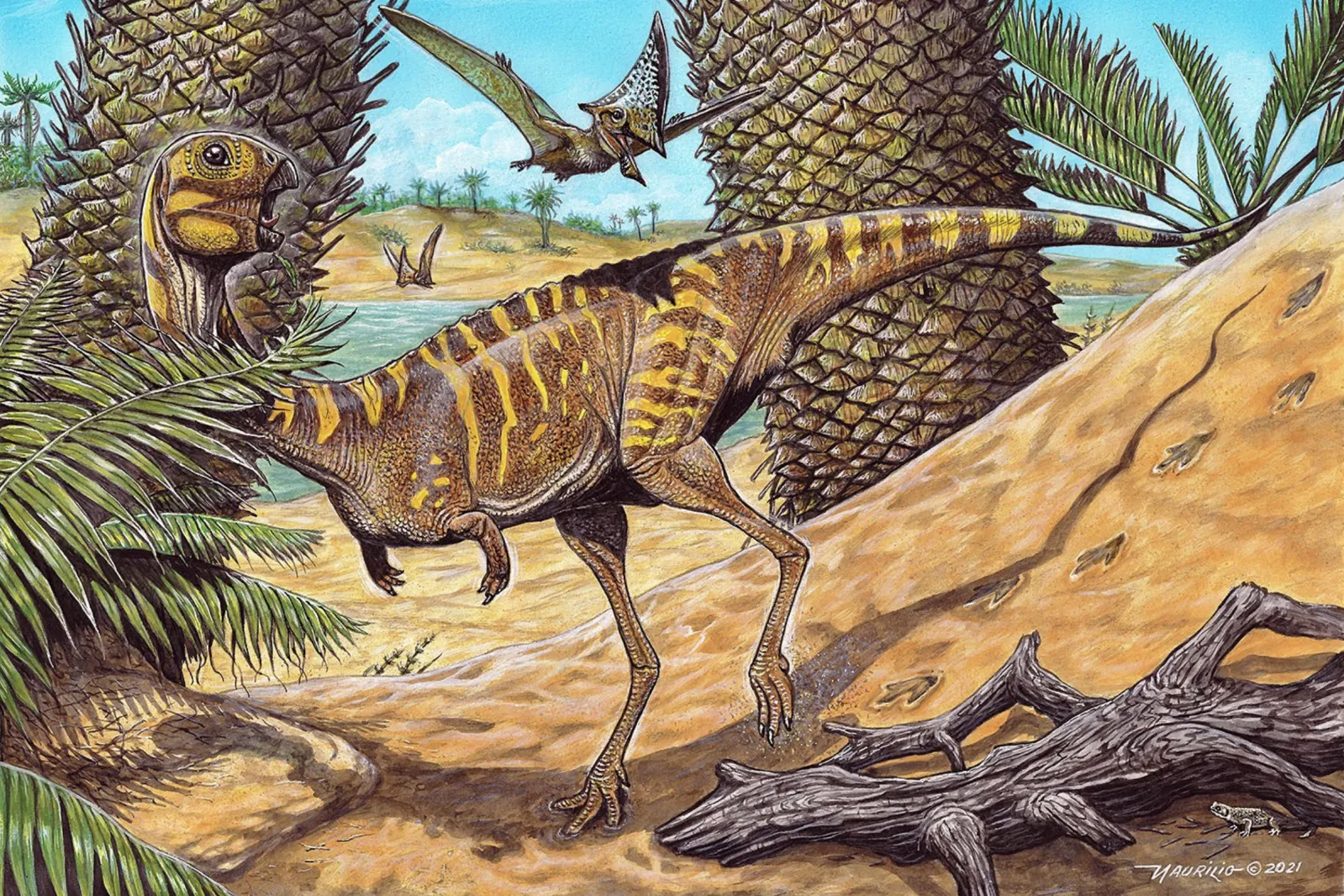
Paleontologists have identified a new species of dinosaur in Brazil that is toothless and walks on two legs.
The "nearly complete" and "well-preserved" fossilized skeleton of the dinosaur, which has been dubbed Berthasaura leopoldinae, was found near a rural road in the municipality of Cruzeiro do Oeste, Paraná State—located in the south of Brazil, according to a paper published in the journal Scientific Reports.
The paleontologists dated the remains, which were uncovered between 2011 and 2014, to between 70 and 80 million years ago. The small dinosaur measured around 3 feet in length and 2.5 feet in height, researchers said.
Read More
Over 100 Dinosaur Tracks From 150 Million Years Ago Discovered in Colorado4 min read

This YouTube Fossil Hunter Has Dug up Thousands of Ancient Animals5 min read

‘Chicken From Hell’ With Huge Hooked Claws Could Be Among Dinosaurs Found in Montana3 min read

Berthasaura leopoldinae belongs to a large group of dinosaurs called Theropoda that walked on their hind legs and ranged in size from the 2-foot-long Microraptor to the 40-foot Tyrannosaurus rex.
Most theropods—members of the group Theropoda—were believed to be carnivores. But puzzlingly, the new species has a beak-like mouth with no teeth.
"That was a real surprise," the paleontologists said in a statement released by Brazil's National Museum.
The researchers said the find was one of the most complete dinosaur skeletons found in Brazil, and the first toothless theropod to be found in the country.
The fact that the dinosaur is toothless is intriguing, indicating that it may not have only eaten meat, like most theropods.
"The toothless part raises doubts about what kind of diet this animal had," said researcher Geovane Alves Souza, one of the study's authors with the National Museum, said, according to AFP.
"It doesn't necessarily mean it didn't eat meat, though. Lots of birds, such as falcons and buzzards, eat meat with beaks. Most likely, it was an omnivore living in an inhospitable environment where it had to eat whatever it could."
The new species was named after Bertha Lutz (1894-1976)—a biologist of the National Museum and one of the main leaders in the fight for the political rights of Brazilian women—and Empress Leopoldina (1797-1826), the first empress of Brazil.
Earlier this week, news emerged regarding the discovery of more than 100 dinosaur tracks dated to around 150 million years ago at a renowned site in Colorado.
Clean-up crews discovered the tracks at the Picket Wire Canyonlands, located in the southeast of the state, after flooding, the Colorado Springs Gazette reported on Tuesday, citing U.S. Forest Service officials.
Picket Wire Canyonlands is home to the largest dinosaur track site in North America.
...
View 0 Comments
Submit Correction
View Editorial & AI Guidelines