...


By Brendan Cole and Shane Croucher
0
Share
Newsweek is a Trust Project member
See more of our trusted coverage when you search.Prefer Newsweek on Googleto see more of our trusted coverage when you search.
Pakistan said it is now in "open war" with its neighbor Afghanistan after months of escalating clashes and tensions over militant groups.
"Our patience has now run out. Now it is an open war between us and you," Pakistan's defense minister Khawaja Muhammad Asif wrote in a post on X, originally in Urdu. "Now it will be full confrontation. Pakistan’s army has not come from across the seas. We are your neighbors and we know your reality."
Qatar had brokered a ceasefire between Pakistan and the Afghan Taliban in October after repeated military clashes between the two sides. But a cross-border attack by Afghan forces on Thursday was followed by Pakistani air strikes on Kabul, Kandahar, and Paktia.
Read More on News
Afghanistan's defense ministry had accused Pakistan's military of violating its territory and airspace in an attack that killed civilians. Islamabad accuses the Taliban of harboring militants who launch attacks in Pakistan. The Taliban denies this.
During the latest clashes, Afghanistan’s Defense Ministry said 55 Pakistani soldiers had been killed and that eight Afghan soldiers were killed and 11 wounded. The ministry added that it had destroyed 19 Pakistani army posts and two bases during fighting which ended around midnight Thursday, according to the Associated Press.
Meanwhile, Mosharraf Ali Zaidi, a spokesperson for Pakistan’s Prime Minister Shehbaz Sharif, said on X at least 133 Afghan fighters were killed, more than 200 wounded with 27 Afghan posts destroyed and nine fighters captured.
What Is Behind The Clashes?
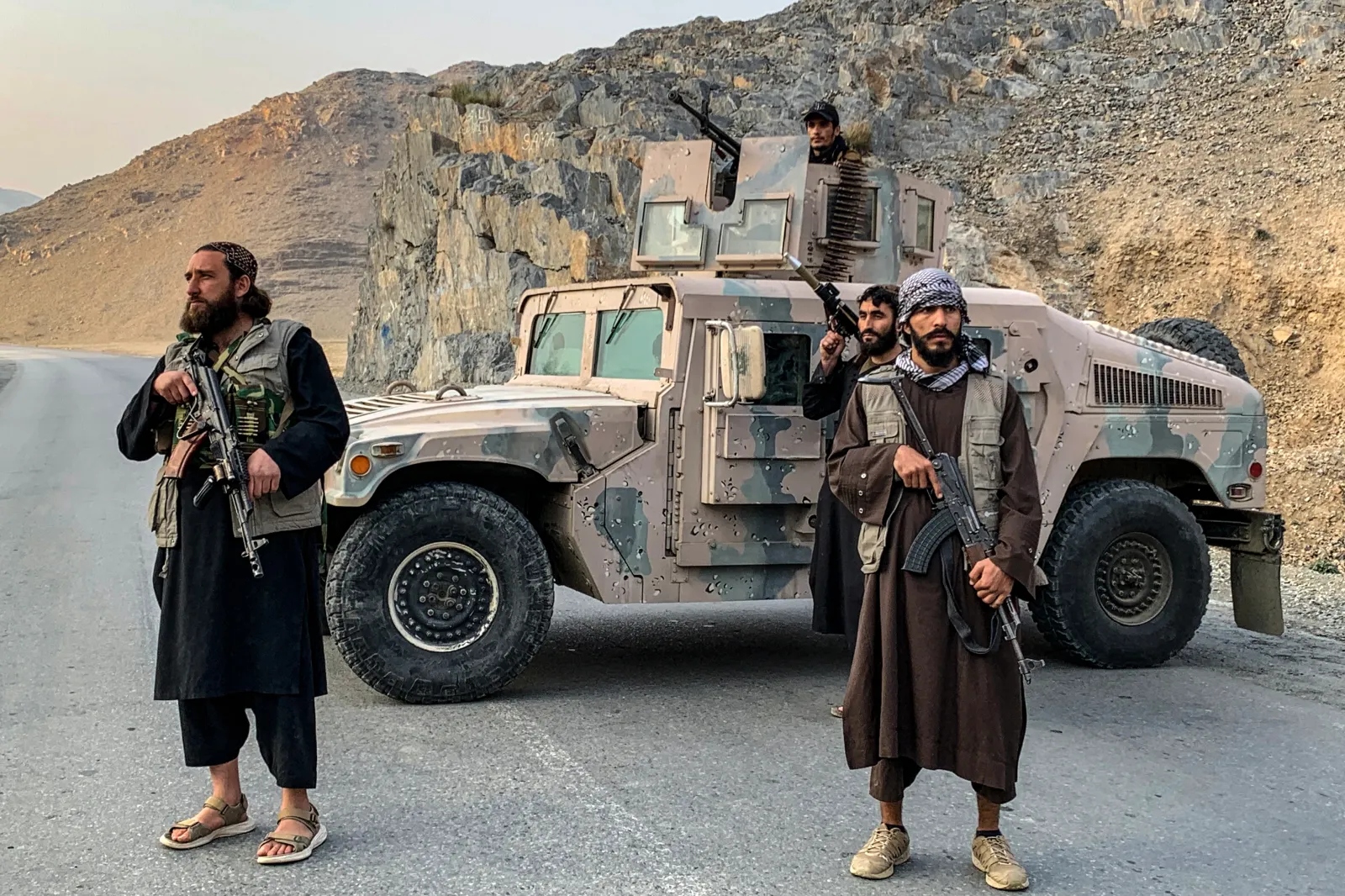
Pakistan had welcomed the return of the Taliban to power in 2021 but found that the group was not as cooperative as it had hoped.
Islamabad accuses the Afghan Taliban of sheltering the Tehreek‑e‑Taliban Pakistan (TTP), a militant group which has carried out deadly attacks on Pakistani civilians and security forces, which Kabul denies.
The TTP was formed in 2007 and has attacked markets, mosques, airports, military bases, police stations and also gained territory, mostly along the border with Afghanistan and also ought alongside the Afghan Taliban against U.S.-led forces.
Pakistan said that armed insurgents from the TTP seeking independence for the southwestern Pakistani province of Balochistan are based in Afghanistan.
Militancy has increased every year since 2022 with attacks by the TTP and Baloch insurgents growing, but Kabul has repeatedly denied allowing militants to use Afghan territory to launch attacks in Pakistan.
The escalation follows deteriorating relations and border clashes along the disputed Durand Line, which separates the neighbors, and comes months after Qatar and Turkey mediated a ceasefire between the two sides.
Pakistani security sources said militants in Afghanistan carried out recent attacks and suicide bombings which targeted Pakistani military and police, one of which killed 11 security personnel and two civilians which was claimed by the TTP.
Afghanistan's Only Ally Responds to Pakistan 'War'
World leaders have reacted to the clashes with offers to mediate amid concerns of a wider regional escalation. Russia, which became the first country to recognize the Taliban government, has urged both sides to halt cross-border attacks and resolve their differences through diplomacy.
Moscow also offered to mediate talks if both sides agree, the RIA News agency reported, citing the Russian foreign ministry.
Iran’s Foreign Minister Abbas Araghchi urged the two countries to resolve their differences through dialogue as he highlighted the significance of the month of Ramadan as a time for self-restraint and Islamic solidarity.
India’s Foreign Ministry Spokesperson Randhir Jaiswal said Delhi condemns Pakistan’s air strikes as “another attempt by Pakistan to externalize its internal failures.”
India is accused by Islamabad of funding groups in Afghanistan and in Pakistan itself to undermine Pakistan’s security, claims India denies.
Meanwhile, Mao Ning, Chinese foreign ministry spokesman said Beijing was “deeply concerned by the escalation” and calls on the two sides to remain calm, exercise restraint, properly settle differences and disputes through dialogue and negotiation.”
"It's in the fundamental interests of both countries and can help keep the region peaceful and stable,” Mao's statement added.
What Happens Next?
...
At 172,000, the Taliban have less than a third of Pakistan's personnel and Islamabad is likely to intensify its military campaign, according to analysts cited by Reuters. Meanwhile, Kabul's retaliation could include raids on border posts and more cross-border guerrilla attacks.
The Taliban has at least six aircraft and 23 helicopters, compared with Pakistan's armed forces which include more than 600,000 personnel, over 6,000 armored fighting vehicles and more than 400 combat aircraft, according to the International Institute for Strategic Studies. Pakistan also has nuclear arms, thought to comprise around 170 warheads.
An Afghan Taliban military spokesperson told the BBC his group would retaliate if attacked but would not start clashes.
Meanwhile, U.N officials have called for an immediate de-escalation and Iran has offered to mediate. Also in the region, Saudi Arabia's foreign minister has met with his Pakistani counterpart to discuss how to reduce tensions.
Update 02/27/26, 08:20 a.m. ET: This article has been updated with further information.
In a polarized era, the center is dismissed as bland. At Newsweek, ours is different: The Courageous Center—it's not "both sides," it's sharp, challenging and alive with ideas. We follow facts, not factions. If that sounds like the kind of journalism you want to see thrive, we need you.
When you become a Newsweek Member, you support a mission to keep the center strong and vibrant. Members enjoy: Ad-free browsing, exclusive content and editor conversations. Help keep the center courageous. Join today.


View 0 Comments
Submit Correction
View Editorial & AI Guidelines