10
Loading video...

By Anna Skinner
Associate News Editor
0
Share
Newsweek is a Trust Project member
See more of our trusted coverage when you search.Prefer Newsweek on Googleto see more of our trusted coverage when you search.
The arrival of fall is still weeks away, but two closely watched long-range forecasts are already offering markedly different visions of what the season could bring across parts of the United States.
While the National Weather Service's (NWS) Climate Prediction Center (CPC) is forecasting a generally warmer-than-normal autumn for much of the country, the Old Farmer's Almanac is calling for widespread cooler conditions across large stretches of the East Coast and Pacific Coast.
The contrast is particularly striking in the Northeast, Southeast and Pacific Northwest, where the forecasts at times point in opposite directions on both temperature and precipitation.
Read More on Weather
The CPC's official August-September-October outlook favors above-normal temperatures across most of the contiguous United States, including much of the Northeast, Mid-Atlantic and Southeast. In its precipitation outlook, the agency leans toward average rainfall across broad portions of the U.S., particularly along parts of the East Coast.
By comparison, the Old Farmer's Almanac predicts cooler-than-average conditions across much of the eastern United States. It forecasts a cooler and wetter fall in the Northeast, while much of the Atlantic Corridor and Southeast are expected to be cooler and drier than normal.
Northeast: Warm and Dry vs. Cool and Wet
The Northeast is one of the most notable areas of disagreement.
According to the Old Farmer's Almanac, the region should see below-average temperatures alongside increased precipitation. The publication expects a wetter-than-normal season, making the Northeast one of the few parts of the country where rainfall is forecast to exceed typical autumn levels.

...
The CPC outlook points in a different direction. NOAA forecasters favor warmer-than-normal temperatures across New England and much of the Northeast during the three-month period. Parts of the region are also included within areas where below-normal precipitation is favored.

...
In practical terms, the two forecasts paint nearly opposite pictures. One suggests a cooler, wetter autumn with more frequent rainfall, while the other envisions a warmer season with a greater chance of drier-than-average conditions.
Southeast Sees Another Divide
A similar split emerges across the Southeast.
The Old Farmer's Almanac forecasts cool temperatures across the region, with Southern Florida expecting to be "wet" and other Southeast states to be "dry."
Meanwhile, the CPC anticipates average precipitation across the Southeast, but its temperature outlook is substantially warmer. The federal forecast favors above-normal temperatures throughout the region, reflecting a broader national pattern of warmth extending from the Gulf Coast to the Northeast.

...
Pacific Northwest Forecasts Pull in Opposite Directions
The Pacific Northwest presents another major area of disagreement.
The Old Farmer's Almanac predicts a notably cool and wet season across Washington and Oregon. It says parts of the region could receive as much as 3 inches more rainfall than normal during September and expects temperatures to trend cooler than average.
The CPC outlook tells a different story. The agency favors below-normal precipitation across parts of the Northwest while also indicating greater odds of above-normal temperatures across much of the western United States. This aligns with other meteorologists' predictions because of the developing El Niño in the Pacific Ocean, which could bring dry, warm weather across the Northwest this fall and winter.
The competing outlooks leave the region facing one of the sharpest forecast contrasts in the country: wetter and cooler conditions according to the Almanac versus a warmer and potentially drier autumn according to the NWS.
Northern California Also Stands Out
Differences extend southward into Northern California.
The Old Farmer's Almanac expects the Pacific Coast to run cooler than average overall. In Northern California specifically, it anticipates slightly above-average rainfall compared with typical fall conditions.
The CPC forecast, however, places much of California within an area where above-normal temperatures are favored. Much of California has equal chances for above- or below-average precipitation, but Southern California is trending toward above-average.
Related Story
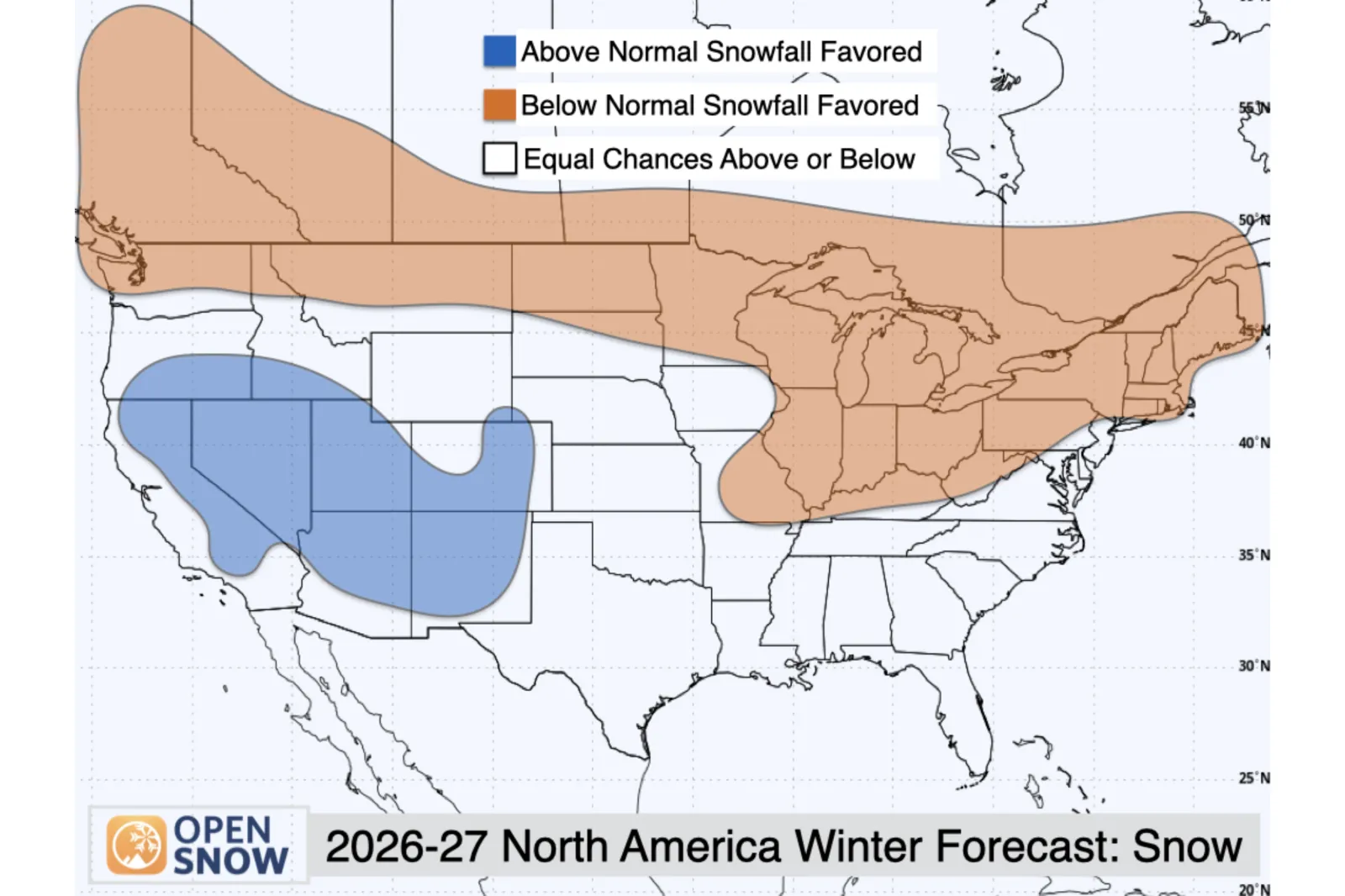
Map Shows Potential Snowfall Across US As Super El Niño Chances Climb
Why the Forecasts Differ
The differing outlooks stem in part from how they are produced.
The Old Farmer's Almanac bases its long-range forecasts on "three pillars," a spokesperson told Newsweek, including solar science, climatology, and meteorology. The group also assesses 30-year statistical averages prepared by governmental meteorological agencies when making its forecasts.
Meanwhile, the NWS outlooks, which can be made as far as a year in advance, are probabilistic, a National Oceanic and Atmospheric Administration (NOAA) spokesperson told Newsweek.
Neither forecast predicts daily weather conditions months in advance. Instead, both describe the most likely temperature and precipitation patterns averaged over the season. Still, for residents in regions such as the Northeast, Southeast and Pacific Northwest, the forecasts offer dramatically different expectations for the months ahead, setting up an autumn where only time will reveal which outlook comes closest to reality.
Contact Newsweek editors on this story: Jason Lemon and Sam Wilson.
View 0 Comments
Submit Correction
View Editorial & AI Guidelines