...

By Joe Edwards
Reporter
0
Share
Newsweek is a Trust Project member
See more of our trusted coverage when you search.Prefer Newsweek on Googleto see more of our trusted coverage when you search.
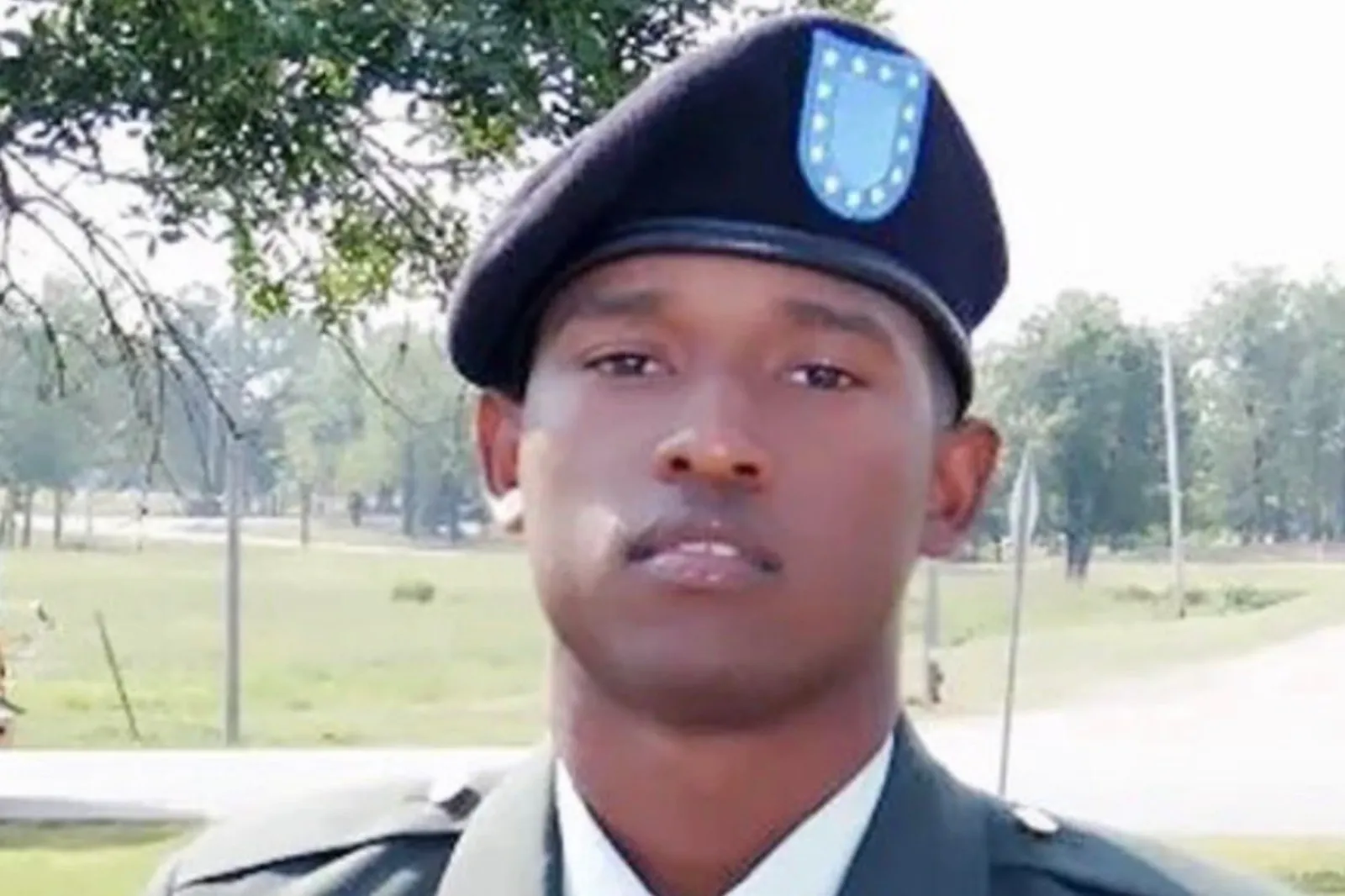
The suspected gunman in Thursday's shooting at Virginia's Old Dominion University previously told a court he was "disgusted" by ISIS atrocities and was "deeply, deeply, deeply sorry" to Americans and the U.S. military for supporting the militant jihadist group, court records reviewed by Newsweek show.
Mohamed Bailor Jalloh made the apology in February 2017 as he was sentenced to 11 years in prison for attempting to provide material support to ISIS, a designated foreign terrorist organization.
"I was in a really bad place, looking for some purpose, and it just really all got out of hand," Jalloh, who served in the Virginia National Guard from 2009 to 2015 as a combat engineer, told the court, calling his service the "proudest moments of my life."
Read More on News
“I am sorry for my actions, I am sorry for my behavior, and I ask the Court for a second chance,” he added.
Jalloh, of Sterling, Virginia, was released from federal custody early in December 2024, the Associated Press reported. It was not immediately clear why his release was moved up.
The FBI named 36-year-old as the deceased suspect in the shooting at Old Dominion's Norfolk campus that left one victim dead and two others injured. The deceased victim was identified as Army Lieutenant Colonel Brandon A. Shah. The two injured were also Army personnel, Army Secretary Dan Driscoll said.
FBI Director Kash Patel said in a statement on Thursday that his agency was investigating the shooting as an act of terrorism.
The shooter shouted "Allahu Akbar" in the attack, said Dominique Evans, special agent in charge of the agency's Norfolk field office, before being subdued by a classroom of ROTC students"rendered him no longer alive."
ROTC is a college-based program allowing students to train to become military officers while earning a degree.
...
Court records cited in that report described a months-long FBI investigation in which Jalloh, expressed interest in perpetrating a violent attack in the U.S. inspired by past domestic terrorism. Prosecutors said he dicussed the 2009 Fort Hood shooting, which left 13 people dead, and suggested he wanted to conduct a similar assault.
According to an FBI affidavit, Jalloh contacted individuals in early 2016 whom he believed were linked to the ISIS, though authorities said one was a government informant. Prosecutors said he also attempted to send money to support the group and sought to purchase a rifle from a Virginia gun store. The weapon he obtained had been rendered inoperable without his knowledge, and he was arrested shortly afterward.
Handing down an 11-year prison sentence and five years suppervised release, U.S. District Judge Liam O'Grady, since retired, noted Jalloh's clean criminal record and National Guard service.
"So I think that the ultimate sentence that I hand down should reflect the good things you have done as well as the horrendous things," Judge O'Grady said, according to the transcript.
"But the offense here ... is really troubling because you were willing to take significant steps to support [ISIS] even though you had spent six years in the National Guard. And that is so hard to really understand in looking at your background."
Read Mohamed Bailor Jalloh's Court Apology
Facing sentencing on February 10, 2017, Jalloh told the court: “First of all, I want to say I've made a lot of mistakes in my life, but this mistake of giving any support to the violent and extreme organization ISIS has been the most devastating one I have ever decided to make in my life," according to the transcript.
“I definitely renounce and denounce every action that they have taken and anything that they've done. I do not want to be associated. And I am deeply, deeply, deeply sorry to this Court, I'm sorry to the American military, I'm sorry to the people of the United States, I'm very, very sorry for what I have done. I did not intend to cause any harm to anyone.”
“And I want to say—I want to say, every time I see any atrocities that ISIS commits, I am disgusted by it because I know this is not what I want to be a part of.
“And part of my ambivalence or whatever is just me not knowing what to do. I've just—I was in a really bad place, looking for some purpose, and it just really all got out of hand.
“And most of all, I want to say my proudest moments of my life was serving and being a member of the Army National Guard as a combat engineer with the best unit here in Virginia. And the men that I served with, they have shown their true—their character. And I am deeply, deeply, deeply ashamed and I am sorry to the men and women of this country that serve and protect us.

...
“I do not espouse those views. In trying to show how I feel, I was trying to espouse those views and trying to be impressive. That's not my true belief about any of the men and women who serve our country.
“And at the time of this offense, Your Honor, I was going through deep emotional pain, and it left me lost and purposeless, and I just want you to know that."
Asked by the judge about the AR‑15 purchase, Jalloh said the purchase was influenced by workplace camaraderie.
"I just happened to buy this in behest of the conversations that I was having. But to be honest, Your Honor, I had no intentions or no plans with that weapon."
He added: “And I just want you to know that this entire crime is not who I am, it's not who I plan to be, and it's not who I have been.
“And I want to say sorry also to my family. I know I have caused them a lot of devastation and shock, especially my ailing father.
“And lastly, Your Honor, I want to say to the Government, the reason why I've tried to give them every bit of information that I have in my head, every bit in the recesses of my head to make sure they can be able to investigate and do their job best is because I want to show that I am not affiliated with that group, I do not support them, I do not want anything to do with it.
“And I am sorry for my actions, I am sorry for my behavior, and I ask the Court for a second chance.”
.
View 0 Comments
Submit Correction
View Editorial & AI Guidelines