...

By Anna Skinner
Associate News Editor
0
Share
Newsweek is a Trust Project member
See more of our trusted coverage when you search.Prefer Newsweek on Googleto see more of our trusted coverage when you search.
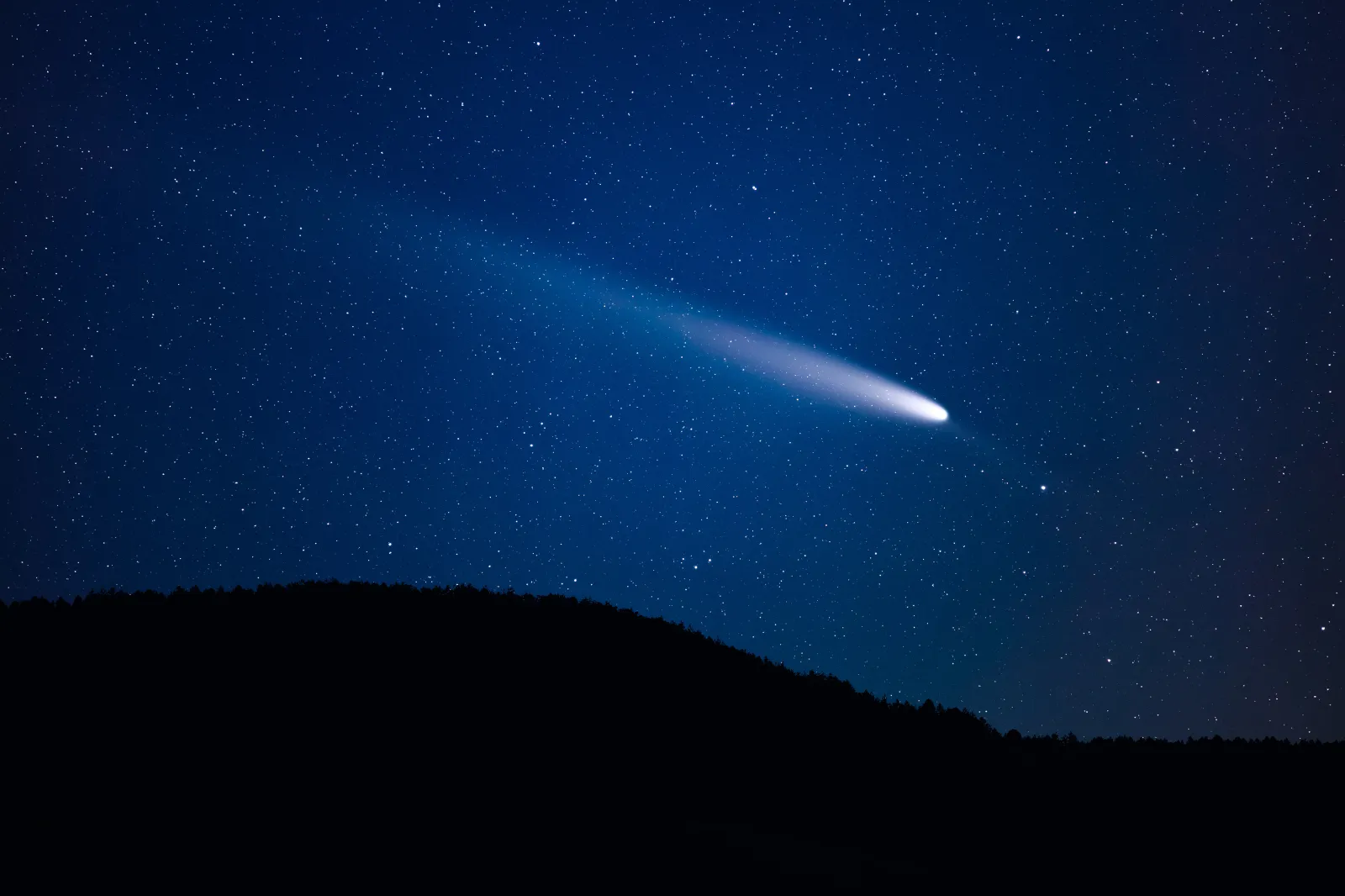
A bright fireball that streaked across the Ohio sky on Tuesday has been confirmed as a meteor, and it's possible that fragments are now scattered across several counties.
NASA confirmed on Tuesday that the loud boom was a result of a six-foot, 17,000-pound meteor, which was traveling 44,000 miles per hour across the sky near Lake Erie. The fireball broke up in the atmosphere, releasing energy which resulted in shaking across the area. Shortly after it fell, several National Weather Service (NWS) offices in the area posted about the meteor on their social media pages, even including a video of the fireball shooting through the sky shortly before it crashed into Earth.
The meteor sent fragments, known as meteorites, across a traceable debris field around where it landed in northeast Ohio.
Read More on Weather
Robert Lunsford with the American Meteor Society told Newsweek, in part, "They have the color of charcoal with a lighter color on the inside if broken. Most are made of stone, but some contain metal and are attracted to magnet and metal detectors."
...
On Wednesday, MyRadar Weather shared a map of where people could likely find the fragments in a post on X.
"NEW: MyRadar has reviewed radar/wind data, as well as NASA analysis, and has produced a map of where METEORITE FRAGMENTS may be found. This comes after Tuesday's meteor exploded over Cleveland," the post said. "IF meteorite fragments survived to the ground, the greatest likelihood of finding large meteorites (upwards of 20 pounds) would be near Rittman, Ohio, just west of Easton and along Highway 57."
The post went on to say that medium meteorites, which range between 2 and 20 pounds, would likely be located around Acme or west of Wadsworth. Small meteorites less than 2 pounds are most likely, the post said, and could be located from Grange to Sharon Center and along Highway 94.
"The meteor likely weighed close to 13,000 pounds before it exploded, and was 6-7 feet across. Weather radar captured the fragmentation of the meteor," the post said. "Despite snow ongoing at the time, we can use the correlation coefficient feature to determine where weird/spiked/jagged/irregular shapes are present – not "hydrometeors" like rain or snow, but rather meteor debris. Break out the metal detectors! Sweeping the area may legitimately provide an opportunity to find meteorites. On Jan. 16, 2018, a meteor exploded over Michigan, producing shaking equivalent to that of a 1.8-magnitude earthquake. Fragments were found after the fact, and debris could even be seen on weather radars."
Lunsford told Newsweek that meteorites are typically quite small and look different from normal rocks.
"Many have a fusion crust on the outside caused by the high heating during their passage through the atmosphere," he said. "They have the color of charcoal with a lighter color on the inside if broken. Most are made of stone, but some contain metal and are attracted to magnet and metal detectors."
The fact that the meteor originated from outer space is bound to draw curious people and collectors who hope to claim a piece of the object for themselves.
"Unfortunately, most people looking for meteorites are looking to line their pockets with cash," Lunsford told Newsweek. "Specimens found by these people are sold privately at high prices, and scientists never get the chance to analyze them. There have been cases where people have said they are from the American Meteor Society to enter private property to pillage from the rightful owners."
Update 3/19/2026, 10:29 a.m. ET: This article was updated to include comment from the American Meteor Society.
View 0 Comments
Submit Correction
View Editorial & AI Guidelines