
By Adam Mills
AI Editor
0
Share
Newsweek is a Trust Project member
See more of our trusted coverage when you search.Prefer Newsweek on Googleto see more of our trusted coverage when you search.

Newsweek
Editor's note: This is AI Impact, Newsweek's weekly newsletter where each week, we will explore how business leaders are unlocking real value through artificial intelligence.
The newsletter will take next week off but we’ll return in January. Happy Holidays!
Read More on Newsweek.AI
Tap or click here to get this newsletter delivered to your inbox.
Core Intelligence
Why AI’s Productivity Payoff Takes Time
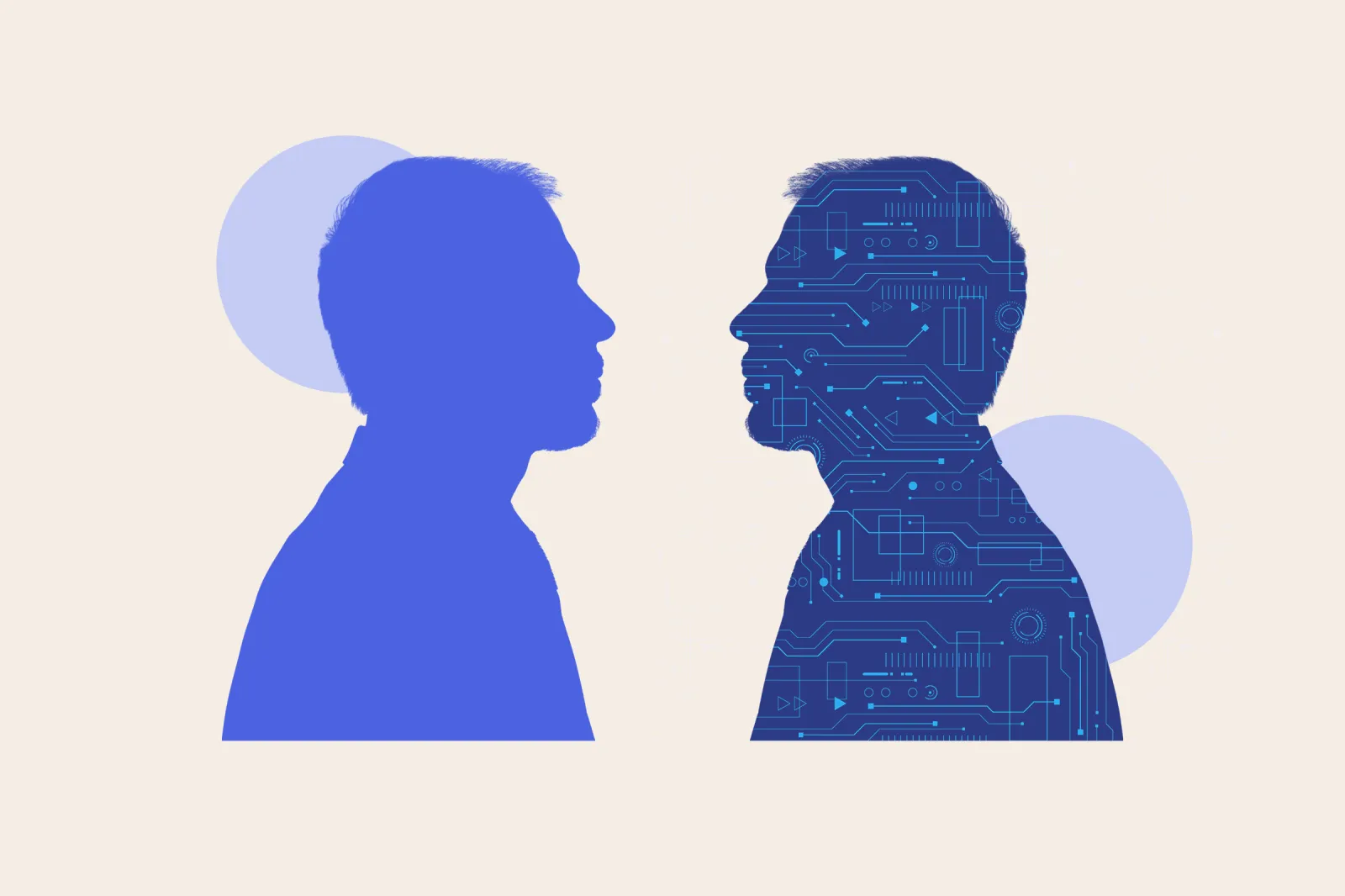
Photo-illustration by Newsweek/Getty
Few people are better positioned to assess AI’s economic potential than Erik Brynjolfsson, a Stanford University professor, senior fellow at the Stanford Institute for Human-Centered AI and director of the Stanford Digital Economy Lab. In a wide-ranging conversation with Marcus Weldon, Newsweek’s contributing editor for AI, he explained why today’s uneven productivity data says less about AI’s limits than about how transformative technologies actually diffuse.
Brynjolfsson argued that the biggest gains from AI will not come from replacing human labor, but from augmenting it. “We need to treat humans as an end and not just a means to an end,” he said—a conclusion grounded not in optimism, but in decades of economic evidence showing that productivity grows fastest when humans and machines work together.
That perspective helps explain why early AI deployments often disappoint. Brynjolfsson situates AI firmly in the lineage of general-purpose technologies, which routinely produce productivity slowdowns before delivering outsized gains. Firms invest heavily in new skills, workflows and organizational change, but those intangible investments are poorly measured, creating the downward slope of what he calls the productivity J-curve.
The payoff arrives later, when those hidden investments begin to compound. Brynjolfsson noted that previous GPTs like electricity took decades to crest the J-curve, but argued that AI’s curve will be steeper and faster, with meaningful gains emerging over years, not generations.
The conversation also highlighted canaries: early warning signals that reveal where AI’s impact is being misread. Brynjolfsson pointed to early-career job declines in AI-exposed roles not as evidence of collapse, but as proof that automation-heavy strategies erode value, while augmentation-oriented approaches continue to support employment and wages.
Crucially, Brynjolfsson warned against what he calls the Turing Trap: optimizing AI to imitate humans rather than amplify them. “If you make a machine that perfectly imitates a human, what does that do to the value of human labor?” he asked. “It drives it down.”
The throughline of the discussion is clear. AI’s economic promise is real, but conditional. Productivity gains will not flow from better models alone. They depend on redesigning work, investing in people and measuring success in ways that reflect how value is actually created.
As Brynjolfsson made clear, the central question is no longer whether AI will matter, but whether organizations are willing to avoid the trap and do the harder work required to move up the J-curve.
You can read Weldon’s full analysis of the conversation here: Centaurs, canaries and J-curves: Pitfalls and productivity potential of AI.
AI Impact Awards & Summit
The Newsweek AI Impact Awards seek to identify and recognize uniquely innovative AI solutions that solve critical business problems in different industry segments, or significantly advance capabilities. Recognition comes not from ideas, but from measurable IMPACT on business operations.
Prompt Injection

...
“My ‘aha’ moment about AI in healthcare was realizing that its greatest impact may not lie in intelligence at all, but in enabling execution. We have spent billions building systems that flag patients with care gaps, predict readmission risk, and highlight those needing follow-up. Yet acting on what we learn, including what AI uncovers, often breaks down within the fragmented workflows of schedulers, care managers and call centers – the very layers meant to keep care moving.
That realization reshaped how I think about where AI can truly deliver value. The organizations making real progress are not the ones with the smartest algorithms; they are the ones that control the coordination points where care actually happens. You cannot dashboard your way to lower readmissions, and you cannot report your way to closed gaps. Progress depends on what gets done, not simply what gets identified.
AI’s real strength is keeping care moving in the right direction for every patient, not simply generating better analysis. And when it is connected to the right operational nodes, AI can help the healthcare system bridge the gap between knowing and doing, turning knowledge into real-world impact and translating data into better outcomes.”
Have your own lesson to share? Email us at: ai.newsletter@newsweek.com
Run Log
By Adam Mills
At Hospital for Special Surgery, Chief Digital and Technology Officer Ashis Barad set out to fix a revenue-cycle problem that was draining time and attention from clinicians and staff. Insurance appeals required teams to pull information from multiple systems, draft documentation and fax hundreds of pages back and forth—work that Barad described as “just the front end” of a much longer, manual process.
Working with Palantir, HSS built an AI-driven system that assembles the relevant clinical data, applies payer criteria and produces a complete appeal in minutes. “What took 45 minutes of manual work turned into five minutes,” Barad said, noting that the system scaled from about 100 appeals a month to more than 1,100.
In early testing, HSS ran human-written and AI-generated appeals in parallel. The first result was decisive. “The human appeal got denied. They missed something,” Barad said. “The very first appeal that we sent out with Palantir was approved.”
That outcome reinforced a broader lesson. “People are so focused on the LLMs that they’re really missing the boat on getting the data right,” Barad said. Without clean, connected data and clinical context, he argued, AI agents and automation quickly break down, especially in health care.
By redesigning the workflow around verified data and keeping clinicians in the loop, HSS was able to reduce administrative burden without cutting staff. The goal, Barad said, is not automation for its own sake, but building systems that free clinicians to focus on patients rather than paperwork.
Context Window
■ “Phygital” design, blending physical controls with digital interfaces, is becoming a key trend in new car buying, as automakers test the right mix of tactile buttons and screen-based experiences to meet customer preferences in the in-car experience. [Newsweek]
■ Global data-center dealmaking surged to a record high in 2025, with more than 100 transactions totaling nearly $61 billion through November, largely driven by demand for the computing power needed to support AI workloads. [Reuters]
■ A Cornell University study finds that scientists using large-language models like ChatGPT are publishing significantly more papers but the surge in AI-assisted output also makes it harder to separate high-value research from lower-quality work. [Cornell University]
■ Alphabet’s parent companyGoogle agreed to acquire clean-energy and data-center infrastructure firm Intersect Power for about $4.75 billion, reflecting how tech giants are investing in power and infrastructure to support rapidly expanding AI workloads and data operations. [Investors]
■ Meta is pushing to become an “AI-first” workplace by integrating a wide range of tools from competitors and its own models, encouraging employees to embed AI into daily work and even linking usage to performance evaluations. [Business Insider]
■ Google Cloud’s new AI business trends report forecasts that 2026 will be the year AI agents start reshaping core business workflows and collaboration, suggesting a strategic shift from point tools to autonomous assistants integrated into enterprise systems. [Google Cloud blog]
Transfer Protocol
George Osborne, formerly chancellor of the exchequer in the U.K., has been named managing director and head of OpenAI for Countries at OpenAI, leading the company’s global expansion of its AI infrastructure and government partnerships through the OpenAI for Countries initiative.
Lisa Qian, previously a private-sector data and technology executive with experience at LinkedIn and Airbnb, has been appointed Seattle’s first chief AI officer, bringing private-sector AI expertise to the city’s government AI strategy and implementation.
Anand Varadarajan, formerly a technology leader at Amazon’s grocery tech and supply chain operations, has been named chief technology officer at Starbucks, where he will drive digital transformation and the integration of advanced technology, including AI-driven systems, into the company’s global operations.
Peter DeSantis, a 27-year Amazon veteran and former senior VP at AWS, has been tapped to lead a new AI-focused organization at Amazon, uniting advanced AI models, custom silicon and quantum computing efforts in a bid to accelerate the company’s next-generation AI infrastructure and services.
Albert Lee, formerly senior director of corporate development at Google, has been named vice president of corporate development at OpenAI, where he will help lead strategic partnerships, mergers and acquisitions to support the company’s global AI growth initiatives.
Know someone on the move in AI? Send job change info to ai.newsletter@newsweek.com
Magic Moment

...
Tani described using ChatGPT to turn a photo of his daughter into Japanese animation–style art inspired by Hayao Miyazaki and Studio Ghibli:
“Are you familiar with Japanese animation—cartoons, a little bit? Do you know Hayao Miyazaki, Totoro? Yeah, my daughter really loves it. So, this is my daughter’s picture. [I used] ChatGPT [to make it].”
Experience some AI magic? Tell us about it at ai.newsletter@newsweek.com
Tap or click here to get this newsletter delivered to your inbox.
View 0 Comments
Submit Correction
View Editorial & AI Guidelines