
By Aman Kidwai
Workplaces Editor
0
Share
Newsweek is a Trust Project member
See more of our trusted coverage when you search.Prefer Newsweek on Googleto see more of our trusted coverage when you search.
National surveys report that police officers spend a significant portion of their time writing reports and conducting other administrative work. Axon's AI-powered report generator is a winner of Newsweek's AI Impact award in the category of Extraordinary Impact in Commercial Tool or Service for its ability to save law enforcement agencies and departments thousands of minutes per week by streamlining and automating the report-writing process, thereby helping to address burnout and staff shortages within these organizations.
"They're experiencing a ton of overtime. Officers are saying that they're having to stay late to get reports and stuff done," Axon founder and CEO Rick Smith told Newsweek. "We're getting officers able to complete their jobs in a reasonable amount of time and they're getting more time for patrol and things like training."
Smith said that he founded his company in the wake of a shooting where two of his friends were killed. His plan was to make Tasers a safe alternative to owning a gun, with part of the mission being to protect life and make bullets obsolete. Smith shared that the Taser was controversial at the time and didn't really take off as a consumer product. However, in its early years, Axon grew its customer base through police departments, which were looking for alternatives to guns in de-escalation situations.
Read More on Newsweek.AI
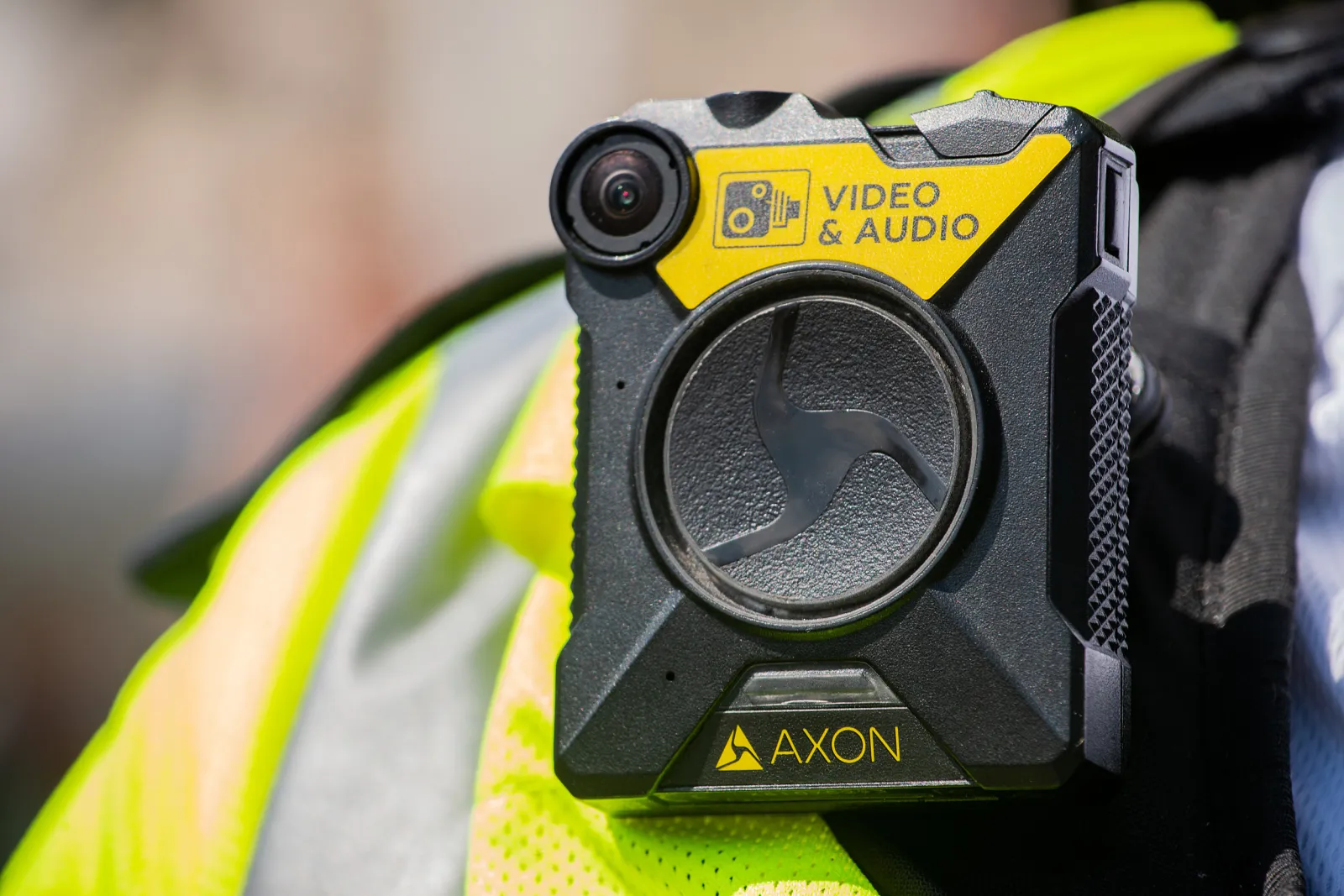
To ensure that Tasers and other forms of police force were being used responsibly, Axon also got into the body camera business, which precipitated a new need for cloud video storage, another service Axon began offering. Smith estimates that Axon's servers host more video data than YouTube, though obviously they have fewer viewers.
In addition to cloud storage, Smith launched a document management product with the goal of ultimately automating the writing process using AI.
"We made a pretty big bet [around 10 years ago]," Smith said. "At some point, AI would be able to write your police report."
Smith started following futurists and attending technology conferences to see where machine learning and generative AI were heading. He said the release of OpenAI's GPT-4 was the point at which he felt comfortable launching the AI report generator, Draft One. It uses body camera information and other records to help officers with a first draft of the incident reports they need to file from their activity in the field.
...
"I had this realization that police spend about half their time writing police reports," Smith said. "That's not really high value-add, it's an enormous expense."
While the use of AI, particularly in law enforcement, can be controversial, Smith is not hesitant to lean into the opportunity presented by emerging technology. He shared that Axon retains an advisory board to proactively identify and address issues that skeptics may have.
"Everything we have been successful at is typically 'zero to one' type stuff, and frankly, stuff that's fairly controversial," Smith shared. "At first, police had no interest in electrical weapons, and so we showed them the benefits. They didn't want our body cameras until the Michael Brown shooting in Ferguson."
More controversial uses of AI in law enforcement include facial recognition or software that predicts crimes, but Smith said Axon's foray into emerging tech was to solve what is essentially a business problem: police officers are spending less time in the field and more time writing reports, most of which do not get viewed by many people.
When using Draft One for the first time, Officer Nathan Stoneking of the Lafayette Police Department in Indiana said, "That's probably a 25 to 30-minute long report, and you hit the narrative button and it cranks something out in a few seconds. There's a plethora of things that you can do with that extra hour or two hours in a 12-hour period."
"You're automating a super expensive, very bureaucratic process. Nobody likes doing these. You have people who become police, this is a terrible part of the job for them," Smith shared. "They really dislike it. It's become a meme."
One year after launch, Axon estimates Draft One has saved officers over 2 million minutes across 100,000 reports. Some departments are saying officers are spending half the time, or less, on report writing. Leon County Sheriff's Office reports that average report-writing time reduced from 24.6 to 9.46 minutes.
"Everything a cop does when they're sitting at a computer is some version of data input or manipulation in some sort of business process," Smith said. "We believe all of those things are important to support functions. They do have risks, so we're also going to need to be thoughtful about making sure that we keep humans in the loop. But those are support functions that our customers would generally love to automate as much as they can."
View 0 Comments
Submit Correction
View Editorial & AI Guidelines