...


By Jordan King and John Feng
0
Share
Newsweek is a Trust Project member
See more of our trusted coverage when you search.Prefer Newsweek on Googleto see more of our trusted coverage when you search.
President Donald Trump has announced that the United States will resume nuclear testing programs and Newsweek has mapped out what impact America’s highest-yield warhead deployed on a U.S. missile would have on several major cities.
“The United States has more Nuclear Weapons than any other country. This was accomplished, including a complete update and renovation of existing weapons, during my First Term in office,” the president wrote on Truth Social on Wednesday. “Because of the tremendous destructive power, I HATED to do it, but had no choice! Russia is second, and China is a distant third, but will be even within 5 years.
“Because of other countries testing programs, I have instructed the Department of War to start testing our Nuclear Weapons on an equal basis,” he said. “That process will begin immediately.”
Read More on News
The W88, estimated to yield 455 kilotons of TNT explosives, is one of the most powerful nuclear warheads in the U.S. arsenal, and is carried on Trident II D5 submarine-launched ballistic missiles (SLBMs) aboard the Navy’s Ohio-class ballistic missile submarines.
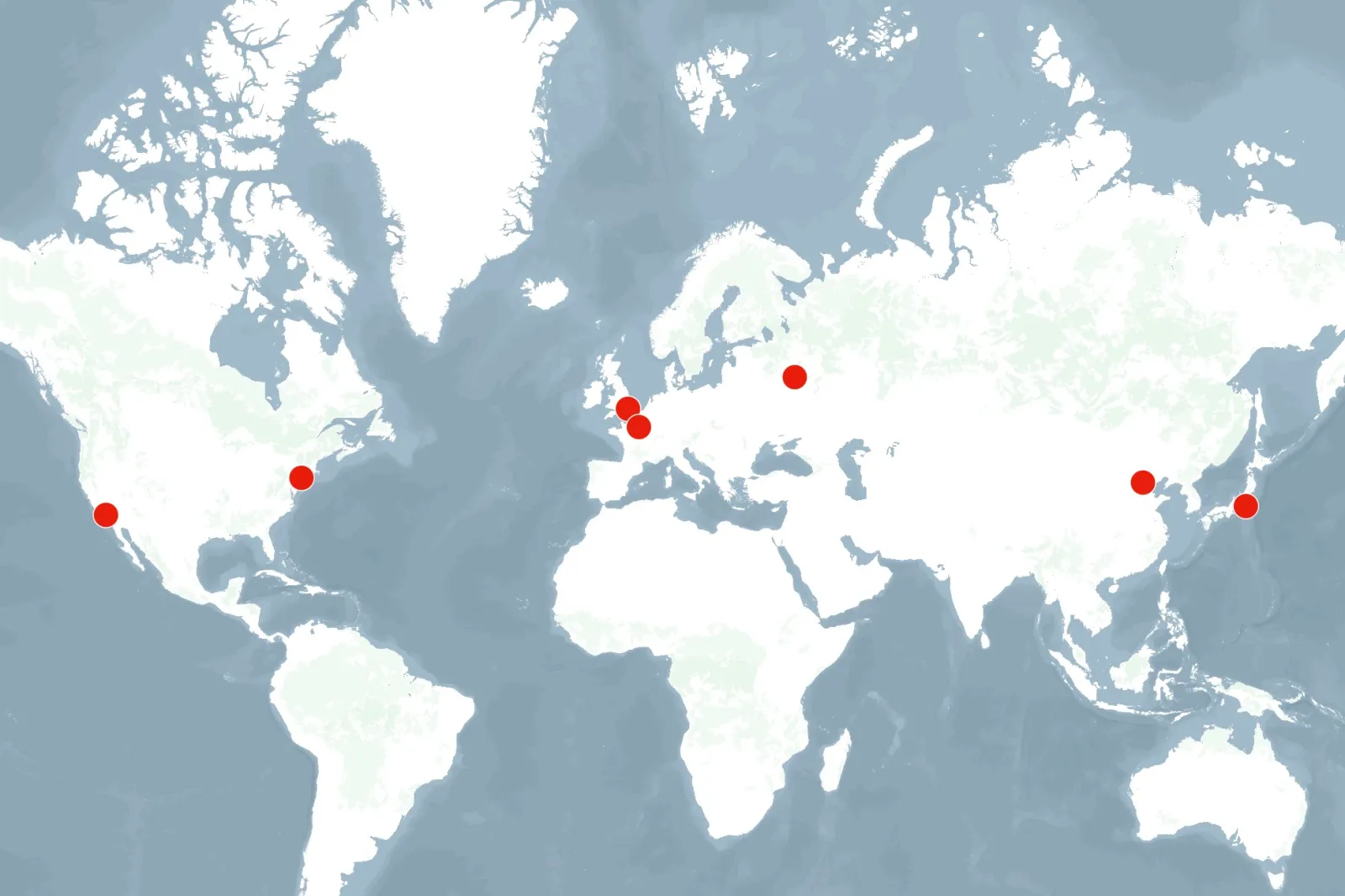
Newsweek has broken down how Moscow, Beijing, London, New York, Los Angeles, Tokyo and Paris would be affected if any of these cities were targeted by a W88 exploding in an airburst, according to NUKEMAP, a resource created by by Alex Wellerstein, a professor and historian of nuclear technology.
Moscow
In Moscow, an estimated 507,500 people would die while 1,442,990 would be injured in any 24-hour period, NUKEMAP shows.
The fireball radius (inner yellow circle), in which everything would be vaporized by intense heat rising to millions of degrees Fahrenheit, would reach 0.73 square miles. The heavy blast damage radius (inner red circle), where heavily built concrete buildings would be severely damaged or demolished and there would be 100 percent fatalities would extend to 3.95 square miles, while the radiation radius (green circle), where the radiation exposure would be fatal with many dying of cancer within a month of exposure, would be 5.73 square miles.
The slightly moderate damage radius (inner gray circle), covering 20.9 square miles, would see most residential buildings collapse, damage to commercial buildings, a high risk of fire spreading and widespread death.
Anyone within 90.1 square miles of the explosion (the thermal radiation radius: wider orange circle) would be at risk of suffering third-degree burns, which are "often painless because they destroy the pain nerves." These can cause severe scarring or disablement and may lead to amputations.
Within the light blast damage radius (wider gray circle), 280 square miles from the blast, many injuries can be caused to those who go to a window after seeing the flash of a nuclear explosion.
Beijing
Deaths: 695,260
Injuries: 1,502,500
Fireball radius: 0.73 square miles
Heavy blast damage radius: 3.95 square miles
Radiation radius: 5.73 square miles
Moderate blast damage radius: 20.9 square miles
Thermal radiation radius: 96.6 square miles
Light blast damage radius: 142 square miles
London
Deaths: 225,930
Injuries: 202,370
Fireball radius: 0.73 square miles
Heavy blast damage radius: 3.95 square miles
Radiation radius: 5.73 square miles
Moderate blast damage radius: 20.9 square miles
Thermal radiation radius: 96.6 square miles
Light blast damage radius: 142 square miles
New York
Deaths: 1,258,610
Injuries: 1,436,630
Fireball radius: 0.73 square miles
Heavy blast damage radius: 3.95 square miles
Radiation radius: 5.73 square miles
Moderate blast damage radius: 20.9 square miles
Thermal radiation radius: 96.6 square miles
Light blast damage radius: 142 square miles
Los Angeles
Deaths: 320,580
Injuries: 601,150
Fireball radius: 0.73 square miles
Heavy blast damage radius: 35.5 square miles
Radiation radius: 5.73 square miles
Moderate blast damage radius: 20.9 square miles
Thermal radiation radius: 96.6 square miles
Light blast damage radius: 142 square miles
Tokyo
Deaths: 673,950
Injuries: 1,752,400
Fireball radius: 0.73 square miles
Heavy blast damage radius: 3.95 square miles
Radiation radius: 5.73 square miles
Moderate blast damage radius: 20.9 square miles
Thermal radiation radius: 96.6 square miles
Light blast damage radius: 142 square miles
Paris
Deaths: 1,072,840
Injuries: 1,537,060
Fireball radius: 0.73 square miles
Heavy blast damage radius: 3.95 square miles
Radiation radius: 5.73 square miles
Moderate blast damage radius: 20.9 square miles
Thermal radiation radius: 96.6 square miles
Light blast damage radius: 142 square miles
America’s Nuclear Weapons Stockpile
Here is a breakdown of America’s nuclear weapons, according to the National Nuclear Security Administration’s most recent stockpile plan (November 2023).
Warheads – Strategic Ballistic Missile Platforms
These are nuclear explosives carried on long-range missiles, either intercontinental ballistic missiles (ICBMs) launched from underground silos in the U.S. or submarine-launched ballistic missiles (SLBMs).
- W78
- W87-0
- W76-0 / W76-1 / W76-2
- W88
Bombs - Aircraft Platforms
These nuclear weapons can be carried by military aircraft—either gravity bombs dropped from bombers or tactical bombs that can be carried by dual-capable fighters.
• B61-3/4
• B61-7
• B61-11
• B61-12
• B83-1
Warheads - Cruise Missile Platforms
These are nuclear warheads designed for air-launched cruise missiles carried by strategic bombers.
• W80-1
View 0 Comments
Submit Correction
View Editorial & AI Guidelines