...


By Micah McCartney and Shane Croucher
0
Share
Newsweek is a Trust Project member
See more of our trusted coverage when you search.Prefer Newsweek on Googleto see more of our trusted coverage when you search.
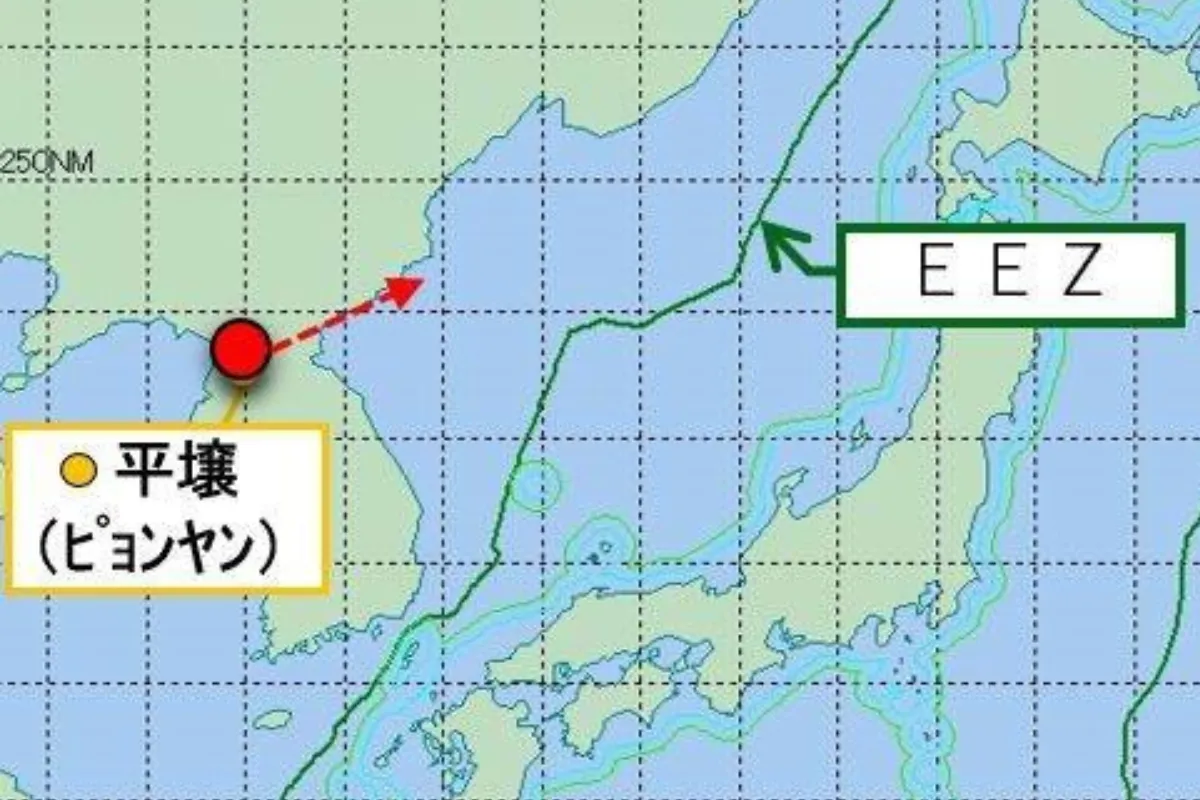
North Korea fired two ballistic missiles that splashed down near its east coast on Tuesday, Japan's Defense Ministry said, in what appeared to be another weapons test by the Kim Jong Un regime.
The first missile ascended to an altitude of almost 50 miles and traveled about 217 miles, while the second reached an altitude of about 44 miles and flew about 211 miles. Both landed outside of Japan's exclusive economic zone.
Newsweek contacted the North Korean Embassy in Beijing for comment by email.
Read More on World
Why It Matters
The event marks the third round of North Korean missile launches in 30 days. Kim's advancing ballistic missile and nuclear capabilities, and tit-for-tat escalations by both Seoul and Pyongyang in 2023 and 2024, drove tensions on the Korean Peninsula to their highest in decades. The South has responded by stepping up security cooperation with its U.S. ally and increasingly Japan.
North Korea has said its United Nations-sanctioned programs are defensive in nature, citing what Kim characterizes as increasingly aggressive behavior by the U.S.
What To Know
"Including these repeated launches of ballistic missiles and other projectiles, this series of actions by North Korea threatens the peace and security of Japan, the region, and the international community," Japan's Defense Ministry said in a statement, originally in Japanese.
"Such ballistic missile launches also violate relevant United Nations Security Council resolutions and constitute a serious issue affecting the safety of the public," it continued. The ministry added that Tokyo had lodged a strong protest against Pyongyang and "strongly condemned these actions."
South Korea's defense authorities also said they had detected the launch of at least one projectile on Tuesday.
Although an armistice brought three years of fighting to a close in 1953, a treaty was never signed. Therefore, the two Koreas are technically still at war.
What People Are Saying
Leif-Eric Easley, a professor of international studies at Ewha Womans University in Seoul, said in a statement shared with Newsweek: "There are often multiple motivations for North Korea's missile tests.
"One is to develop technologies that improve its military capabilities; another is to demonstrate those capabilities to increase deterrence. A third is to show strength for domestic political legitimacy. A fourth is to promote exports, such as to Russia for Putin's aggression against Ukraine. Finally, Pyongyang may time launches to protest U.S. defense exercises with allies or to express displeasure with South Korean diplomacy."
What Happens Next
Since taking office in June, South Korean President Lee Jae Myung has signaled a break from the hard-line approach of his predecessor, Yoon Suk Yeol. North Korean officials have so far dismissed these overtures.
At a news conference last week, Lee stressed that denuclearization of the North remains the ideal scenario but acknowledged it was unlikely, given the lack of incentive. Lee said he hoped to play the role of pacemaker for potential efforts by U.S. President Donald Trump to restore North-South dialogue.
During his first term, Trump met with Kim in three face-to-face talks in a failed bid to persuade him to walk back his nuclear program. The U.S. president has repeatedly said he is open to reengaging with the North Korean leader.
Update 1/27/26, 7:07 a.m. ET: This breaking news story was updated with additional content.
In a polarized era, the center is dismissed as bland. At Newsweek, ours is different: The Courageous Center—it's not "both sides," it's sharp, challenging and alive with ideas. We follow facts, not factions. If that sounds like the kind of journalism you want to see thrive, we need you.
When you become a Newsweek Member, you support a mission to keep the center strong and vibrant. Members enjoy: Ad-free browsing, exclusive content and editor conversations. Help keep the center courageous. Join today.


View 0 Comments
Submit Correction
View Editorial & AI Guidelines