
10
Loading video...


By Jasmine Laws and Anna Skinner
0
Share
Newsweek is a Trust Project member
See more of our trusted coverage when you search.Prefer Newsweek on Googleto see more of our trusted coverage when you search.
Health officials in North Carolina have indicated that they do not believe cyclospora cases in the state are connected to the Taco Bell outbreak, and likely have several sources.
There has been a surge of cyclospora cases in the state over the last week as the outbreak tied to shredded lettuce sold at Taco Bell, sourced from central Mexico, remains ongoing, with cases numbers rising in multiple states.
On Friday, the Food and Drug Administration (FDA) confirmed that cyclospora cases from Taco Bell exposure have occurred in nine states, four more than was originally reported, although North Carolina was not listed among the newly added states.
Read More on U.S.
Multiple Sources For Cases
Rather than being linked to Taco Bell lettuce, North Carolina officials said in a July 21 press conference there were likely multiple sources driving the rise in cases. They also said there have been rises in case numbers across June and July in previous years, though this year's case numbers are notably higher.
"There are many fresh fruits and vegetables that can serve as vehicles for cyclospora," North Carolina Department of Health and Human Services official Carl Williams said, adding that the department believed it was "likely, maybe probable that there are multiple vehicles for cyclospora."
He said "it's not a single source or single food product from a single company," and added that, in Michigan, a significant proportion of cases were associated with shredded lettuce from Taco Bell, but "not all of them."
When asked if lettuce, parsley and cilantro are the largest sources of cases, Williams said "yes" and added that "those items do pop up frequently" when it comes to cyclospora cases generally.
Although, he emphasized "that's not necessarily to say that's proof that that's the cause, but it's one of those situations where if something keeps showing up, a certain type of herb, like parsley or cilantro, or a certain type of vegetable like lettuce, we start to think that that's probably implicated."
4,173 Confirmed cases, 308 Hospitalizations
This summer, a cyclospora outbreak spread across the U.S., with the Centers for Disease Control and Prevention (CDC) reporting 4,173 confirmed cases and 308 hospitalizations in 41 states since May 1. However, state health officials have reported significantly higher totals.
In North Carolina, there had been 561 reported cases since May 1—which rose by 254 in the week between July 14 and 21—and hospitalizations have reached 16.
Newsweek has contacted the North Carolina Department of Health and Human Services and the CDC via email for comment.
...
What Is Cyclospora?
Cyclospora cayetanensis is a microscopic parasite that causes cyclosporiasis, a gastrointestinal illness that causes watery diarrhea, stomach cramps, nausea, fatigue and loss of appetite.
The parasite carried in human feces and spread through food or water contaminated with infected stool. According to the FDA, humans are the only known host of Cyclospora cayetanensis.
Symptoms typically develop about one to two weeks after a person consumes contaminated food or water. Unlike many foodborne illnesses, cyclospora is not usually spread directly from person to person because the parasite must spend time in the environment before it becomes infectious.
Health officials say fresh produce is often implicated in outbreaks because the parasite can contaminate fruits and vegetables through irrigation water or other environmental exposure.
North Carolina Department of Health and Human Services guidance about the parasite noted that it is often "connected with fresh herbs and produce that are eaten uncooked. Parsley and cilantro are commonly identified ingredients."
The department's advice included to "cut away any damaged or bruised areas of produce before preparing or eating"; to "rinse produce before you peel it"; to "gently rub produce while holding under plain running water"; to "use a clean vegetable brush to scrub firm produce"; "dry produce with a clean cloth or paper towel"; and to "remove the outermost leaves of a head of lettuce or cabbage."
CDC Expands US Outbreak to Nine States
The current surge in cyclosporiasis cases has become the largest recorded outbreak of the illness in the U.S. in recent years, according to CDC data. Earlier in July, CDC officials identified the multistate outbreak included cases in Michigan, Ohio, Indiana, Kentucky and West Virginia.
On Friday, the FDA confirmed that another four states could be affected by the shredded lettuce linked outbreak.
These states included Illinois, Kansas, Oklahoma and Pennsylvania, and officials who spoke to the outlet said that patients in those states may have gotten sick around the same time as the patients in the first five. Although investigators said that they needed more time to determine which illnesses were part of the same outbreak.
This comes after Health Secretary Robert F. Kennedy Jr. said the outbreak was "under control," citing a federal investigation he said had identified the outbreak's source and prompted a large-scale lettuce recall.
No Evidence of a Mexican Connection
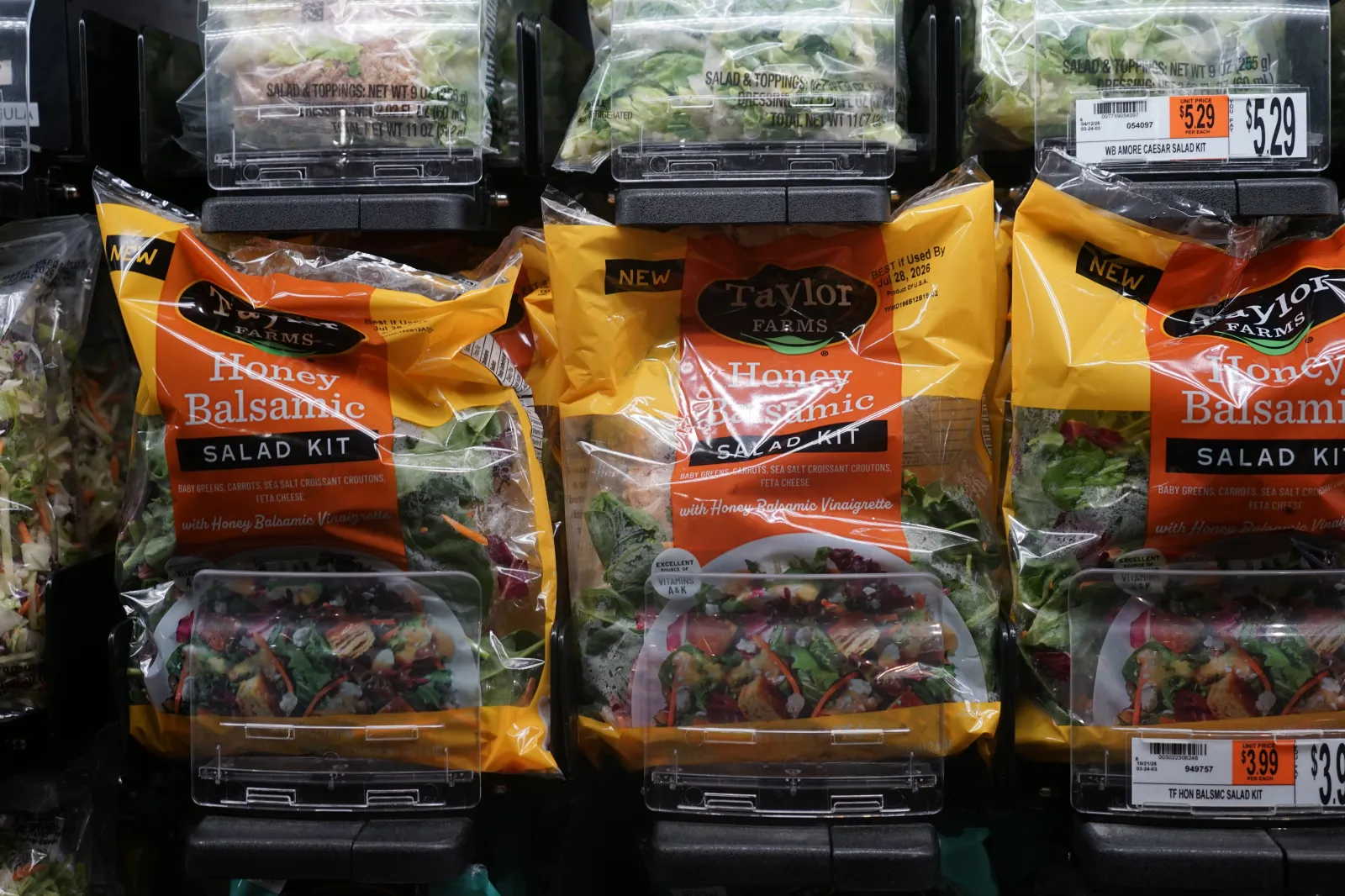
The FDA also recently said a sample of shredded iceberg lettuce supplied by Taylor Farms, which was not part of the recall, tested positive for the parasite. However, the agency later determined the result as a false positive. Taylor Farms issued a statement on Sunday that said, "We were informed that FDA made a mistake."
On Tuesday, Mexican Health Minister David Kershenobich said no evidence suggests lettuce sourced from Mexico caused the cyclosporiasis outbreak in the U.S.
"So far, no evidence has been found to indicate that it originated there," Kershenobich said during a regular government news conference, adding, "However, we are taking all precautions in case that were the case."
Contact Newsweek editors on this story: John Fitzpatrick and James Debens
View 0 Comments
Submit Correction
View Editorial & AI Guidelines