...

By Amanda Greenwood
Associate News Editor
0
Share
Newsweek is a Trust Project member
See more of our trusted coverage when you search.Prefer Newsweek on Googleto see more of our trusted coverage when you search.
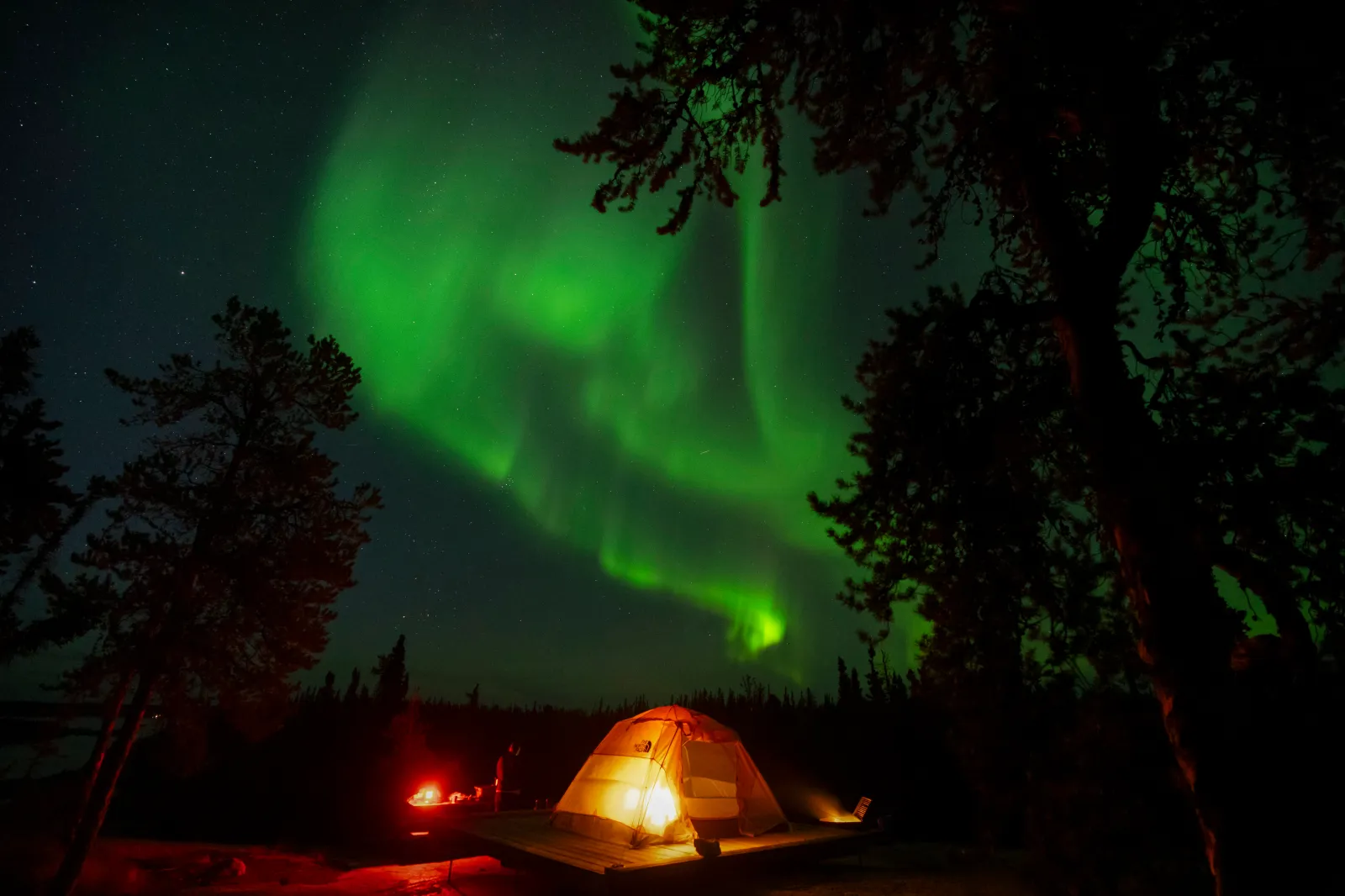
The peak of the rare, severe geomagnetic storm hit parts of the U.S. on Tuesday, November 11 at 8:20 p.m. ET, creating auroras as far south as Florida and prompting the National Oceanic and Atmospheric Administration (NOAA) to issue a G4 alert—the second-highest on its five-level scale.
Why It Matters
This is only the fourth G4 (severe) geomagnetic storm alert the NOAA has issued since the current solar cycle began in 2019. Storms like this can temporarily disrupt power grids, GPS navigation, radio signals, and satellite systems. However, it can also mean that Americans in states that rarely see the northern lights—like Alabama, Utah, and northern California—could see auroral displays, as the storm passes through.
Read More on News
...
What To Know
Geomagnetic storms occur when charged particles from the sun collide with Earth’s atmosphere, creating auroras—rippling green, red, and purple lights across the night sky. The storm followed days of intense solar activity, including an X5.1-class solar flare on November 11—a massive burst of energy that released radiation and charged particles. That flare likely triggered several coronal mass ejections (CMEs), powerful bursts of solar material and magnetic energy, that fueled the geomagnetic storm.
The NOAA reported auroras visible as far south as northeastern Colorado, with forecasts suggesting sightings in Alabama and northern California. The storm is expected to last until Thursday, November 13, dropping to G3 (Strong) levels, although some meteorologists believe there’s more to come, and the U.S. could see a G5-level storm in the coming days.
Forecasters have warned that the storm could disrupt communications, navigation, and other satellite-based technologies. It could also lead to voltage control issues, which may trigger localized, temporary power outages—but for most, the impact should be minimal.
Typical auroras are usually limited to polar regions, but the latest NOAA forecast shows they could be visible across more than 20 states—including parts of the Midwest and Northeast, and possibly as far south as Alabama and Northern California.
What People Are Saying
Noah Bergren, senior meteorologist at FOX 35 Orlando, posted on X: “Wow! Tonight's solar storm is producing quite the aurora and northern lights show across the United States. And this could be a teaser for a bigger episode Wednesday night that is not just more vibrant, but further south.”
Meteorologist Max Velocity said: “Tomorrow's Northern Lights could be even bigger than today. We think the biggest geomagnetic storm is still to come, and a G-5 storm cannot be ruled out.”
NOAA Space Weather Prediction Center posted: “G4 Levels Reached! Conditions met on 12 Nov at 0120 UTC. We anticipate continuing geomagnetic storm levels through the night to continue as long as conditions remain favorable (magnetic field of CME opposite Earth's). Stay aware at http://spaceweather.gov”
What Happens Next
The severe geomagnetic storm is expected to continue into the early hours of Thursday, November 13, before it begins to weaken. NOAA and meteorologists will continue monitoring the situation for any significant impacts to power grids, telecommunications, and satellite operations.
View 0 Comments
Submit Correction
View Editorial & AI Guidelines