
...

By Joshua Rhett Miller
Senior Reporter
0
Share
Newsweek is a Trust Project member
See more of our trusted coverage when you search.Prefer Newsweek on Googleto see more of our trusted coverage when you search.
A federal judge in Louisiana has temporarily blocked the usage of nitrogen gas in executions, ruling the new method could cause "pain and terror" to condemned inmates.
U.S. District Court Judge Shelly Dick issued a 29-page preliminary injunction Tuesday to stop state corrections officials from executing Jessie Hoffman Jr., 46, at Louisiana State Penitentiary in Angola on March 18.
"The court finds it substantially likely that Hoffman will be able to prove a duration of conscious suffering of 30 to 40 seconds," Dick wrote in the ruling. "Thus, the court concludes that Hoffman has clearly demonstrated that he is substantially likely to prevail in his assertion that nitrogen hypoxia superadds pain and terror as compared to firing squad."
Read More on U.S.
Attorneys for Hoffman, who was previously sentenced to death by lethal injection for the 1996 abduction, rape and murder of 28-year-old Mary "Molly" Elliott in New Orleans, filed a lawsuit last month seeking to block his execution, which would've been the first in Louisiana since 2010.
...
Hoffman's attorneys alleged nitrogen hypoxia equated to cruel and unusual punishment in violation the Eighth Amendment. The execution would also infringe on Hoffman's ability to practice his religion of Buddhism, including breathing and meditation exercises, his lawyers argued. The ruling marked the first time an execution using nitrogen gas had been successfully challenged in federal court on constitutional grounds.
"We are grateful that the district court carefully considered all of the evidence presented and recognized the significant risks to Jessie Hoffman's constitutional rights posed by Louisiana's new and untested lethal gas execution method," Hoffman's attorney, Cecelia Kappel, told Newsweek in a statement.
Dick's ruling "gives everyone a chance to have a full trial on the merits" before Hoffman is executed, Kappel said.
"We look forward to the opportunity to continue presenting the court with evidence proving that this method risks inflicting torture on Jessie at the time of his death," Kappel added.
Louisiana Attorney General Liz Murrill said in a statement late Tuesday she disagreed with Dick's ruling and would immediately appeal.
Hoffman, who appeared in federal court in Baton Rouge on Friday, did not challenge his conviction or death sentence, Dick acknowledged in her ruling.
"The court is asked to make this important decision on an undeveloped record after an expedited preliminary injunction hearing," the judge wrote. "Hoffman is going to be executed. It's not a question of if; it's merely a question of how, and the alternatives are quickly narrowing."
Louisiana has "no readily available" electric chair and cannot acquire the drugs necessary for lethal injection, with the only viable alternatives as nitrogen hypoxia or firing squad, Dick wrote.
"The state's desire for swiftness does not prevail over well-informed deliberation," she added.
Hoffman sought to be executed by firing squad or a drug cocktail, but Louisiana Department of Public Safety and Corrections Secretary Gary Westcott chose nitrogen hypoxia as his method of execution rather than lethal injection, as per Hoffman's 1998 death sentence.
Nitrogen hypoxia — the deprivation of oxygen through the inhalation of nitrogen — was added as a method of execution by the Louisiana legislature in February 2024. Condemned inmates in the state can choose between lethal injection, electrocution or nitrogen gas.
Louisiana is just one of four states that authorizes execution by nitrogen hypoxia, a method first developed in 2014 by four criminal law professors at Oklahoma's East Central University, Dick wrote in her ruling.
"Louisiana has never executed or attempted to execute a condemned inmate by nitrogen gassing, nor has the federal government," she wrote.
Alabama is the lone state to have utilized nitrogen gas in executions, forcing four condemned men to inhale pure nitrogen, displacing the oxygen in their lungs.
"Eyewitness accounts from these executions are the most probative evidence of what death by forced inhalation of nitrogen looks like," Dick wrote. "The accounts of all four Alabama executions describe suffering, including conscious terror for several minutes, shaking, gasping, and other evidence of distress."
Some witnesses to nitrogen hypoxia executions have reported "violent writhing of the entire body," vigorous convulsing lasting up to four minutes, repeated gasping while conscious, heaving and spitting, as well as two minutes of "shaking and trembling," followed by roughly six minutes of "periodic gulping breaths" before death, Dick noted.
The judge also admonished state officials for refusing to make the new nitrogen hypoxia protocol publicly available.
"The state relented to releasing a redacted protocol to the public until the day before the preliminary injunction hearing," Dick added. "The redacted protocol easily meets the definition of a public record under Louisiana law, yet the state shrouded the redacted protocol in secrecy until the day before the hearing. The public has an interest in knowing how its government operates."
The Rev. Jeff Hood, a priest and spiritual adviser for condemned inmates, has witnessed nine executions, including the execution of Kenneth Smith in Alabama in January 2024 that marked the first time nitrogen gas was used in capital punishment.
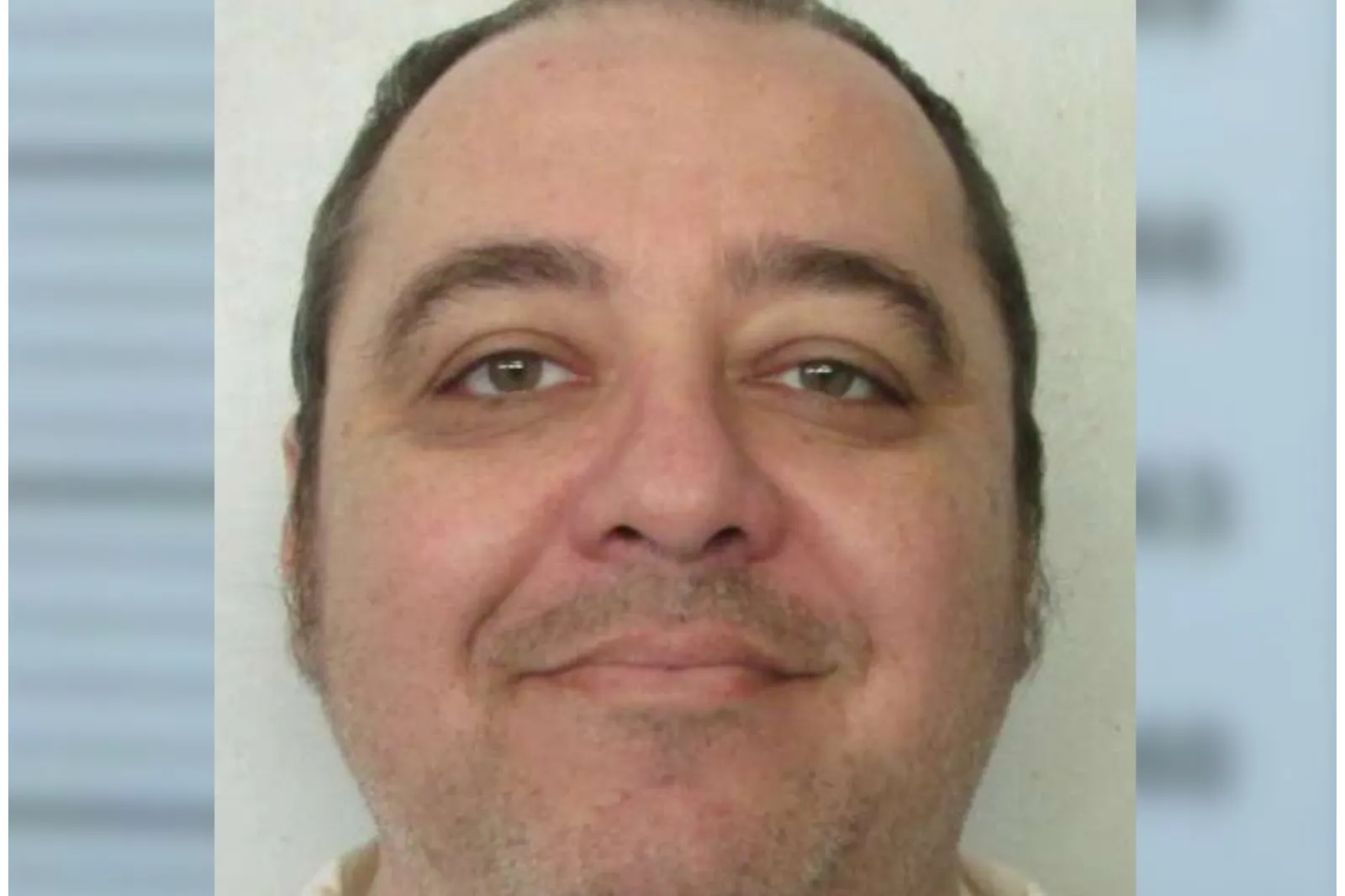
...
Hood characterized Smith's execution as "horrific" to witness, adding the nitrogen caused him to immediately tense up, violently pull on his restraints and struggle for nearly eight minutes.
"What I saw in Alabama is akin to the worst execution method humanity has ever devised," Hood said Tuesday. "To say that it was horrific is an understatement."
Hood applauded Dick's ruling, saying it "restored a small measure of decency" throughout Louisiana.
"Lucifer himself could conceive of few more evil ways to execute someone than nitrogen hypoxia," Hood told Newsweek. "Indeed, Judge Dick has heard and believed the cries of those of us who've actually witnessed a nitrogen hypoxia execution. Now, let there be no doubt, nitrogen hypoxia is one of the cruelest and most unusual forms of punishment to ever exist."
A message seeking comment from Louisiana Gov. Jeff Landry was not returned Tuesday.
Landry announced last month that corrections officials had finalized an updated protocol allowing for death sentences in the state to resume.
"For too long, Louisiana has failed to uphold the promises made to victims of our state's most violent crimes; but that failure of leadership by previous administrations is over," Landry said on February 10. "The time for broken promises has ended; we will carry out these sentences and justice will be dispensed."
View 0 Comments
Submit Correction
View Editorial & AI Guidelines