CDC

By Ian Randall
Deputy Science Editor
0
Share
Newsweek is a Trust Project member
See more of our trusted coverage when you search.Prefer Newsweek on Googleto see more of our trusted coverage when you search.
The present outbreak of the Nipah virus infection in West Bengal, India, is the latest of a series of flare-ups of the frequently fatal, fruit-bat–spread zoonotic disease.
Nipah (Henipavirus nipahense) typically causes febrile, flu-like symptoms. There is no specific treatment for the infection, nor is there a vaccine against the disease.
“The first recognized human infection was in the Malaysian village of Kampung Sungai Nipah in 1998, initiating a deadly outbreak that lasted through 1999,” explained infectious disease physician Dr. Naomi Hauser and colleagues in a 2021 study of the disease.
Read More on World
“Smaller sporadic outbreaks have since recurred nearly annually within South Asia with case fatality rates reaching greater than 90 percent.”
The current outbreak—which emerged in a private hospital in the city of Basarat—has resulted in five confirmed infections and nearly 100 people placed under quarantine.
...
The first known human outbreak of Nipah virus started after the disease made the jump from infected pigs to their farmers.
The virus was detected in three Malaysian states—Negeri Sembilan, Perak and Selangor—where it led to 265 cases of "acute encephalitis," a swelling of the brain which can develop as a serious complication of the infection.
Encephalitis can result in additional symptoms including confusion, drowsiness and seizures, with patients often falling into a coma within 24–48 hours.
During the 1998–1999 outbreak, 105 deaths were recorded in Malaysia. An additional 11 cases and one death were reported from Singapore, as a result of abattoir workers handling imported pigs that carried the infection with them.
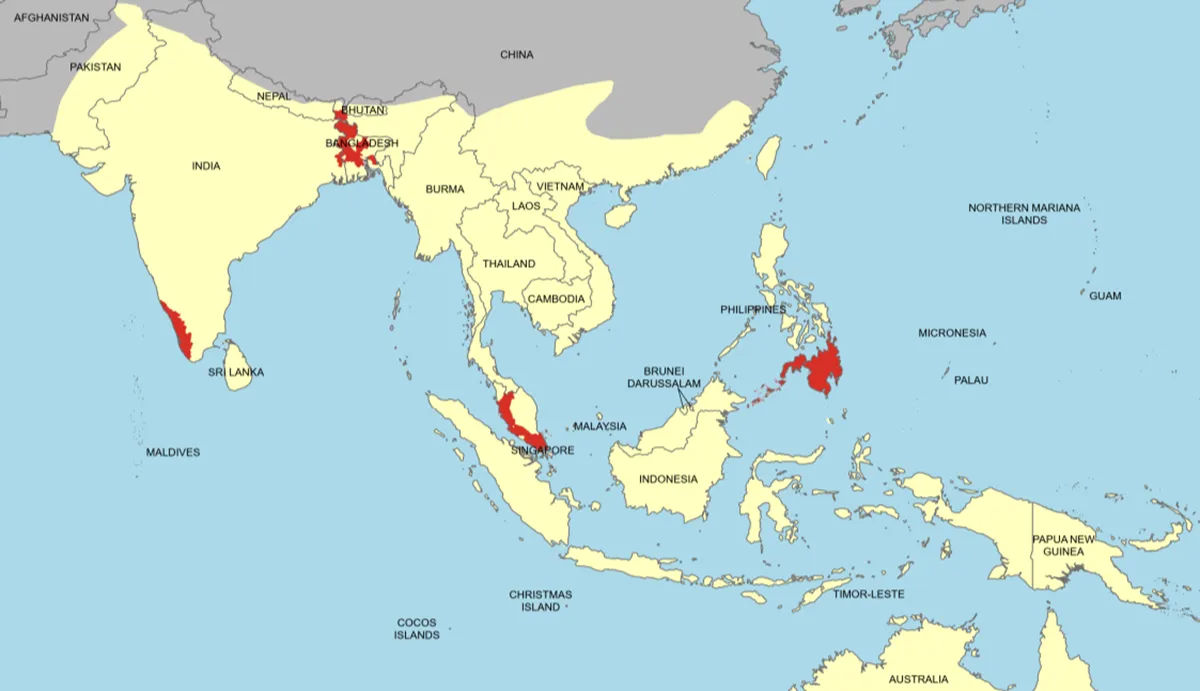
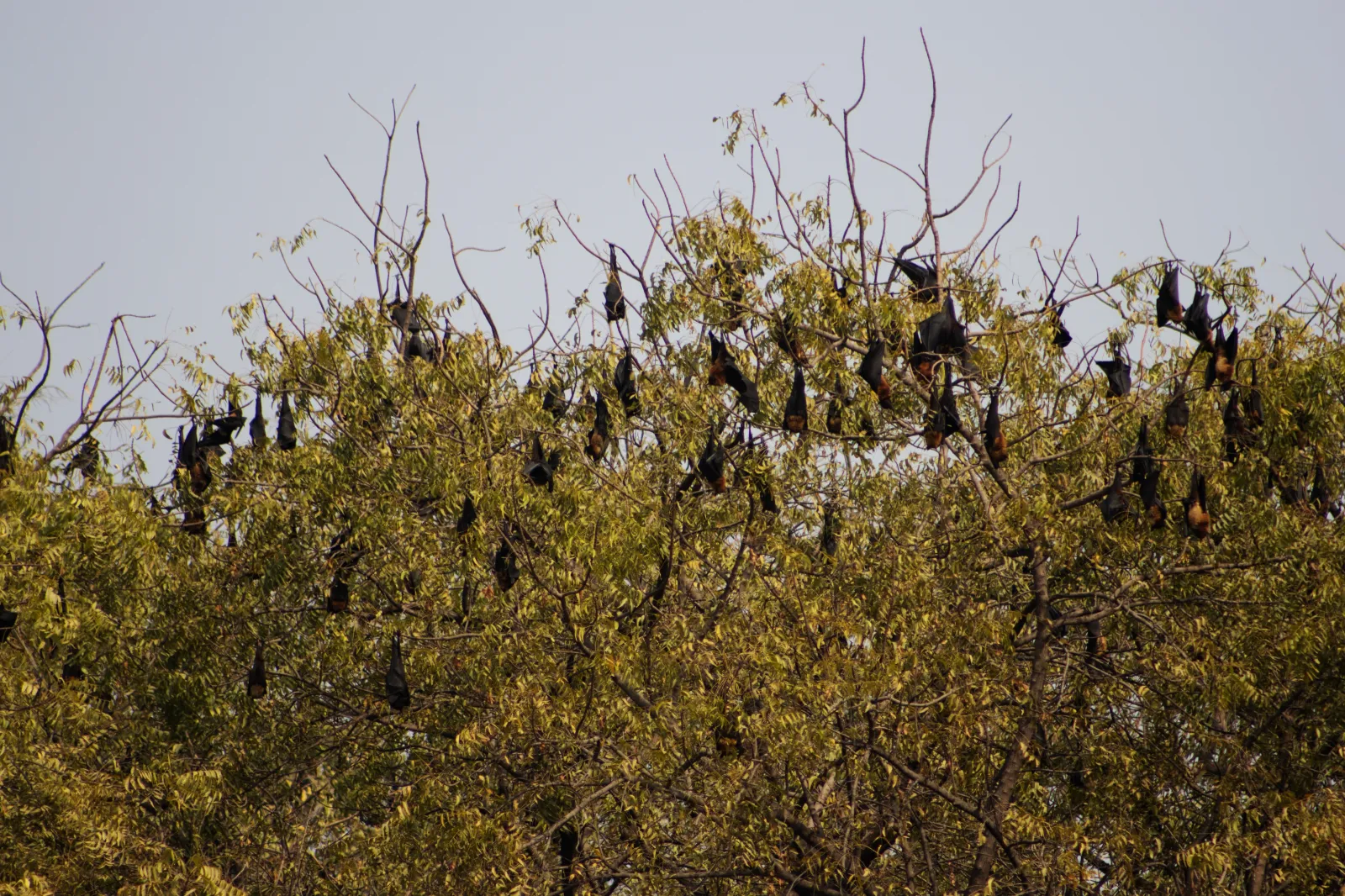
Since then, there have been more than a dozen further outbreaks in parts of Bangladesh, India and the Philippines—the so-called "Nipah Belt"—all locations within the range of the Pteropus genus of megabats that are known to serve as a reservoir of the virus.
...
Bangladesh has been most frequently hit by Nipah virus outbreaks, with 18 recorded since the first back in 2001. In total, there have been 347 recorded cases and 249 fatalities.
Most outbreaks have been recorded during winter. It is believed that this seasonality is connected to the harvesting of date palm sap—a sweet, cloudy and nutrient-rich liquid—between October and April.
Infected bats are known to contaminate sap by licking shaved areas of trees; by defecating or urinating in collection pots; and even by becoming trapped and dying in the pots.
India has seen more sporadic outbreaks—four in the same time period—with 106 recorded cases and 72 fatalities. The most deadly occurred in Kerala in 2018, with a case fatality rate of 91 percent.
According to Hauser and colleagues, the early outbreaks in Bangladesh and India in 2000–2001 saw the emergence of a distinct strain of Nipah virus infection, one characterized by acute severe respiratory symptoms.

...
The Philippines, meanwhile, saw a single outbreak of Nipah virus in two southern villages between March and April 2014, with 17 cases and nine deaths.
It is estimated that the case fatality rate among those who developed acute encephalitis as a result of the infection may have been as high as 82 percent.
Alongside instances of human–human transmission, medical experts also noted the first association of the infection with the slaughter of horses and consumption of horse meat.
Illness and fatalities were also observed in the horses, as well as other domestic animals that had consumed horse meat around the time of the outbreak.
There has never been a reported case of Nipah virus infection in North America; the high fatality rate of the infection and its limited ability to spread directly between humans means that it has a much lower transmissibility than other viruses like, for example, SARS-CoV-2.
Do you have a tip on a health story that Newsweek should be covering? Do you have a question about Nipah virus? Let us know via health@newsweek.com.
References
Hauser, N., Gushiken, A. C., Narayanan, S., Kottilil, S., & Chua, J. V. (2021). Evolution of Nipah Virus Infection: Past, Present, and Future Considerations. Tropical Medicine and Infectious Disease, 6(1), 24. https://doi.org/10.3390/tropicalmed6010024
McKee, C. D., Islam, A., Luby, S. P., Salje, H., Hudson, P. J., Plowright, R. K., & Gurley, E. S. (2021). The Ecology of Nipah Virus in Bangladesh: A Nexus of Land-Use Change and Opportunistic Feeding Behavior in Bats. Viruses, 13(2), 169. https://doi.org/10.3390/v13020169
View 0 Comments
Submit Correction
View Editorial & AI Guidelines