...

By Jess Thomson
Science Reporter
0
Share
Newsweek is a Trust Project member
See more of our trusted coverage when you search.Prefer Newsweek on Googleto see more of our trusted coverage when you search.
A group of armadillos originally thought to be a single species may actually be four separate species, research has found.
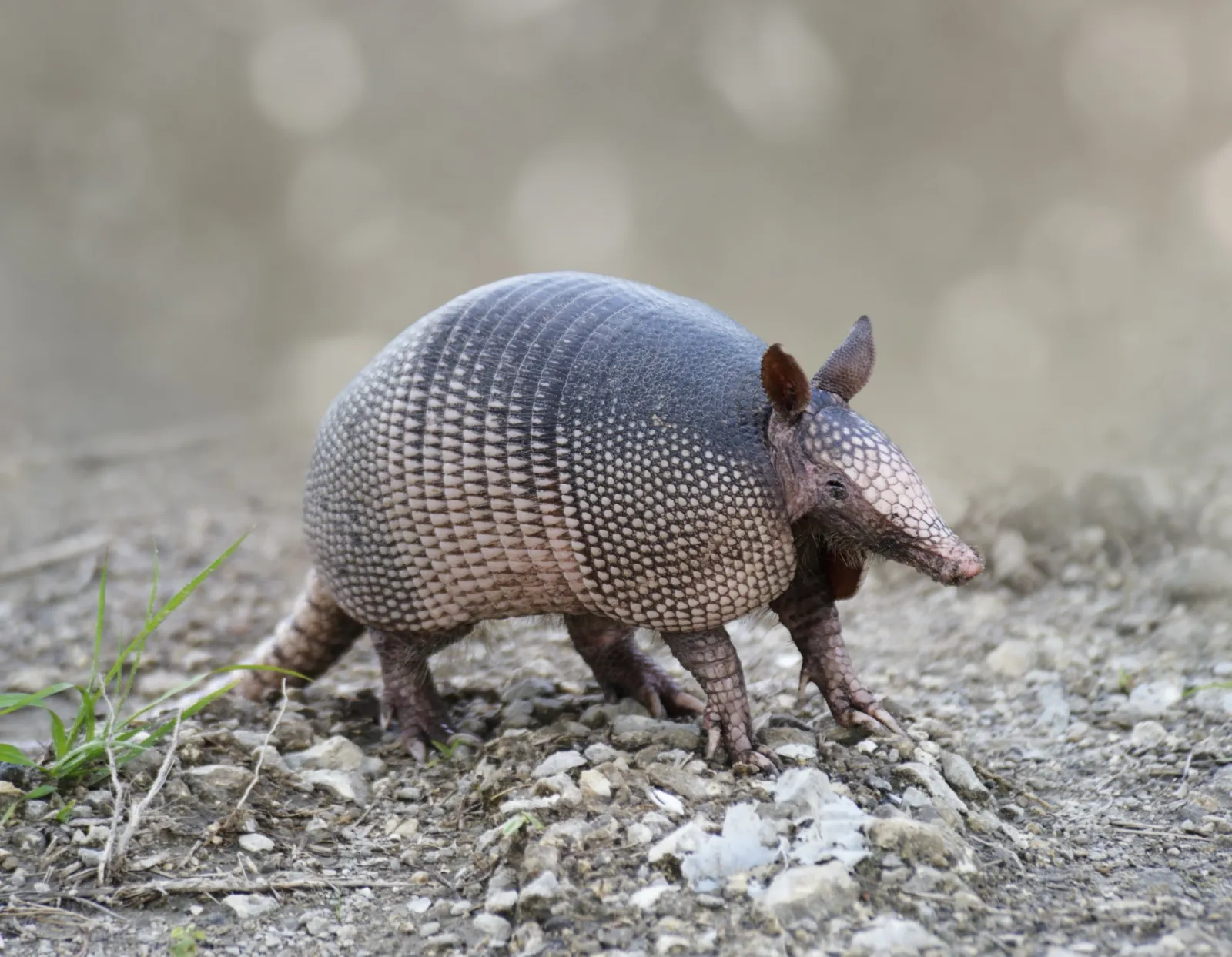
The nine-banded armadillo, the official state small mammal of Texas, may in fact be made up of four distinct species, one of which is new to science, according to a new paper in the journal Systematic Biology.
This marks the first new species of armadillo discovered in the past 30 years and means that the armadillo species found in the U.S. has a new name.
Read More
World’s Worst Water Pollution Revealed in Map4 min read

‘Concerning’ Bird Flu Study Finds Surfaces Contaminated for a Long Time3 min read

Archaeologists Find ‘Exciting’ Colonial Artifact From Michigan Fort4 min read

...
Armadillos are small mammals with distinctive armor-like shells made of bony plates and covered in leathery skin, providing protection from predators. The nine-banded armadillo—Dasypus novemcinctus—was thought to be found between the central U.S. and Argentina, having expanded its range from South America into Central America and the U.S., as far north as Illinois and Nebraska.
Using DNA and museum samples, researchers have uncovered that what was considered a single species made up of different subspecies is actually four very similar but genetically distinct species of armadillo.
"It was widely accepted that the nine-banded armadillo, Dasypus novemcinctus, ranges from northern Argentina all the way to southern Illinois, but in recent years, some scientists have been putting forth evidence that this is actually a complex of multiple different species," study co-author Frédéric Delsuc, a research director at the National Center for Scientific Research (CNRS) in France, said in a statement.
"By studying the DNA of armadillos from all along this range, we put together a very detailed genomic analysis that makes us very confident that they are actually four species."
The armadillo that is found in the U.S., including Texas, is now promoted from the subspecies Dasypus novemcinctus mexicanus to a species in its own right, Dasypus mexicanus, or the the Mexican long-nosed armadillo.
The new species—found in a region of northeastern South America known as the Guiana Shield—wasn't any type of subspecies before and is now the newest species of armadillo, named the Guianan long-nosed armadillo, or Dasypus guianensis.
"With the new classification, the armadillo that's found in the United States should now be called the Mexican long-nosed armadillo," co-author Anderson Feijó, assistant curator of mammals at the Field Museum in Chicago's Negaunee Integrative Research Center, said in the statement. "The new species, the Guianan long-nosed armadillo, is the first armadillo described in the last 30 years."
All four of the species look incredibly similar to each other, hence why scientists hadn't yet figured out they were separate genetically.
"They're almost impossible to differentiate in the field," Delsuc said.
The discovery was made thanks to DNA analysis and an in-depth investigation of the physical traits of the armadillos across their range.

...
"Museums were crucial to the study," Feijó said. "Most of the specimens were collected before all these DNA molecular techniques were available. So in addition to museum collections being valuable to the research being done at the time a specimen is collected, it can be used in the future for things we can't even predict."
The knowledge that there are four separate species may help researchers in conservation efforts.
"Now that we know there are four distinct species, we might also expect they have their own ecological requirements that might not be the same," Feijó said. "Sometimes, biologists bring individuals from one area to another to repopulate. Since they're different species, with potentially different needs, they will not be able to integrate.
"This discovery totally shifts the way we think about conservation for these species and the way we think about how threatened they are."
Do you have a tip on a science story that Newsweek should be covering? Do you have a question about armadillos? Let us know via science@newsweek.com.
View 0 Comments
Submit Correction
View Editorial & AI Guidelines