...

By Maria Azzurra Volpe
Reporter
0
Share
Newsweek is a Trust Project member
See more of our trusted coverage when you search.Prefer Newsweek on Googleto see more of our trusted coverage when you search.
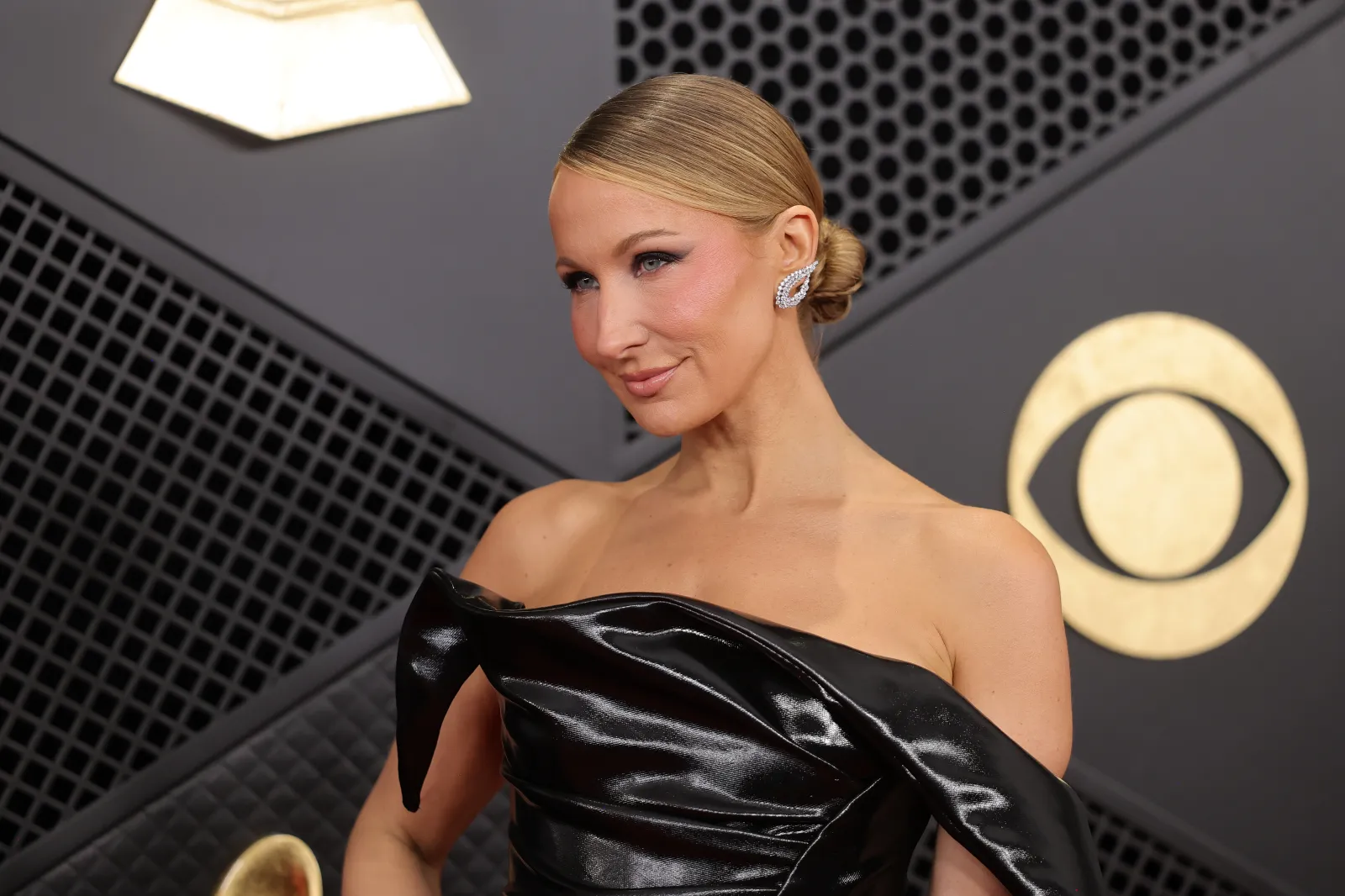
Comedian Nikki Glaser has sparked debate after opening up about her relationship on a recent episode of Call Her Daddy.
During the podcast, she explained that while she prefers monogamy for herself, she is comfortable with her partner of 13 years having sexual experiences with other women and even encourages it.
“In a relationship I don't really care if my boyfriend were to hookup, but that is not a two way street. Like, I’m not someone who likes to hookup when I’m in a relationship, I don't really care about that, but I don't care if someone else were to. In fact, I kind of like it,” said Glaser speaking to Alex Cooper.
Read More on Relationships
She then went on to explain her beliefs that the chance of finding the best person out of 8 billion people on the planet are very slim, and that if her boyfriend were to find a woman he shares a better connection with, she would tell him to go for it.
“I would always ask anyone I was with, if you develop feelings for someone else tell me and well deal with it, like I just dot want to be blindsided. If you want to have sex with someone else also tell me about it [because] I want to like see what she looks like and ask you about it,” she said.
“Sometimes I'm too busy to be really sexy so I'm like get out and get some attention.”
Newsweek reached out to Nikki Glaser for comment.
The revelation has reignited conversations around modern relationship structures, particularly one-sided open relationships, with experts weighing in on how and why these dynamics can work—or unravel.
Counselor and psychotherapist Georgina Sturmer explains this setup fits within consensual non-monogamy, a broad term used when both partners agree it is acceptable to have additional partners.
...
She told Newsweek that every couple defines this differently, but what stands out here is the asymmetry. While one partner is sexually open, the other opts out of outside connections, particularly emotional intimacy.
According to Sturmer, the long-term health of any one-sided open relationship depends on continuous emotional honesty.
From the outside, such dynamics can appear unbalanced, but sustainability comes down to whether both people continue to feel psychologically safe. She stresses that agreements made early on are not fixed and may need to be revisited as circumstances and feelings shift.
Sturmer also points to attachment styles as a possible factor. For some individuals, encouraging a partner to seek sex elsewhere may reduce pressure to maintain constant emotional closeness.
She adds that openness does not always signal avoidance or insecurity. In some cases, the ability to discuss needs openly can indicate a strong sense of trust. However, the key risk is consent that is not fully authentic, particularly when one partner suppresses their own needs to please the other. For this reason, she says, consent must be ongoing, not a one-time conversation.
Dating and relationship coach Kate Mansfield focuses on the structure of the arrangement itself. She classifies it as a “mono-poly” or one-sided open relationship, where one person remains monogamous by choice.
While she acknowledges these setups can function, she told Newsweek that they require an unusually high level of self-awareness and communication. In her view, they work best only when the monogamous partner feels genuinely secure and not motivated by fear of loss.
Mansfield raises concerns about emotional unpredictability. Even when clear rules exist, such as avoiding emotional intimacy, feelings can develop despite intentions.
She also highlights the risk of resentment if time, affection, or attention become imbalanced, warning that boundaries around emotions, health, and time are difficult to enforce consistently.
Sex and relationship expert Annabelle Knight emphasizes the importance of authentic consent and emotional alignment.
She told Newsweek that one-sided openness can be healthy only if both partners feel fully comfortable and fulfilled. Problems arise when agreements are made to avoid conflict or out of fear, leading to unspoken resentment and power imbalances.
Knight adds that motivations can include compersion, emotional exclusivity, or a desire for control and predictability. However, she warns that emotional drift is common and recommends regular check-ins and a willingness to renegotiate boundaries.
Ultimately, she says, the healthiest relationships are consciously chosen, not passively accepted, and allow both partners to express evolving needs without fear.
View 0 Comments
Submit Correction
View Editorial & AI Guidelines