
...
By Joshua Rhett Miller
Senior Reporter
0
Share
Newsweek is a Trust Project member
See more of our trusted coverage when you search.Prefer Newsweek on Googleto see more of our trusted coverage when you search.
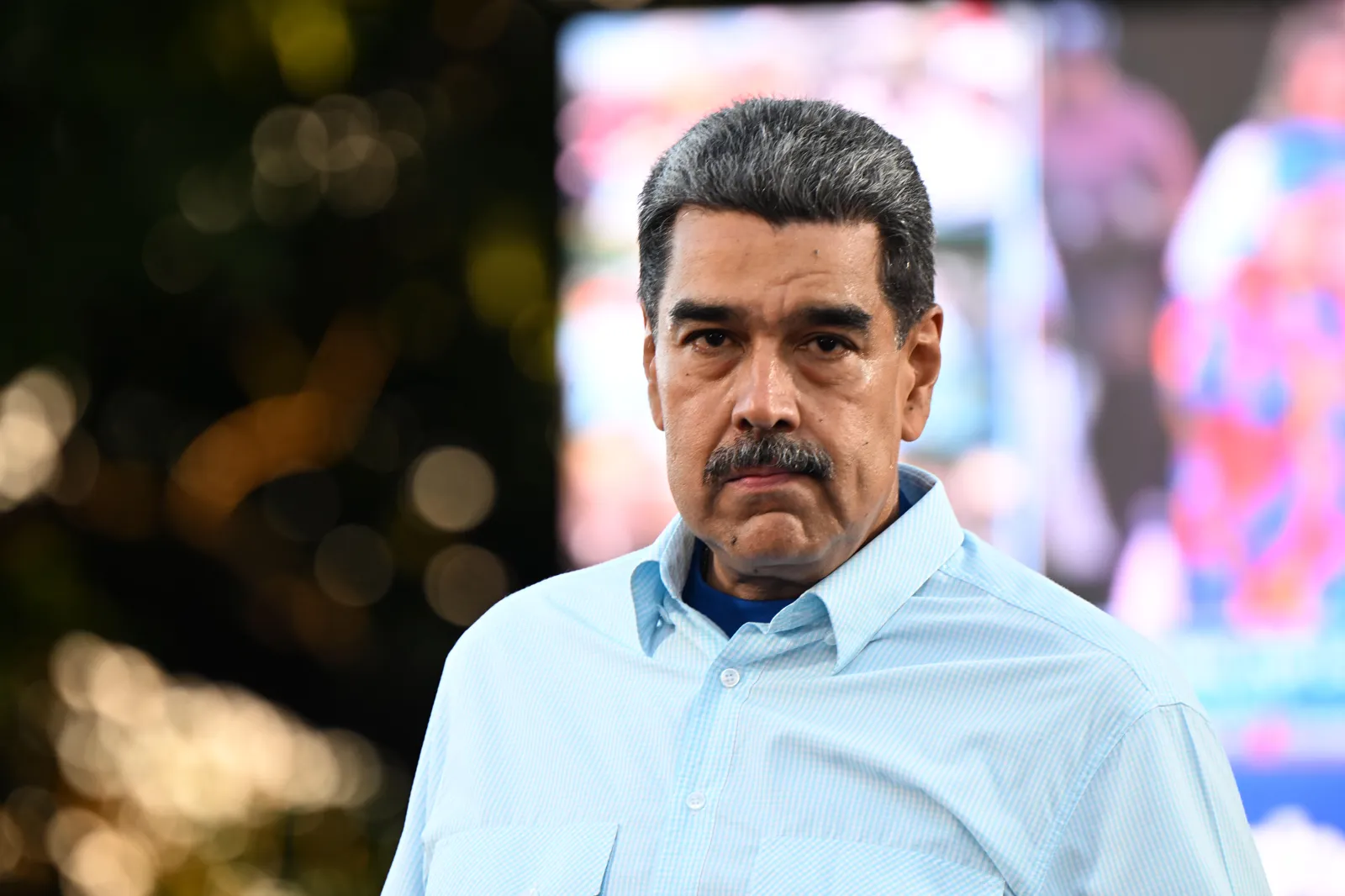
Nicolás Maduro returned to court Thursday in New York, where an attorney for the former Venezuelan president insisted his constitutional rights are being violated as he fights drug trafficking accusations.
Maduro, 63, appeared alongside his wife Cilia Flores before U.S. District Judge Alvin Hellerstein in Manhattan, marking their first court appearance since they were captured by U.S. military forces during an operation in early January. Maduro followed the proceedings while sitting between his attorneys and glanced at his wife, who sat nearby with her own lawyers. They both wore jail uniforms and donned headphones to listen to interpreters.
Federal prosecutors allege in a 25-page indictment that Maduro and others, including Flores, conspired with drug cartels to transport "thousands of tons" of cocaine into the United States between 1999 and 2025. But Maduro's attorney, Barry Pollack, claims the United States is violating the ousted leader's constitutional rights by barring Venezuelan government funds from being used to pay his legal costs.
Read More on World
Pollack told Hellerstein during Thursday's hearing that defendants have a right to "not just competent counsel, but counsel of his choice, and the right to use untainted funds for that purpose," CNN reported.
Pollack said Maduro and Flores, 69, have testified that they cannot pay their legal fees on their own and that the Venezuelan government should be able to pay for it. Pollack also suggested that Maduro may need a court-appointed attorney if the Venezuelan government is blocked from paying his legal fees.

...
But Hellerstein said a defendant's right to counsel "does not necessarily mean counsel of choice, it also means appointed counsel," CNN reported.
"That is true in the case of someone who does not have untainted funds available to them," Pollack replied. "But, conversely, it is not true of someone who does have untainted funds available to them."
Prosecutor Kyle Wirshba countered that Maduro can use his own funds for his legal defense, citing the U.S. government's ability to impose sanctions to advance national security and foreign policy interests.
Hellerstein then asked why that argument still holds, since U.S.-Venezuelan relations have somewhat warmed, prompting Wirshba to insist that "simply because there are relations with another government" doesn’t mean Washington cannot maintain its sanctions.
“If the purpose of the sanctions is because the defendants are plundering the wealth of Venezuela, it would undermine the sanctions to allow them access the same funds now to pay for their defense,” Wirshba told Hellerstein.

...
Wirshba also accused Maduro and his wife of "plundering the wealth of Venezuela," CNN reported.
"It would undermine the sanctions to allow them to access those funds now," he said.
Hellerstein didn't issue a ruling on Thursday, but indicated he would not dismiss the case.
Pollack said in a court filing last month that the U.S. Treasury Department's Office of Foreign Assets Control initially approved Maduro's plan to have the government pay for his defense, but then rescinded it hours later without explanation. Prosecutors later said the U.S. government had authorized Maduro and Flores to use personal funds, but not assets controlled by Venezuela.
Maduro vehemently denied the accusations during his initial court appearance in January as he declared himself the "constitutional president" of Venezuela despite his high-profile capture by U.S. military forces in Caracas on January 3.
"I am not guilty," Maduro told Hellerstein through an interpreter. "I am a decent man."
...
Maduro and Flores pleaded not guilty to four counts during the 30-minute proceeding in January: narco-terrorism conspiracy; cocaine importation conspiracy; possession of machine guns and destructive devices; and conspiracy to possess machine guns and destructive devices.
Prior to Thursday's hearing, demonstrators outside the courthouse waved Venezuelan flags and held signs saying, "Free President Maduro." Others shouted "no boots on the ground" while denouncing U.S. military actions overseas or held inflatable dolls depicting the deposed leader in an orange prison jumpsuit.
Some ruling party supporters, state employees and civilian militia members also gathered at a public plaza in Caracas, Venezuela, ahead of the hearing to support Maduro.
"We are going to see him today," ruling party leader Carmen Melendez told the crowd. "We may see him skinnier...But that’s our president."
U.S. President Donald Trump, meanwhile, accused Maduro of being a "major purveyor of drugs coming into our country" during his Cabinet meeting on Thursday, adding that he would receive a fair trial.
"But I would imagine there are other trials coming," Trump said without providing additional details. He suggested the allegations against Maduro could be a "fraction of the kind of things that he's done."
The Associated Press contributed to this report.
In a polarized era, the center is dismissed as bland. At Newsweek, ours is different: The Courageous Center—it's not "both sides," it's sharp, challenging and alive with ideas. We follow facts, not factions. If that sounds like the kind of journalism you want to see thrive, we need you.
When you become a Newsweek Member, you support a mission to keep the center strong and vibrant. Members enjoy: Ad-free browsing, exclusive content and editor conversations. Help keep the center courageous. Join today.


View 0 Comments
Submit Correction
View Editorial & AI Guidelines