...

By John Feng
China Editor
0
Share
Newsweek is a Trust Project member
See more of our trusted coverage when you search.Prefer Newsweek on Googleto see more of our trusted coverage when you search.
Elon Musk’s X has shut down a suspected Chinese “bot farm” seeking to deepen divisions in the United States surrounding the cost of the AI boom to ordinary households. The “influence” operation fed off American public angst over AI infrastructure, especially data centers—and the next U.S. target is likely already in the sights of China's propaganda army.
Hundreds of fake accounts—some using AI-generated imagery that suggested data center operators were exploiting the public—were “posting in a manner that could manipulate a legitimate debate about American AI and energy policy,” X said.
Musk’s social media platform, which has leaned heavily into AI through its chatbot Grok, is the latest U.S. tech company to discover this pattern, and the latest to fight a two-front narrative war against the U.S. public and now China.
Read More on World
China is in a race with the U.S. to dominate the AI era, from the diffusion of its own AI models worldwide to setting the standards for AI governance. Beijing has never been in a stronger position to lead, and a low-cost propaganda campaign on X is only one small sign that it’s apparently willing to do whatever it takes to win.
Trying to slow the expansion of America's data centers is one way China is working to get ahead. Its next target may be the American power grid on which those data centers—and AI firms—so heavily rely.
What’s the Debate?
In the U.S., AI is already a major economic driver and the main attraction for private capital investment.
The debate over America’s AI buildout centers on the critical hardware they house for the industry—powerful computer chips, dense memory drives and high-speed fiber-optic networks.
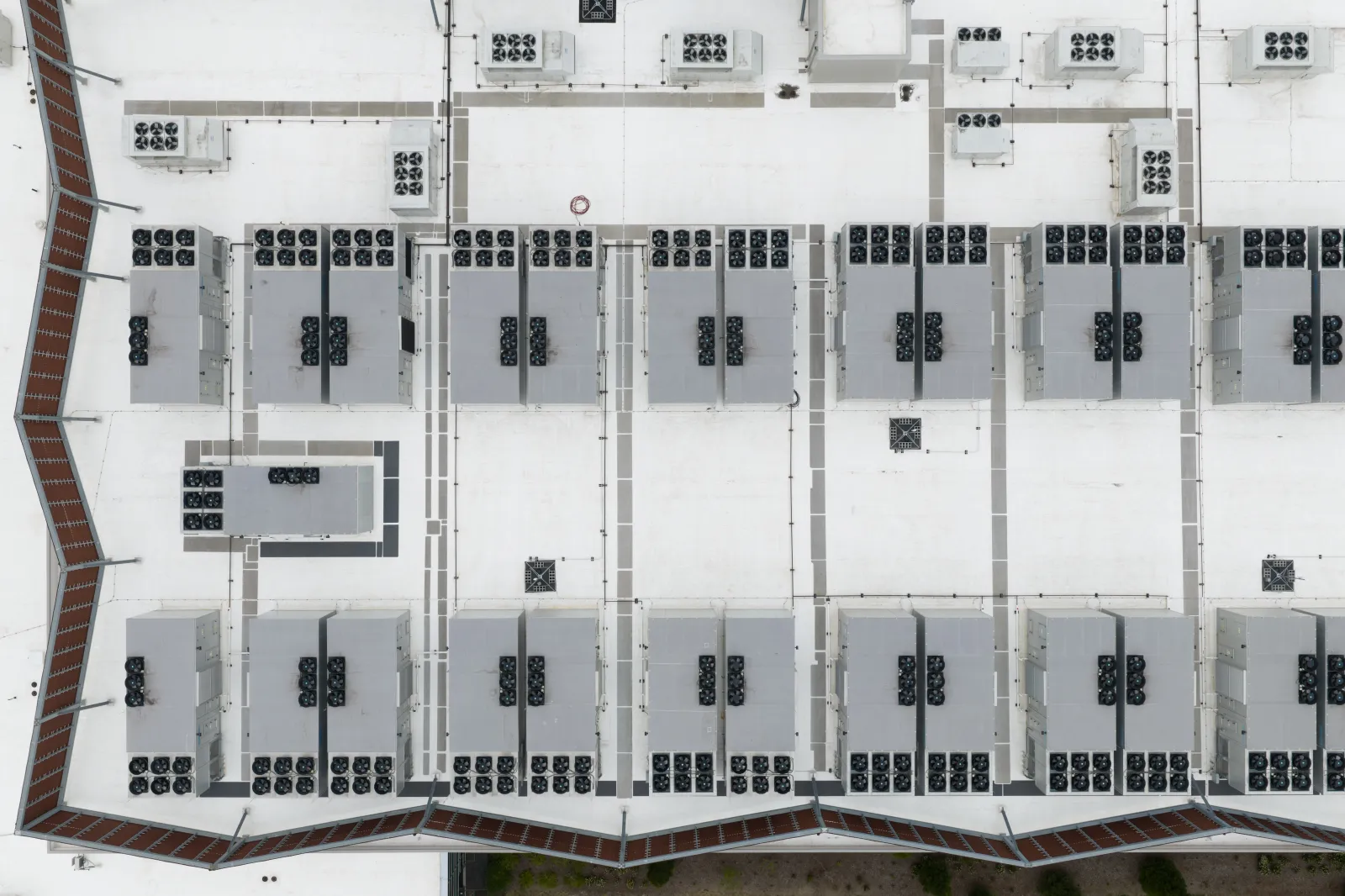
The massive complexes are a significant drain on local power grids and require around-the-clock cooling, typically with industrial-scale fans or with evaporative water towers.
Both are resource intensive and have led to concerns that they will drive up energy bills for local households. Some states have begun taking action to limit the proliferation of data centers or mitigate their impact on local areas.
The White House has championed the expansion of data centers but also acknowledged concerns about energy bills for ordinary Americans with its "Ratepayer Protection Pledge" in March to ensure tech firms pay "the full cost of their energy and infrastructure, no matter what."
Under that pledge, companies "agree to protect American consumers from price hikes due to data center energy and infrastructure requirements, and lower electricity costs for consumers in the long term."

...
U.S. states that back data centers believe the tax revenues could fund public goods, and that the private sector could help upgrade aging utilities, including the infrastructure needed for energy generation.
Environmental groups are concerned that data centers will occupy hundreds of acres of land previously reserved for agriculture, residential purposes, or protected areas.
The disagreement is happening in plain sight—on the internet, on television screens and in newspapers. China is watching and its propaganda army is capitalizing on it to hobble its main rival, according to X.
The China-linked bot farm, which comprised 200,000 active and backup accounts, posted “claims that AI data centers are driving up household electricity prices and straining the grid,” X said.
Beijing and other U.S. adversaries know that in a democracy, the ordinary voter has power to sway domestic and foreign policy, and that by influencing them, they may be able to achieve desired outcomes.
China Is in It To Win It
Artificial intelligence is at the center of the next industrial revolution. China’s leaders have named it a key frontier technology, signaling its readiness to devote more resources, including generous state subsidies, toward its most successful players.
China isn’t arguing about data centers; it needs AI to reignite its stagnant economy. Its homegrown AI players matter because their success—and only if it’s global—could fundamentally alter its core growth engine for the rest of the century.
Its data centers are built in the vast and sparsely populated western provinces, away from the crowded east coast hubs where its AI talent is raised. Its people have little say in how the central governments decides to repurpose land.
In the competition to expand AI infrastructure, China has another big advantage over America: it has gone all in on wind and solar for its tech industry, while coal-fire plants supply power to other traditional sectors.
That goes some way toward avoiding the environmental debate happening in the U.S., where adoption of renewable energy has been slower.
In April, a Stanford University report found the U.S. had the most data centers anywhere in the world—5,427—more than 10 times any other country, “and consuming more energy than any other region.”
Germany was next on the list with 529, ahead of the U.K. with 523, and China with 449, according to the report.

...
Although the Stanford authors said their data center counts didn’t capture differences in facility size, computing capacity, or utilization, the numbers showed that the U.S. was still ahead in the AI buildout.
But as the power-hungry industry consumes more power and America looks to generate more, expect China to do everything it can to slow the U.S. advance.
The U.S. is already waking up to the possibility that China might try whatever tactic—low or high cost—to overtake the U.S. lead in emerging technologies like AI, chiefly for the sake of its own economic security.
In recent years, U.S. officials have warned that Chinese hackers have sought to preposition malware in critical infrastructure linked to communications, energy and water. The plan, they said, is to disrupt an effective U.S. response during a crisis.
The Iranian cyberattack that shut a British power plant for four days was one example of such a threat.
This week, President Donald Trump signed an executive order to ban foreign-made components from the U.S. power grid, in light of “the unusual and extraordinary foreign threat” posed to U.S. energy generation.
The White House’s statement did not name China, or any other adversary, but said AI was among the reasons that America’s energy demand was rising.
“Certain foreign actors are increasingly creating and exploiting vulnerabilities in the United States bulk-power system, which provides the electricity that supports our national defense, vital emergency services, critical infrastructure, and the economy,” it said.
View 0 Comments
Submit Correction
View Editorial & AI Guidelines