...

By Marni Rose McFall
0
Share
Newsweek is a Trust Project member
See more of our trusted coverage when you search.Prefer Newsweek on Googleto see more of our trusted coverage when you search.
A new pyramid-shaped warning symbol is starting to appear on some restaurant menus in New York City, the first city in the country to require chain restaurants to place a warning label on food or drink items containing more than 50 grams of added sugar.
Why It Matters
According to a 2024 study from the market research company Talker Research, the average American far exceeds recommended intake levels when it comes to their daily sugar consumption. The survey analyzed the habits of 2,000 Americans and found the average individual ingests 99 grams of sugar each day.
Read More on News
The Food and Drug Administration (FDA) recommends that added sugars do not exceed 10 percent of one’s total daily calories, which, for a 2,000-calorie diet, amounts to 48 grams of sugar.
Obesity is a problem that impacts millions of Americans, bringing with it higher risks of developing health problems like Type 2 diabetes and heart disease. The latest data from the Centers for Disease Control and Prevention (CDC) found that 40.3 percent of U.S. adults were obese between August 2021 and August 2023, with higher rates reported among those aged 40 to 59.
...
What To Know
According to a statement from the New York City Department of Health shared with Newsweek, “New York City chain restaurants must now post an icon on their menus next to any prepackaged food or drink or non-packaged equivalent that contains 50 grams (g) or more of added sugars, the daily recommended limit for a 2,000 calorie diet.”

The rule will also require chain restaurants to “warn consumers of the health dangers associated with eating and drinking too many added sugars over time, such as an increased risk of type 2 diabetes, weight gain, and tooth decay.”
The law applies to approximately 4,000 restaurants in New York City that are part of chains with 15 or more locations nationwide.
This legislation was first passed in 2023 and applies to prepackaged food items that have a Nutrition Facts Label and equivalent non-packaged items.
So, what kinds of food items can you expect to see these labels on?
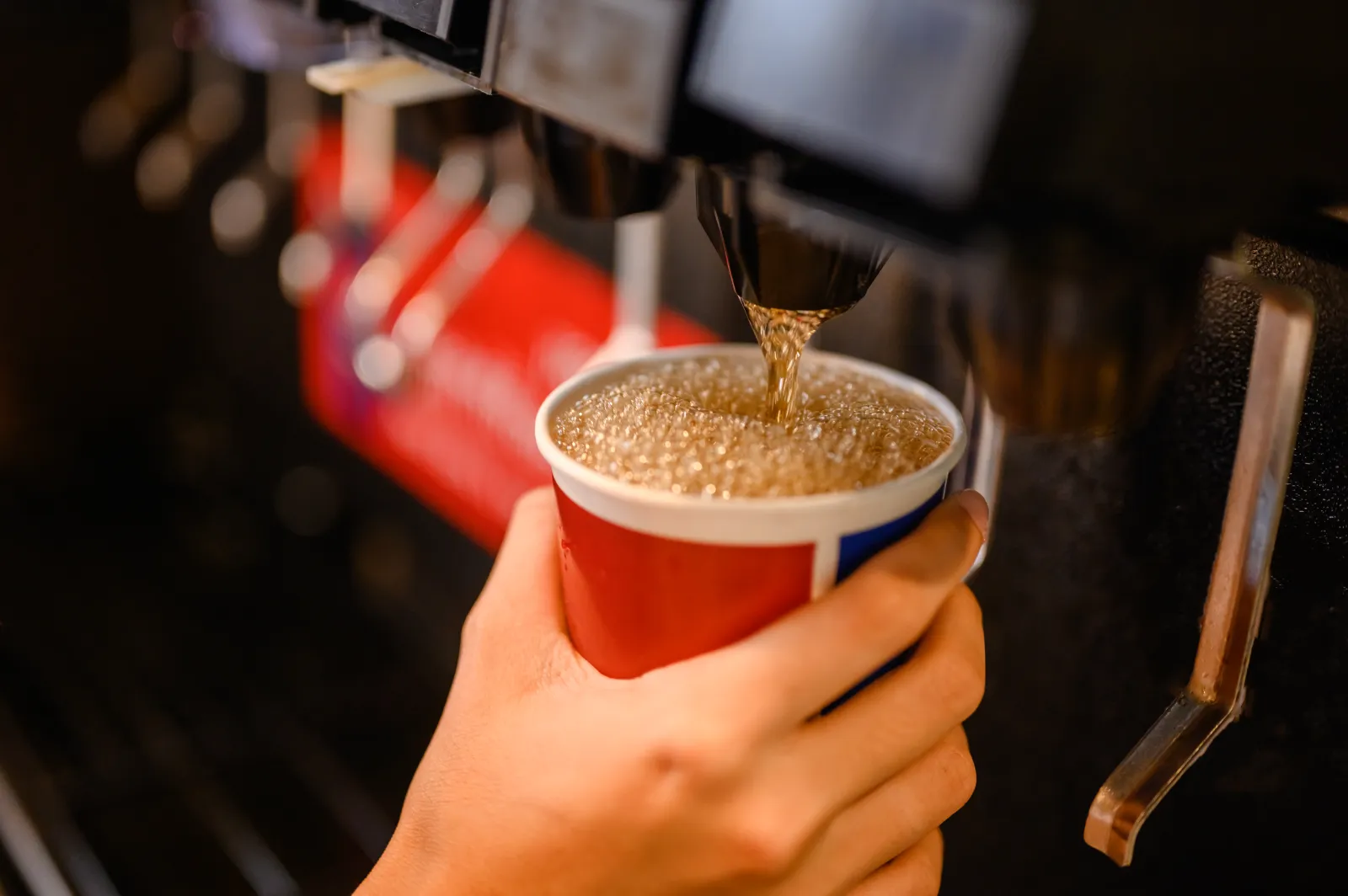
"Some obvious things, such as sugar sweetened beverages. But it’ll also appear on many other drinks and desserts, such as milkshakes," Katherine N. Balantekin, an assistant professor in the Department of Exercise and Nutrition Sciences at the University of Buffalo told Newsweek by email.
"Some categories that might surprise consumers include other drinks such as fancy coffee drinks, some smoothies, and foods that have a lot of sauce," Balantekin added.
And indeed, it's not just items typically associated with sugar which could receive the label, according to Lisa R. Young, a nutrition consultant, author of the book Finally Full, and an adjunct professor of nutrition at New York University.
"Some savory foods with lots of sauces and salad dressings may also carry the symbol since added sugars show up in unexpected places, especially if the portion size is large," Young told Newsweek.
What People Are Saying
Acting New York Health Commissioner Dr. Michelle Morse said in a press release shared with Newsweek: “Every New Yorker deserves access to delicious, healthy food that they feel good about eating. As the first in the nation to add a warning icon for added sugars, this rule underlines our longstanding work to ensure New Yorkers have information about the food they eat. Just one large sugary drink can exceed the daily recommended amount of added sugars. Through this rule, we aim for New Yorkers to have more insight into the amount of sugar in certain products to make more informed choices.”
Katherine N. Balantekin told Newsweek: "One big advantage is it will bring a level of awareness to the general public of how much sugar is in our food supply. It tends to be more obvious for items that taste sweet (e.g., sugar-sweetened beverages, desserts), but people don’t realize how much added sugar is in other items such as breads to make them more palatable. One big disadvantage is that it will only be on items with over 50 grams of added sugar, which is the daily limit. Many of us exceed the daily limit from eating smaller amounts of added sugar across most of what we’re eating."
Lisa R. Young told Newsweek: "This is a very positive step for public health. Most people don’t realize how much added sugar is hiding in foods and drinks, especially when portions are large. A warning label can raise awareness and help consumers make more informed choices. It also encourages restaurants and manufacturers to think twice about how much sugar they’re adding.
"From a nutrition perspective, reducing added sugars can help lower the risk of obesity, diabetes and heart disease. The main advantage is transparency—it helps people quickly spot which foods are high in sugar. A possible disadvantage is that it may cause confusion or concern if consumers don’t fully understand what the symbol means or if it’s inconsistently applied."
What Happens Next
Health Secretary Robert F. Kennedy Jr. has said that he is looking at issues which are driving what he has termed the U.S “Obesity epidemic,” in his bid to "make America Healthy Again.” This could mean there are further changes to come to the way Americans consume food and drink.
Update 10/23/25, 07:30 a.m. ET: This article has been updated to include comment from Lisa R. Young and Katherine N. Balantekin.
View 0 Comments
Submit Correction
View Editorial & AI Guidelines