...


By Billal Rahman and Dan Gooding
0
Share
Newsweek is a Trust Project member
See more of our trusted coverage when you search.Prefer Newsweek on Googleto see more of our trusted coverage when you search.
A group of Democratic lawmakers announced legislation on Thursday aimed at barring local police departments from collaborating with federal immigration authorities to apprehend migrants without legal status.
The PROTECT Immigration Act would terminate the federal 287(g) program, repealing its statutory authority and clarifying that state and local law enforcement do not have inherent authority to investigate, detain, or arrest individuals for suspected immigration offenses.
Illinois Democratic Representative Mike Quigley is leading the bill. Speaking to Newsweek on Thursday, he explained what had inspired the legislation.
Read More on News
"It was what I witnessed in my home city during the Operation Midway Blitz," he said, referring to the DHS operation in Chicago. "You know, I walked with young immigrant kids from a shelter to school, and they talked to me about their lives and how happy they were, and they had no idea that I was walking them with other adults because their parents couldn't."
Why It Matters
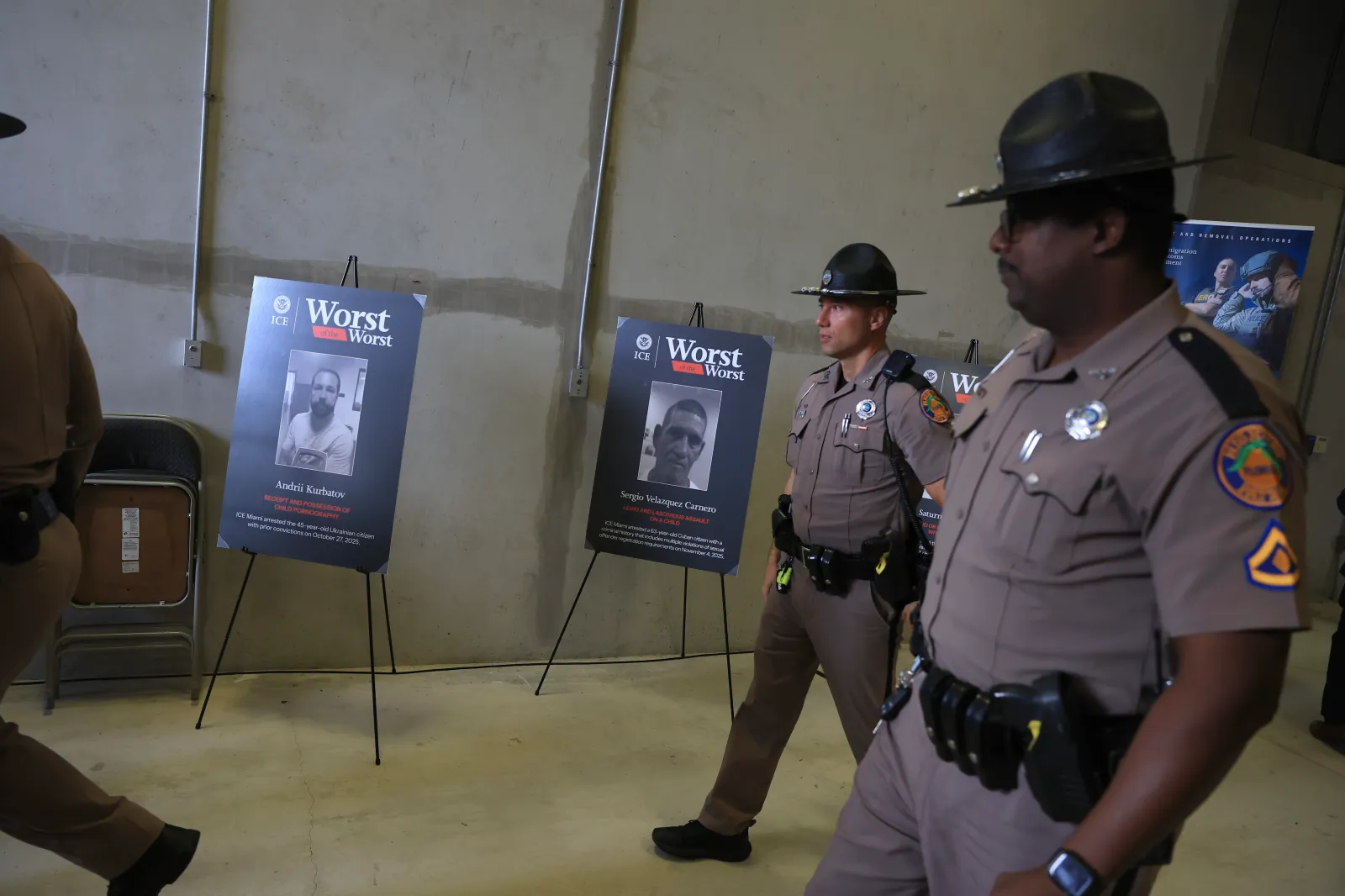
Since President Donald Trump’s inauguration in January 2025, the number of 287(g) agreements, which allow state and local law enforcement officers to cooperate with federal immigration authorities, has risen sharply. While some communities have clearly embraced the cooperation, others have raised concerns that immigrants, regardless of legal status, will now be afraid to report crimes and seek help from local law enforcement.
...
What To Know
The legislation specifies that only federal immigration officers and authorized Department of Homeland Security employees would retain immigration enforcement authority.
At the end of 2024, there were about 135 active 287(g) agreements; by mid-2025, that number had climbed into the several hundreds, reflecting the administration’s effort to expand local involvement in immigration enforcement. By September 2025, the Department of Homeland Security said that more than 1,000 287(g) partnerships across dozens of states, a marked increase compared with the end of the previous administration.
Supporters argue this growth boosts federal enforcement capabilities while addressing public safety concerns, while critics raise concerns about civil rights and community trust.
Quigley told Newsweek that it was important for ICE agents to work within the law, to arrest and deport illegal immigrants, particularly those who have allegedly committed crimes, but that blurring the lines by bringing in local police and sheriff's departments was upsetting the balance.
"There's important functions here. There's security at airports, border security, those are important things and in terms of deporting someone who really should because they are a risk, that's kind of what the American people expect," he told Newsweek. "But they don't expect them to stop a soccer mom, break her windows, drag her out in front of her kids... They've gotten carte blanche to go after anybody with brown skin, and they have, despite what they've said, they have detained U.S. citizens."
Starting October 1, 2025, participating law enforcement agencies will have reimbursement opportunities from ICE, which will cover the annual salary and benefits of each eligible trained 287(g) officer, including overtime of up to 25 percent of the officer’s annual salary.
Agencies may also receive quarterly monetary performance awards based on the successful location of individuals without legal status and overall support of ICE’s mission, with amounts ranging from $500 to $1,000 per eligible task force officer, depending on performance levels.
Quigley is the lead sponsor of the bill, alongside other Democratic Representatives Pramila Jayapal of Washington, Sarah McBride of Delaware, Valerie Foushee of North Carolina, Eleanor Holmes Norton as Washington, D.C., delegate, Sara Jacobs and Robert Garcia of California, Ilhan Omar of Minnesota, Sylvia Garcia of Texas, Henry "Hank" Johnson of Georgia, Bonnie Watson Coleman of New Jersey, and fellow Illinoisans Delia Ramirez, Danny K. Davis, and Robin Kelly as co-sponsors.
What People Are Saying
ICE Deputy Director Madison Sheahan previously said in a press release: “We encourage all state and local law enforcement agencies to sign a 287(g) agreement now. By joining forces with ICE, you’re not just gaining access to these unprecedented reimbursement opportunities—you’re becoming part of a national effort to ensure the safety of every American family.”
Washington Democratic Representative Pramila Jayapal, in a press release: “Allowing local law enforcement to be deputized to kidnap and disappear immigrants undercuts the trust that local police rely on to maintain public safety in our communities. Immigrants and their U.S. citizen loved ones stop reporting crimes out of fear of being kidnapped and deported. Local police are spread thin enforcing federal civil immigration law. We know that Trump is not targeting criminals, he is targeting our friends, neighbors, co-workers, and pillars of our community. This lawlessness must end immediately.”
Naureen Shah, director of policy and government affairs for the ACLU’s Equality Division, in a press release: “Enlisting local law enforcement for mass deportations isn’t just a waste of taxpayer dollars – it terrorizes our communities, undermines public safety and fuels racial profiling. We thank Congressman Quigley for his leadership and urge our members of Congress to pass the PROTECT Immigration Act without delay.”
What's Next
As with any attempt at immigration-related legislation, the likelihood of the bill passing is uncertain. With Republicans holding control of the House and the Senate, seeking to advance the president's immigration agenda, the 287(g) program may be difficult to change, for now.
View 0 Comments
Submit Correction
View Editorial & AI Guidelines