...

By Ryan Chan
China News Reporter
0
Share
Newsweek is a Trust Project member
See more of our trusted coverage when you search.Prefer Newsweek on Googleto see more of our trusted coverage when you search.
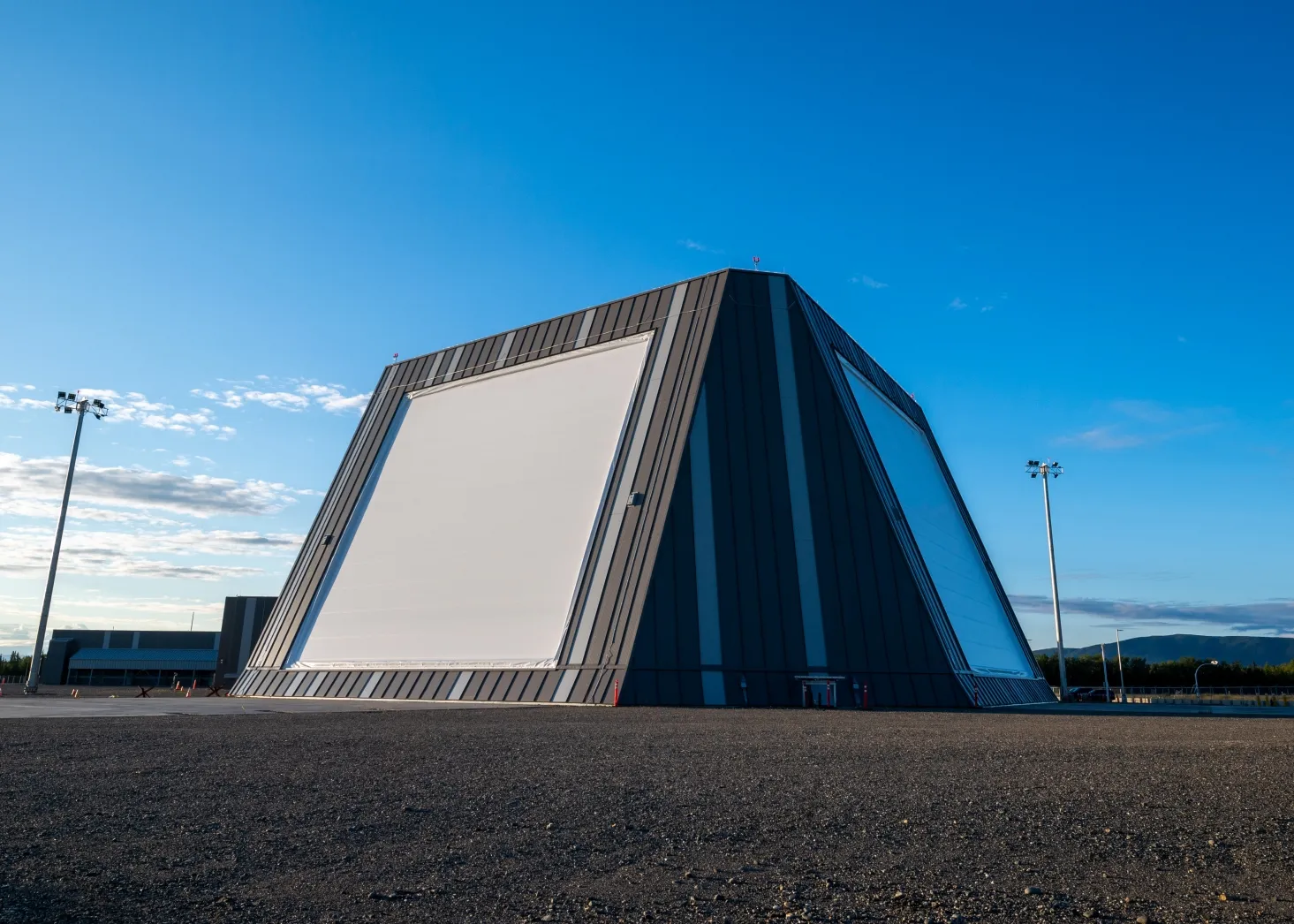
The United States homeland missile defense network received a major boost recently as a radar system designed to detect missile threats completed its operational trial period.
The Long Range Discrimination Radar, or LRDR, located at Clear Space Force Station in Alaska, is tasked with searching, tracking and discriminating among multiple long-range threats simultaneously, increasing the probability of successful interceptions.
Why It Matters
The U.S. has built a comprehensive network, consisting of interceptors and radars on land and at sea, to defend against missile threats from the Pacific. A vital component is the Ground-based Midcourse Defense (GMD) system, which is responsible for intercepting missiles with support from radar sensors such as the LRDR.
Read More on U.S.
While the GMD is capable of defeating a limited attack from North Korea, it is not able to counter larger and more sophisticated missile threats from both Russia and China. The Trump administration is advancing the Golden Dome missile defense initiative, which aims to protect the homeland from all types of aerial threats.
What To Know
The U.S. Space Force Combat Forces Command announced on Monday that it took operational acceptance of the LRDR from the Missile Defense Agency on December 4.
This marked a significant milestone for the Space Force's missile-warning, tracking and targeting missions, the Colorado-based command said, improving interceptor precision, shortening reaction time and strengthening deterrence against ballistic missile threats.
"The radar is specifically designed for precision discrimination to distinguish between ballistic missile lethal and non-lethal objects in a highly congested operating space," the Combat Forces Command said.
Lethal objects refer to missile warheads, while nonlethal objects—such as decoys—are countermeasures designed to help armed missile payloads penetrate missile defenses. Discriminating between them can help ensure that interceptors hit the correct targets.
The LRDR provides "precision track, discrimination and hit assessment data" to the GMD's fire control system, according to the Combat Forces Command. The GMD has deployed 44 interceptors in silos at two military facilities in Alaska and California.
The radar was fielded in December 2021 as it transitioned from construction to testing, training and operations. On June 23, it conducted its first flight test tracking a live intercontinental ballistic missile target, providing data for a simulated interception.
...
What People Are Saying
Colonel Jared Hoffman, assistant deputy commander for Combat Forces Command's Operations, Plans, Training and Force Development, said: "This operational acceptance signifies a critical milestone in bolstering U.S. national security and missile warning, tracking and targeting capabilities, and I am incredibly honored to be working alongside the talented men and women who will be maintaining and operating this critical radar."
The U.S. Missile Defense Agency said: "LRDR provides an unparalleled ability to simultaneously search, track and discriminate multiple small objects, at very long ranges, 24/7/365. LRDR combines proven solid-state radar technologies with proven ballistic missile defense algorithms, all based upon an open architecture platform capable of meeting future growth."
What Happens Next
It remains unclear when the Sea-Based X-Band Radar, part of the U.S. homeland missile defense, will return to service following the replacement of its golf ball-shaped radome. It provides sensor coverage in the Pacific along with the LRDR.
View 0 Comments
Submit Correction
View Editorial & AI Guidelines