...

By Andrew Stanton
Reporter
0
Share
Newsweek is a Trust Project member
See more of our trusted coverage when you search.Prefer Newsweek on Googleto see more of our trusted coverage when you search.
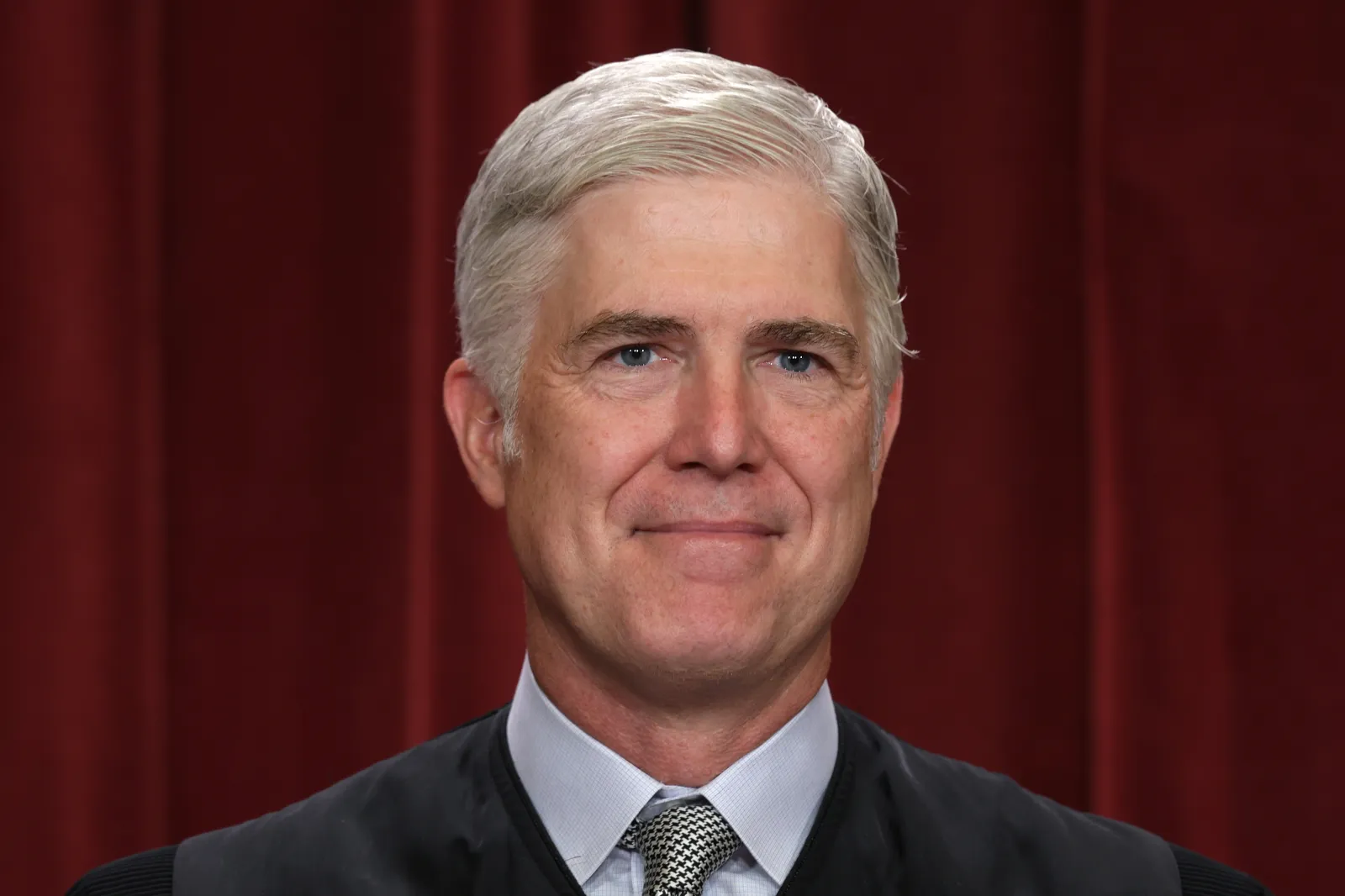
In his dissent of a ruling on Friday, U.S. Supreme Court Justice Neil Gorsuch said the Court made a “broad new legal rule.”
Newsweek reached out to the Court’s public information office for comment via email.
Why It Matters
The Court released its first ruling of its term on Friday for the case Bowe v. United States.
Read More on Politics
The case deals with how the Court can approach motions to vacate convictions by federal prisoners, specifically about whether judges must dismiss repeat motions to vacate and whether the Court has “certiorari jurisdiction over the grant or denial of an authorization by a court of appeals to file a second or successive motion to vacate.”
What To Know
The case deals with whether a provision 28 U.S.C. § 2244(b) stating decisions on whether to allow state prisoners’ second or successive habeas corpus applications “shall not be appealable and shall not be the subject of a petition for a writ of certiorari" applies to 28 U.S.C. § 2255, a provision dealing with motions to vacate sentences in federal cases.
It was brought by Michael Bowe, who is serving a 24-year sentence in federal custody after pleading guilty in 2008 to offenses including conspiracy to commit a Hobbs Act robbery, attempted Hobbs Act robbery and using a firearm in relation to a “crime of violence.”
He has challenged a mandatory 10-year sentence, arguing that the Court's rulings post-conviction “call into question” whether those charges qualify as a “crime of violence.” He has attempted relief several times raising concerns about this, including in 2022, when a panel dismissed the request because the claim had been “presented in a prior application” and that they lacked jurisdiction over such old claims under the 2244 statute. However, Bowe has questioned whether that applies to federal prisoners.
Justice Sonia Sotomayor penned the majority opinion who wrote that the case raises two questions. The first is whether the 2244 statute “bars this Court’s review of authorization decisions concerning the motions of federal prisoners,” which the Court holds it “does not.” The second is whether the statute applies to motions filed by federal prisoners, which it “does not,” she wrote.
Sotomayor wrote with regards to the Court’s certiorari jurisdiction that Congress has “treated state and federal prisoners differently,” and that the statute applying to state prisoners does not apply to federal prisoners.
She was joined by Justices John Roberts, Elena Kagan, Brett Kavanaugh and Ketanji Brown Jackson. Gorsuch disagreed, penning a dissent joined by Justices Samuel Alito and Clarence Thomas. Justice Amy Coney Barrett joined part of the dissent.
Gorsuch criticized the majority’s position on whether Congress allows the court authority to grant certiorari in such a case.
“But from there, the majority engages in pure invention, devising a broad new legal rule that even express limitations on our certiorari jurisdiction are unenforceable absent a clear statement,” he wrote.
Gorsuch also wrote he believes it is one of the Court’s “paramount responsibilities to respect the limits on our jurisdiction,” and that the Antiterrorism and Effective Death Penalty Act of 1996 has already made it clear to him the court does not have certiorari jurisdiction.
“Everyone agrees this provision precludes us from exercising certiorari jurisdiction to review an appellate panel’s decision granting or denying certification to state prisoners. And because §2255(h) tells us that the same rules apply to federal prisoners, exactly the same outcome follows for federal prisoners like Mr. Bowe,” he wrote.
...
What People Are Saying
Justice Sonia Sotomayor wrote in the majority opinion: “Finally, the Government invokes a practical concern. The Government suggests that it would make little sense to bar certiorari review of authorization decisions concerning state prisoners but not federal ones. That argument carries little weight when the governing standard requires Congress to speak clearly. It also misses the mark. Congress treated state and federal prisoners differently across AEDPA, with state prisoners often facing far higher hurdles to relief.”
Justice Neil Gorsuch wrote in his dissent: “I understand my colleagues’ eagerness to reach the merits of this case. As they observe, the courts of appeals are divided on the question whether federal prisoners like Mr. Bowe may pursue do-over claims. Ante, at 5. Doubtless, too, it is often this Court’s job to resolve circuit splits and bring nationwide uniformity to the application of federal law. But it is also one of our paramount responsibilities to respect the limits on our jurisdiction. And, to my eyes, AEDPA precludes us from exercising certiorari jurisdiction here.”
What Happens Next
The Court is set to release more rulings over the coming months on topics ranging from the Voting Rights Act to President Donald Trump’s tariffs.
The news cycle is loud. Algorithms push us to extremes. In the middle—where facts, ideas and progress live—there's a void. At Newsweek, we fill it with fearless, fair and fiercely independent journalism.
Common ground isn't just possible—it's essential. Our readers reflect America's diversity, united by a desire for thoughtful, unbiased news. Independent ratings confirm our approach: NewsGuard gives us 100/100 for reliability, and AllSides places us firmly in the political center.
In a polarized era, the center is dismissed as bland. Ours is different: The Courageous Center—it's not "both sides," it's sharp, challenging and alive with ideas. We follow facts, not factions. If that sounds like the kind of journalism you want to see thrive, we need you.
When you become a Newsweek Member, you support a mission to keep the center strong and vibrant. Members enjoy:
Help keep the center courageous. Join today.


View 0 Comments
Submit Correction
View Editorial & AI Guidelines