10
Loading video...

By Andrew Stanton
Reporter
0
Share
Newsweek is a Trust Project member
See more of our trusted coverage when you search.Prefer Newsweek on Googleto see more of our trusted coverage when you search.
U.S. Supreme Court Justice Sonia Sotomayor’s concerns about “police power” were echoed by conservative Justice Neil Gorsuch on Monday.
The court denied review of the case O’Donnell v. City of Chicago. The case asked the court to resolve the question of whether the city’s practice of impounding and selling a driver’s car after two unpaid parking tickets and keeping the proceeds, without offsetting the ticket debt or refunding the surplus, is an unconstitutional taking. It raised major questions about the Fifth Amendment's Takings Clause and police power.
The Seventh Circuit had previously upheld the practice as being consistent with the Fifth Amendment’s Takings Clause, concluding it is part of the police’s power to enforce traffic code.
Read More on News
Sotomayor Issues Statement on 'Police Power'
Sotomayor, a liberal, explained in a statement respecting the denial of certiorari why she decided to join the majority of justices in declining to hear the case despite having concerns about that “police power.”
“I have serious concerns about that conclusion, which implicates a Circuit split over whether, and under what circumstances, exercises of the State’s police power are immune to takings claims. Because that split would continue to benefit from further percolation, however, and because this case is not the best vehicle to resolve the split, I concur in the Court’s denial of certiorari,” she wrote.
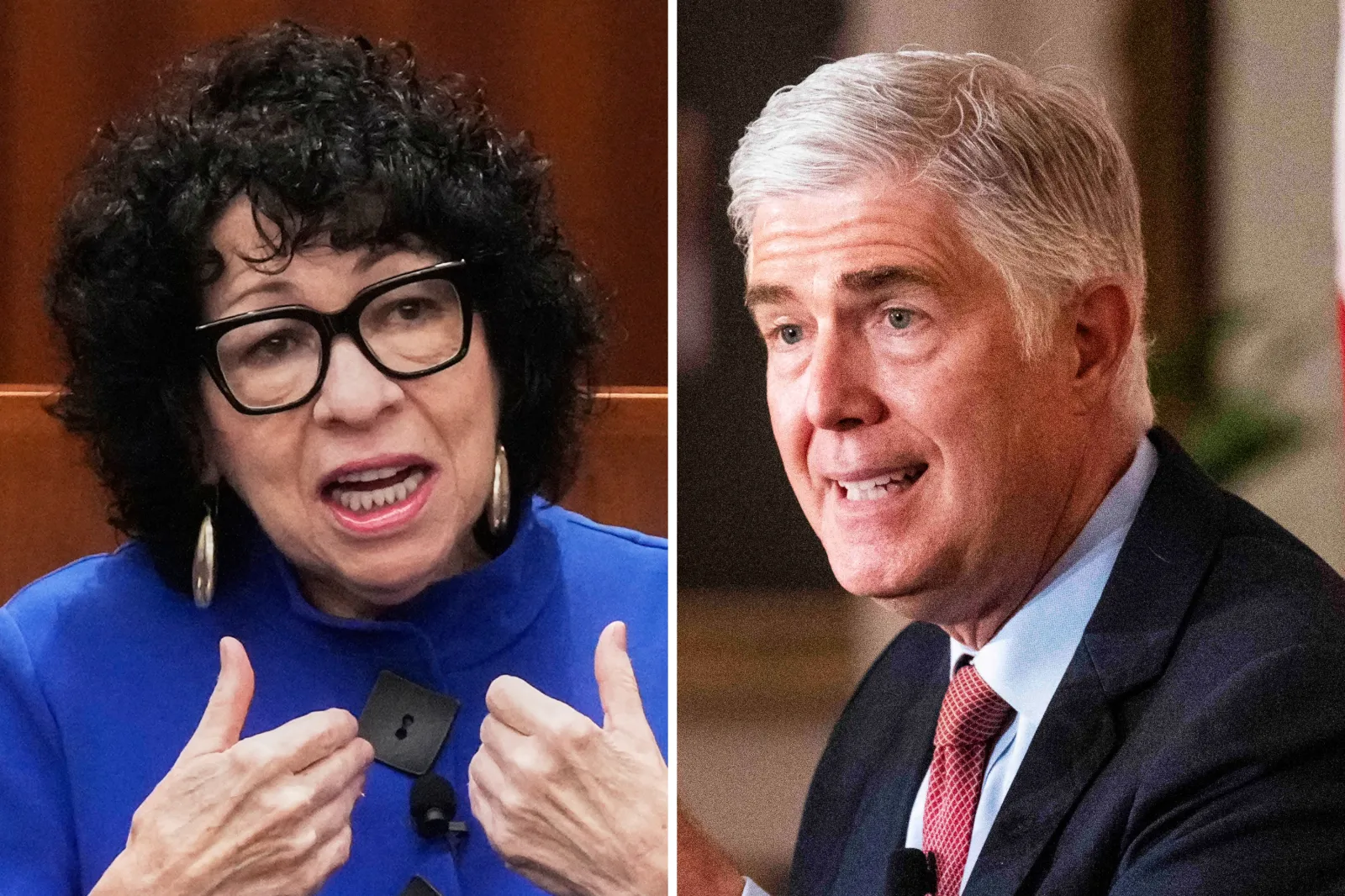
She was joined by Gorsuch in her statement, signaling concern from both the court’s conservative and liberal wings about the scope of police power in these sorts of cases.
Sotomayor said she believes courts should “carefully and narrowly define the circumstances in which the State’s exercise of its police powers are held exempt from the just compensation requirement, as well as explain the source of any such exemption.”
“I again encourage courts considering this issue to take care that due deference to state police powers does not eclipse constitutional rights,” she added.
Still, Sotomayor said there are certain questions that would continue to “benefit from further percolation” in the lower courts, and that petitioners “lodged a facial challenge to Chicago’s ordinance” which could require the court “to invalidate even those features of the law that have nothing to do with vehicle forfeiture.”
...
Petitioner 'Disappointed' by Supreme Court Decision
Jacie Zolna, an attorney representing the petitioners, wrote in a statement to Newsweek on Monday that they are “disappointed that the petition was not granted but appreciate that Justices Sotomayor and Gorsuch highlighted the painful inequities—and likely unconstitutionality—of the City of Chicago’s vehicle confiscation program.”
“We remain confident that the constitutional rights of all Chicagoans will eventually be vindicated,” Zolna said.
Newsweek also reached out to the lawyers representing Chicago for comment via email.
O’Donnell v. City of Chicago: Supreme Court Case Explained
The case was brought by Ryan O'Donnell and Michael Goree, two of the Chicago residents who have been subject to the policy. O’Donnell received “three minor parking tickets” from Chicago, and his vehicle was impounded because he was unable to pay those fines.
The city also impounded the vehicle belonging to Goree because the co-signer of the vehicle had outstanding ticket debt from a different vehicle—even though Goree did not have any tickets himself, according to the petition.
The petitioners wrote in their petition that Chicago “does not sell vehicles at their fair market value, nor does it apply the sales proceeds to the debt to extinguish the lien,” instead keeping those proceeds.
They said the policy is “devastating and counterproductive.”
“The owner loses a car—usually their most important asset and only way to get to work, school, worship, etc.—and is left saddled not only with the existing ticket debt, but also new towing and storage fees. Often, drivers are left to pay off car loans on vehicles they no longer own,” the petition reads.
Lawyers representing Chicago wrote in response that the case “is an exceedingly poor vehicle to address” the questions involving “the relationship between the Takings Clause and law enforcement authority.”
“Petitioners fail to acknowledge that they exclusively pleaded a facial challenge to the City’s law. That means this Court’s analysis would be limited to whether the mere enactment of the City’s ordinance is unconstitutional, such that it is invalid in all its applications. And here, petitioners’ facial claim easily fails that test–without any need for this Court to examine the scope of the Takings Clause,” they wrote in a court filing.
Related Story

Report: Chicago Has Seized and Sold Nearly 50,000 Cars Over Ticket Debt Since 2011
What Is the Takings Clause?
The Takings Clause is found in the Fifth Amendment of the Constitution.
It states private property shall not be “taken for public use, without just compensation."
The court wrote in the 1960 case Armstrong v. United States that the clause was “designed to bar Government from forcing some people alone to bear public burdens which, in all fairness and justice, should be borne by the public as a whole.”
What Happens Next
Sotomayor has said she would like to see the court address some of the questions raised in the case, but it is not clear whether other cases could be brought to the High Court in the coming years to be ruled on. The court will be hearing several other important cases over its current term.
Newsweek’s reporters and editors used Martyn, our AI assistant, to produce this story. Learn more about Martyn here. Contact Newsweek editors for this story: Anthony Murray and Jason Lemon.
View 0 Comments
Submit Correction
View Editorial & AI Guidelines