
...

By Aman Kidwai
Workplaces Editor
0
Share
Newsweek is a Trust Project member
See more of our trusted coverage when you search.Prefer Newsweek on Googleto see more of our trusted coverage when you search.
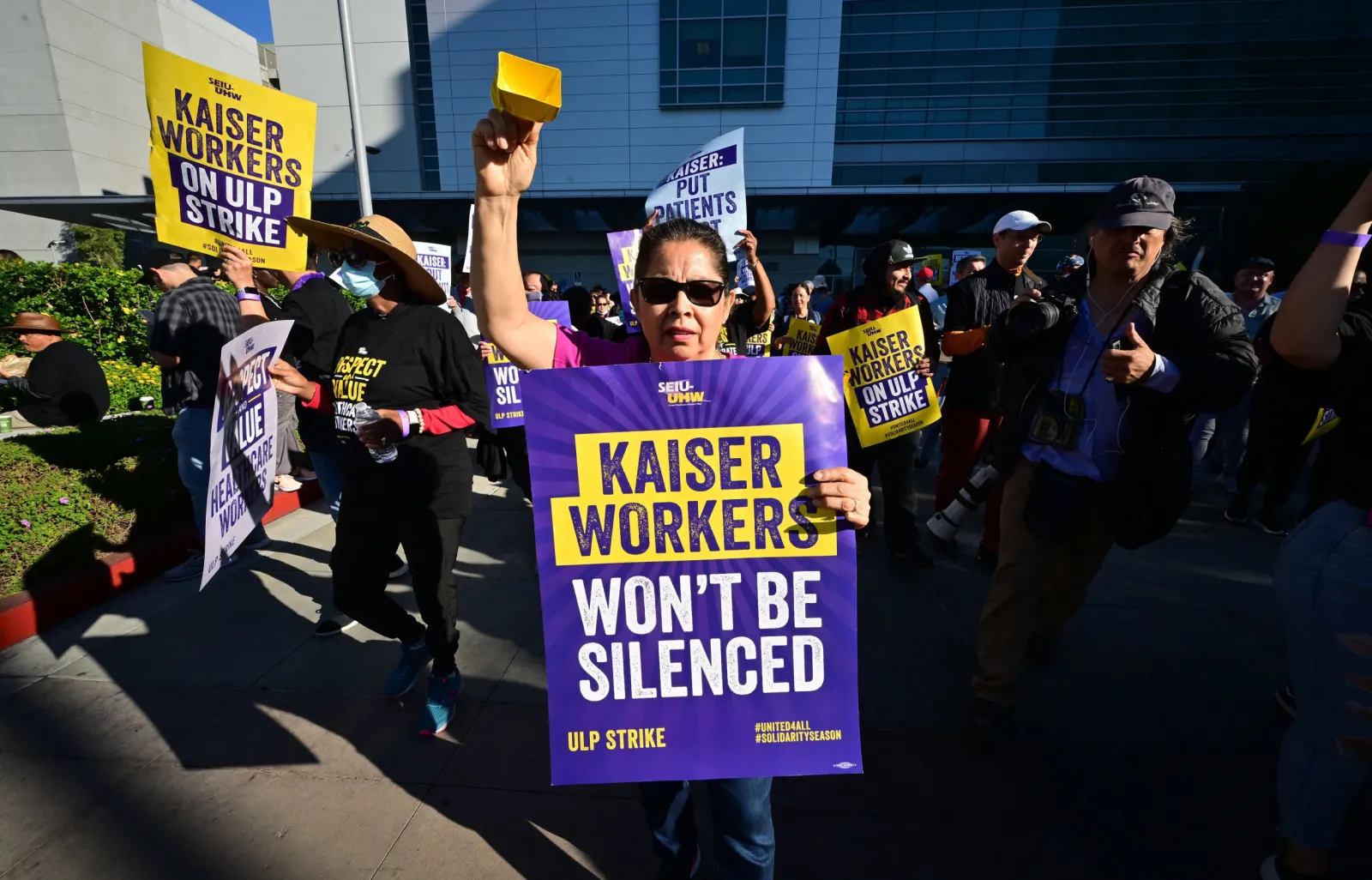
Across the West Coast, tens of thousands of health care workers are set to strike on October 14 unless they can reach a tentative contract with employer Kaiser Permanente.
The contracts of 52,000 Kaiser Permanente workers expired on September 30 or October 1, and “nearly all” have given 10-day strike notices, a statement from the Oregon Federation of Nurses and Health Professionals (OFNHP) said earlier this month.
An estimated 4,000 employees from four bargaining units at Sunnyside Medical Center and Westside Medical Center in Portland, along with ambulatory surgical centers and medical clinics in Washington and Oregon, are now expected to be part of the strike, first announced on October 3 by the United Nurses Associations of California/Union of Health Care Professionals (UNAC/UHCP).
Read More on Health Care
The OFNHP is part of the Alliance of Health Care Unions, which represents 62,000 Kaiser Permanente health professionals and is simultaneously bargaining on “a national bargaining agreement that would be an addendum to each local’s contract.”
...
Why It Matters
Earlier this month, the UNAC/UHCP delivered a strike notice to Kaiser Permanente, pointing to understaffing, fair pay and retirement security among the issues driving the organized labor action. It will be the largest UNAC/UHCP strike ever against Kaiser Permanente.
The statement added that investment remains low at existing centers while the company “pours money” into expansion projects. “Without solving its staffing missteps at home, these expansions risk leaving current health plan members facing delays in appointments, treatment, and recovery,” it said.
What They're Saying
"We’re fighting to make sure Kaiser puts patients first—health care should be driven by our mission, not a desire for more profits. Longer wait times for appointments and shorter times with caregivers undermines the quality of care," OFNHP President Sarina Roher said. Roher stated that months of bargaining have yielded little progress.
Roher added that Kaiser must do more to recruit and retain health care workers, warning that staff are being asked to handle more patients in less time and that many are leaving for nearby hospitals offering better pay.
“Kaiser is now on a dangerous path,” the UNAC/UHCP statement said. “Stagnant wages and unsafe staffing threaten both the workforce and the high-quality care patients depend on. Kaiser currently holds $64 billion in reserves — much of it accumulated during the COVID-19 pandemic, when frontline caregivers sacrificed their health, families, and, in some cases, their lives."
“Our patients are waiting longer, and our caregivers are stretched to the breaking point, and Kaiser executives are sitting on billions,” said UNAC/UHCP Executive Director Joe Guzynski.
In a statement to Newsweek, Kaiser Permanente said it continues to bargain in good faith with the Alliance of Health Care Unions, which represents nearly 61,000 employees. The company said a strike “would only delay progress, waste millions, cause lost wages, and potentially disrupt care,” adding that patients remain its priority.
It said its current offer raises wages by 21.5 percent over four years, improves medical and retiree benefits, and funds employee education initiatives. Kaiser said its Alliance-represented workers are already paid about 16 percent above market rates and that union demands for a 25 percent wage increase would drive up costs for members.
Kaiser also disputed the unions’ claims about staffing and quality, saying it meets or exceeds nurse-to-patient ratios and has added more than 6,300 new employees in 2024, including nearly 4,700 in care delivery roles.
The organization said it remains committed to reaching an agreement “through good faith negotiations and mutual respect.”
Updated 10/10/25 at 7:53 p.m. ET: This article was updated with comments from Kaiser Permanente.
View 0 Comments
Submit Correction
View Editorial & AI Guidelines