10
Loading video...

By Ellie Cook
Senior Defense Reporter
0
Share
Newsweek is a Trust Project member
See more of our trusted coverage when you search.Prefer Newsweek on Googleto see more of our trusted coverage when you search.
Several of the United States' closest allies in Europe have curbed U.S. military access to their airspace or bases on their territory, a sign of further rupture that European officials have sought to play down despite obvious anger from the White House.
The limits on access for U.S. jets and weapons heading for the Middle East to strike Iran come after European nations were caught off guard by the start of U.S.-Israeli operations on February 28, then quickly distanced themselves from the aerial bombardment now well into its fifth week with no visible end in sight.
Thousands of specialized U.S. Army paratroopers started to arrive in the region in recent days, further fueling concerns that the U.S. could escalate the conflict by invading Iranian soil even as President Donald Trump insists the U.S. is in talks with Tehran.
Read More on World
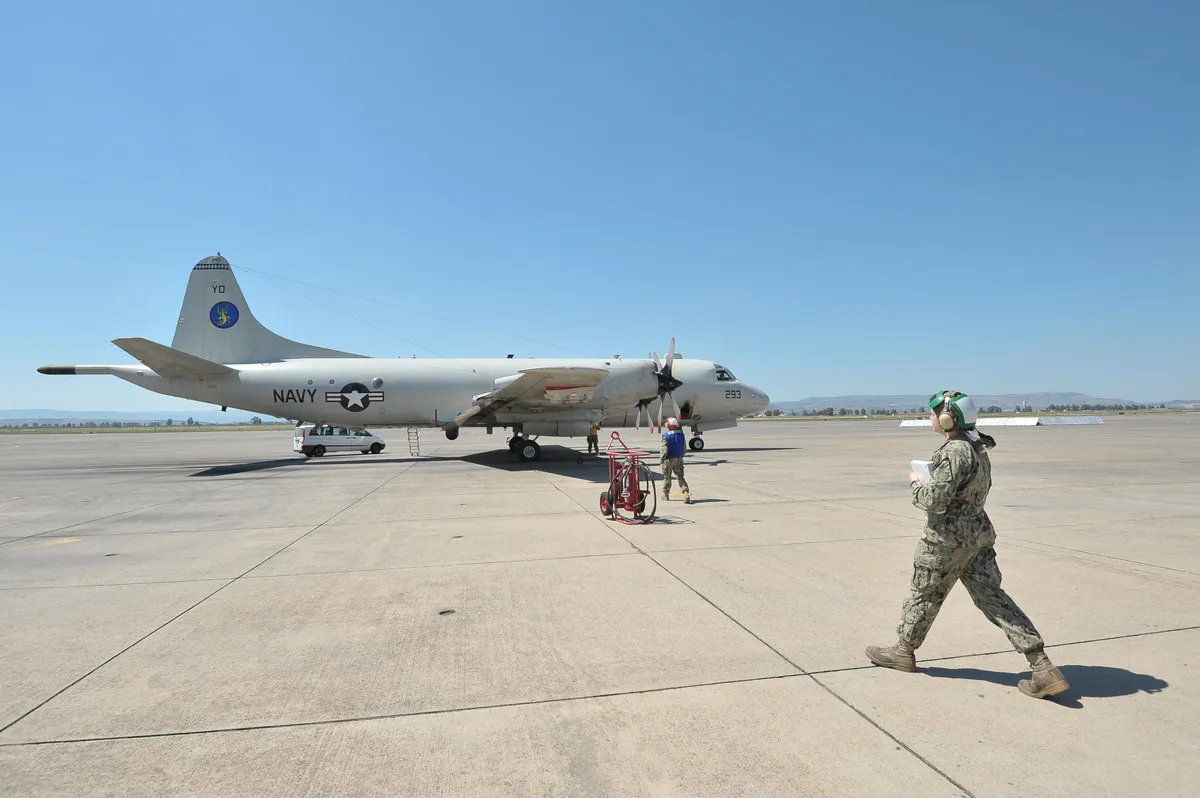
Trump on Tuesday accused France of closing its airspace to aircraft carrying weapons for the war to Israel, just hours after it emerged that Italy's government had refused permission for U.S. bombers bound for the Middle East to land at one of its bases.
...
Spain has publicly said it has shuttered its airspace to any U.S. military flights linked to the war and blocked U.S. access to two major bases in the south of the country.
The U.K., which has long touted a special relationship with the U.S., was forced to greenlight American forces using British bases for operations targeting Iran earlier this month after insisting U.S. personnel could use the facilities only for defense. The British government announced on Tuesday that it would send extra troops and air defense systems to the Middle East.
All four countries are significant powers in NATO, an alliance Trump has blasted as "cowards" for refusing to be drawn into the more than four weeks of aerial assaults on Iran or operations in the Persian Gulf and Strait of Hormuz.
Spain's left-wing government has denounced the Iran war as illegal and immoral, while Italian leader Giorgia Meloni—a right-wing Trump ally—has criticized the conflict as "outside the scope of international law."
Trump's ire is clear. Nations that have resisted becoming embroiled in the war should "build up some delayed courage" and deploy forces to the Strait of Hormuz, he said on Tuesday.
Iran has effectively cut off maritime traffic in the waterway, through which one-fifth of the world's oil and gas usually flows, since the opening salvos of the war.
It's proved to be one of Tehran's most effective tactics, putting ever-growing pressure on the U.S. to fully reopen the strait as global fuel prices remain high and markets yo-yo because of concerns over supplies. Iran attacked an oil tanker off the Dubai coast on Tuesday, setting the vessel alight in the hours before Defense Secretary Pete Hegseth warned that the coming days would be "decisive."
"You’ll have to start learning how to fight for yourself, the U.S.A. won’t be there to help you anymore, just like you weren’t there for us," Trump said in a post to his Truth Social platform. "Go get your own oil!"
In a separate message leveled at Paris, Trump warned: "The U.S.A. will REMEMBER!!!"
Europe took a markedly different stance: "There have been no critical issues or friction with international partners," Italy's government said in a statement, released Tuesday. "Relations with the United States, in particular, are strong and based on full and loyal cooperation.”
Margarita Robles, Spain's defense minister, told lawmakers in Madrid on Tuesday: “Two countries went to war and expected us to join them. Our position is supported by the majority of people, and not just Spanish but European."
But the blocking of airspace and bases for Iran-related operations "absolutely doesn’t imply a break with our transatlantic links," Robles quickly added.
A White House official told Newsweek on Monday that Washington "does not need help from Spain or anyone else," and described U.S. operations in Iran as "meeting or surpassing" the administration's goals.
Polish officials, meanwhile, denied domestic media reports that Warsaw had denied an informal U.S. request to move one of its Patriot air defense systems to the Middle East as continued Iranian drone and missile attacks force the U.S., Israel and Gulf states to burn through air defense equipment.
A spokesperson for the Polish Defense Ministry said Washington had not put any pressure on Warsaw to transfer one of the U.S.-made missile systems, which are considered the gold standard of ground-based air defenses.
"Our Patriot batteries and their armament are used to protect Polish skies and NATO's eastern flank," Polish Deputy Prime Minister and Defense Minister Władysław Kosiniak-Kamysz said in a post to social media on Tuesday. "Nothing is changing in this regard."
View 0 Comments
Submit Correction
View Editorial & AI Guidelines