10
Loading video...

By Gabe Whisnant
News Editor
0
Share
Newsweek is a Trust Project member
See more of our trusted coverage when you search.Prefer Newsweek on Googleto see more of our trusted coverage when you search.
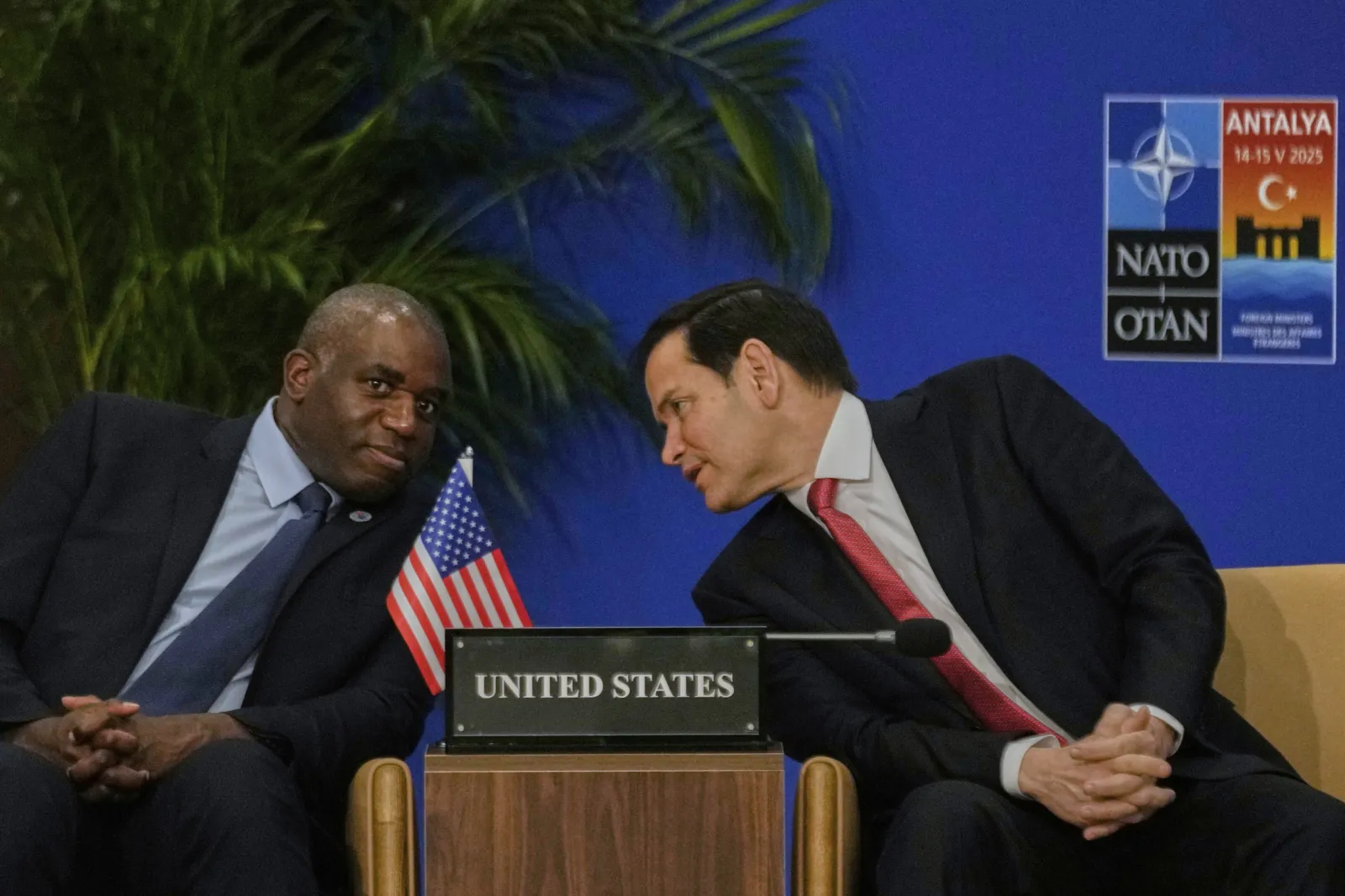
Foreign ministers from NATO member states gathered in Antalya, Turkey, on Thursday to debate a U.S. proposal to significantly boost defense spending amid growing global threats and shifting American strategic priorities.
NATO Secretary-General Mark Rutte emphasized the urgent need for increased investment to counter evolving dangers from Russia, terrorism, and increasingly, China.
"When it comes to the core defense spending, we need to do much, much more," Rutte said, warning that Russia could rebuild its military within three to five years after the war in Ukraine ends.
Read More on Politics
...
Why It Matters
The debate unfolds ahead of the June 24–25 NATO summit in the Netherlands, where President Donald Trump is expected to press allies for concrete commitments. Trump's administration has suggested the U.S. might not defend NATO countries that fail to meet spending targets—a controversial stance that adds pressure to European governments.
What To Know
U.S. Secretary of State Marco Rubio reinforced this call, pressing allies to spend 5 precent of their gross domestic product (GDP) on defense by 2032.
"The alliance is only as strong as its weakest link," Rubio said, arguing that the investment would support essential 21st-century defense capabilities, including cyber infrastructure and logistics networks.
The proposal marks a sharp increase from NATO's current 2 percent target, with only 22 of 32 members currently meeting that goal. A new framework would raise the benchmark to 3.5 percent for core military spending and recommend an additional 1.5 percent for supporting infrastructure like roads, bridges, and ports.
Meanwhile, diplomatic efforts continue outside the NATO framework. In Istanbul on Friday, Russian and Ukrainian delegations are expected to hold their first direct peace talks in three years. Although Ukrainian President Volodymyr Zelensky offered to meet Russian President Vladimir Putin, the Kremlin rebuffed the invitation. Trump has encouraged the leaders to meet but downplayed Putin's refusal.
Rubio said Thursday he does not have high hopes on Russia-Ukraine talks and that a breakthrough can only come through a face-to-face Trump-Putin meeting.
"The only one who can break this logjam at this point, if it can be broken, it is President Trump," the secretary of state told reporters.
On the sidelines of the Antalya meeting, Rubio met with Syrian Foreign Minister Assad al-Shaibani, highlighting Damascus' attempts to re-engage diplomatically with the region and beyond.
British Foreign Secretary David said that the U.K. aims to increase defense spending to 2.5 percent of GDP by 2027, with a further rise to 3 percent by the time of the next general election, expected in 2029.
While NATO as an alliance holds no formal security mandate in Asia, questions remain about how the Trump administration might reshape expectations for allies as it shifts strategic focus toward China. The alliance's last major mission outside the Euro-Atlantic area—its two-decade-long engagement in Afghanistan—ended in disarray, casting doubt on NATO's future role in broader global security challenges.
Despite the urgency, many European nations face structural challenges in meeting the proposed spending targets. Countries such as Belgium, Canada, Italy, and Spain still fall short of the 2 percent goal set in 2023.
What People Are Saying
British Foreign Secretary David Lammy said: "It's hugely important that we recommit to Europe's defense and step up alongside our U.S. partners in this challenging geopolitical moment, with so many pressures across the world—particularly in the Indo-Pacific.
Lithuanian Foreign Minister Kęstutis Budrys said: "There is a lot at stake for us," He urged NATO partners to meet the investment goals faster than the 2032 target "because we see the tempo and the speed, how Russia generates its forces now as we speak."
What's Next
NATO's internal debates now extend beyond budgets. Questions remain about how the alliance will articulate its continued support for Ukraine without extending membership. For now, Washington has ruled out Ukraine's accession, leaving the alliance to balance political symbolism with strategic caution.
NATO leaders must also decide how to frame the threat from Russia in the summit communiqué.
As Rutte put it, "We will see what is the best way to play that."
This article contains reporting by The Associated Press.
Update: 5/15/25, 2:17 p.m. ET: This article has been updated with additional information and remarks.
View 0 Comments
Submit Correction
View Editorial & AI Guidelines