...

By Sam Stevenson
Associate News Editor
0
Share
Newsweek is a Trust Project member
See more of our trusted coverage when you search.Prefer Newsweek on Googleto see more of our trusted coverage when you search.
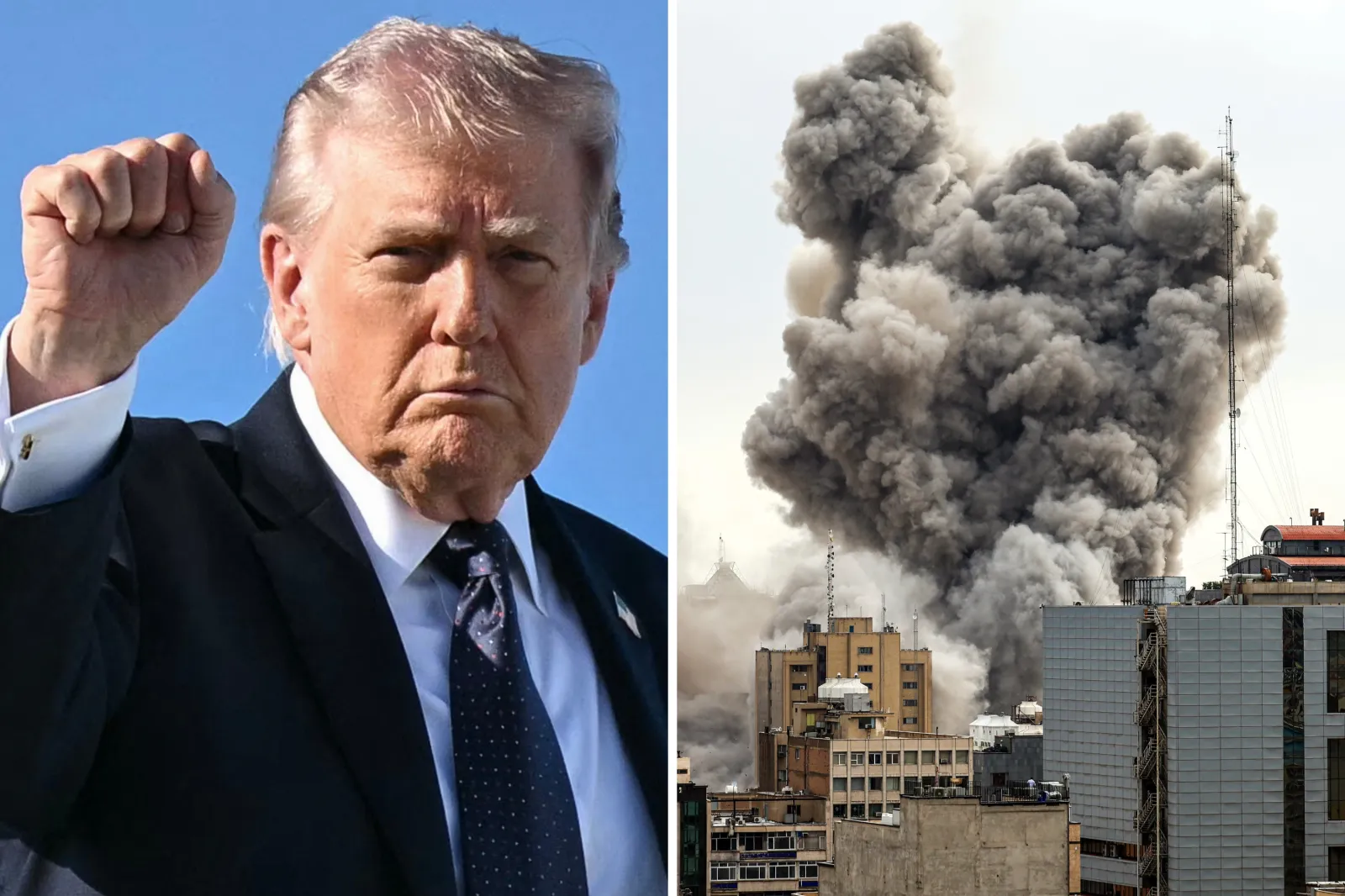
Polling expert Nate Silver says a war with Iran may not trigger a political backlash right away—but it carries several risks that could complicate President Donald Trump’s standing with voters.
“President Trump’s courageous decision to launch Operation Epic Fury is grounded in a truth that presidents for nearly 50 years have been talking about, but no president had the courage to confront: Iran poses a direct and imminent threat to the United States of America and our troops in the Middle East," White House press secretary Karoline Leavitt said in a statement to Newsweek.
“The rogue Iranian Regime under the evil hand of the Ayatollah has killed and maimed thousands of American citizens and soldiers over the years – and that ends with President Trump.”
Read More on Politics
Why It Matters
The United States and Israel have entered a widening conflict with Iran after launching airstrikes that killed the country’s supreme leader, prompting regional retaliation by the Islamic Republic.
While wars once reshaped U.S. politics quickly, Silver argues this one may test whether that still holds.
...
What To Know
Trump faces three political risks over his administration’s ongoing conflict with Iran, according to Silver.
“I do think Iran presents some particular downside risks for Trump,” he said in a post on X
“1. Oil price spikes. 2. Foreign adventurism = backtracking from implicit and explicit campaign promises. 3. Partnering with Israel makes the domestic politics more complicated (also for Dems, to be fair).”
For decades, conventional political wisdom held that wars produced a short‑term boost in presidential approval, followed by public backlash if fighting dragged on, Silver writes in an article posted on his website.
That pattern, he says, helped define conflicts from Vietnam to Iraq, shaping how politicians and voters understood the costs of war, but Silver believes that framework no longer fits modern warfare.
Conflicts today rely more on airpower, drones and advanced technology, reducing casualties and making wars feel distant from everyday life.
As a result, voters appear far less reactive than they once were—unless U.S. troops are killed in large numbers, a draft is introduced, or the homeland comes under attack, according to Silver. That shift has already been visible during Trump’s second term, the polling expert says.
Previous foreign policy actions, including strikes in Venezuela and earlier attacks on Iranian nuclear sites, produced little sustained movement in Trump’s approval ratings.
Even when operations appeared successful, voters largely shrugged.
Iran, however, may be different.
Silver says the current conflict carries three distinct political risks that could weigh on Trump over time, even if there is no immediate rally‑around‑the‑flag effect.
First, Iran is a major oil producer, and fighting in the Middle East raises the risk of higher energy prices.
Markets reacted quickly when the conflict escalated, with crude prices spiking at the beginning.
While the U.S. now produces more of its own oil, Silver notes that Americans are still sensitive to higher gas prices, which could show up quickly in household budgets.

...
Second, the war marks a departure from themes Trump emphasized during his successful campaigns. He built much of his political brand on rejecting long, costly Middle East wars and criticizing the Iraq invasion.
A sustained conflict with Iran—especially one framed as regime change—could look like backtracking to swing voters who took those promises seriously, even if much of his base remains loyal.
Third, the conflict is being conducted alongside Israel, which introduces added political complexity at home.
Israel has become an increasingly divisive issue in U.S. politics, cutting across party lines and creating internal tensions for both Democrats and Republicans.
Silver argues that this dynamic could complicate Trump’s domestic coalition rather than unify it. Taken together, these risks do not guarantee political damage.
Silver says the most likely outcome is that Iran fades into the background, much as Venezuela did earlier this year.
Still, he cautions that foreign adventurism late in a presidency can carry a “lame duck” feel, especially when economic confidence is already weaker than during Trump’s first term.
What People Are Saying
Writing on X, Nate Silver said: “The old conventional wisdom: wars produce initial spikes in presidential approval ratings, followed by crashes once they inevitably turn into quagmires. The new CW: lol, nothing matters, because wars feel functionally more distant from Americans than ever.”
President Donald Trump told the New York Post: “I don’t have the yips with respect to boots on the ground—like every president says, ‘There will be no boots on the ground.' I don't say it. I say, ‘probably don’t need them.'"
Secretary of State Marco Rubio said: “There was absolutely an imminent threat and it was that we knew that if Iran was attacked and we believe that they would be attacked, that they would immediately come after us and we were not going to sit there and absorb a blow.”
Defense Secretary Pete Hegseth said: "No stupid rules of engagement, no nation-building quagmire, no democracy building exercise, no politically correct wars. We fight to win, and we don’t waste time or lives, as the president warned, an effort of this scope will include casualties.”
What Happens Next
Attention is likely to shift toward how long the conflict lasts, whether energy prices remain elevated, and how Americans respond to growing uncertainty abroad.
Political consequences may hinge less on battlefield developments and more on how the war intersects with economic confidence and voter fatigue at home.
Update 03/03/26, 10:47 a.m. ET. This article was updated with a statement from the White House.
In a polarized era, the center is dismissed as bland. At Newsweek, ours is different: The Courageous Center—it's not "both sides," it's sharp, challenging and alive with ideas. We follow facts, not factions. If that sounds like the kind of journalism you want to see thrive, we need you.
When you become a Newsweek Member, you support a mission to keep the center strong and vibrant. Members enjoy: Ad-free browsing, exclusive content and editor conversations. Help keep the center courageous. Join today.


View 0 Comments
Submit Correction
View Editorial & AI Guidelines