...

By Soo Kim
Reporter
0
Share
Newsweek is a Trust Project member
See more of our trusted coverage when you search.Prefer Newsweek on Googleto see more of our trusted coverage when you search.
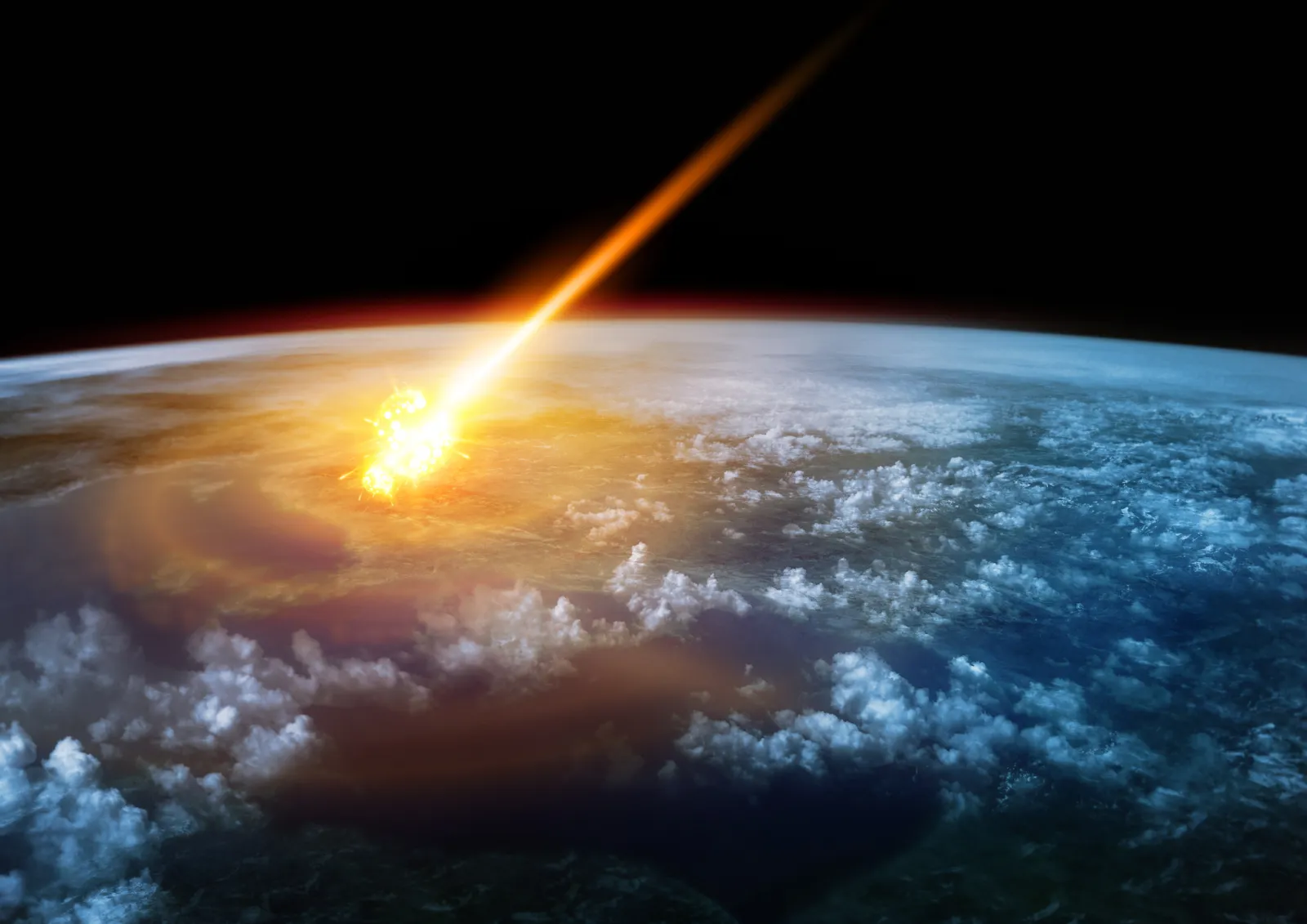
Sightings of a fireball meteor have been reported on Tuesday in several states in the northeast of the United States, according to NASA.
In a Facebook post shared on Wednesday, NASA said: “Eyewitnesses in Connecticut, Delaware, New Jersey, New York, and Pennsylvania reported a daytime fireball on Tuesday, April 7, at 2:34 p.m. EDT.”
According to the national space agency, the meteor was first spotted at 48 miles above the Atlantic Ocean, off the shore of Mastic Beach on Long Island in New York state. Later heading southwest at 30,000 miles per hour (mph), “the fireball traveled 117 miles through the upper atmosphere before disintegrating 27 miles above the town of Galloway, north of Atlantic City [in New Jersey].”
Read More on Science
A fireball is a meteor that shines brighter than the planet Venus and is the brightest of all meteors. NASA explains: “They are caused by particles that are larger than the ones producing ‘normal’ meteors.”
A meteor refers to the streak of light in the sky that appears when a meteoroid—a small rock or particle traveling through space, which is usually a piece of a comet or asteroid—enters the Earth’s atmosphere and disintegrates, the space agency notes.
...
Peak “fireball season” in the northern hemisphere takes place from February through April, when the appearance rate of fireballs can increase by as much as 10 to 30 percent, especially around the time of the March equinox. NASA explains: “Exactly why is not known. Some astronomers think the Earth passes through more large debris at this time of year, causing an uptick in fireball sightings.”
Meteors are generally pretty common and occur all the time, while fireballs can be spotted on any given night, NASA notes. However, “they often occur over the ocean or unpopulated areas with no witnesses, or during the daytime, making them difficult to spot,” the space body adds. So, those who manage to catch a clear view of a meteor across the dark skies are treated to a spectacle.
NASA monitors the skies for objects of all sizes with a range of specialized telescopes across the U.S. The country’s planetary defense is specifically tasked with finding and tracking asteroids that are 140 meters (around 459 feet) and larger in diameter.
“These objects are big enough to penetrate Earth’s atmosphere and could cause widespread damage,” NASA warns. “Meteoroids are much smaller. Almost impossible to track in space, they cannot survive passage through the atmosphere intact and pose no real hazard to ground-dwellers."
Some meteors travel through the Earth’s atmosphere at hypersonic speeds, which is much faster than the speed of sound.
“This immense speed creates a wave of pressure which, combined with the friction and heat that can cause the rock to fragment, can result in a loud, explosive sound, often called a sonic boom, that can be heard on the ground,” NASA says. “Additionally, the fragmentation of the fireball unleashes large amounts of energy, which also generates a pressure wave that can produce a very loud boom, even shaking houses.”
Do you have a tip on a science story that Newsweek should be covering? Do you have a question about meteors? Let us know via life@newsweek.com.
View 0 Comments
Submit Correction
View Editorial & AI Guidelines