...

By Jack Beresford
Senior Reporter
0
Share
Newsweek is a Trust Project member
See more of our trusted coverage when you search.Prefer Newsweek on Googleto see more of our trusted coverage when you search.
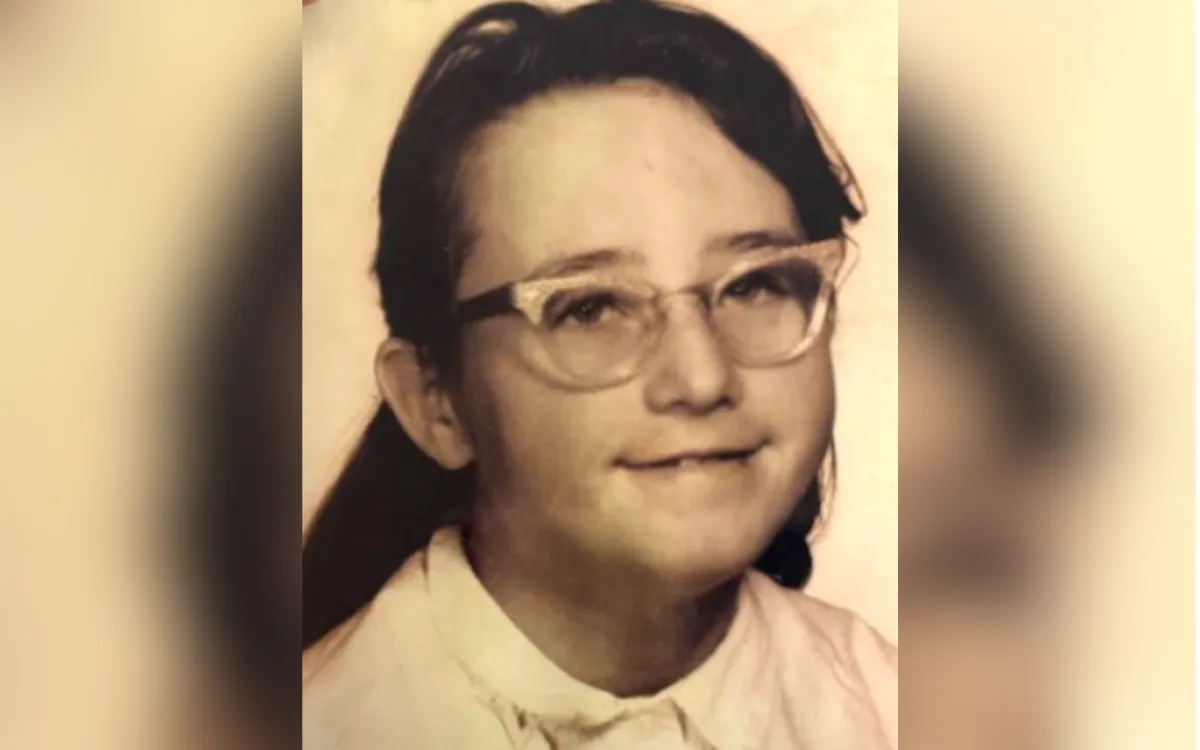
The murder of a 12-year-old girl in New York State has been solved after 61 years following a DNA breakthrough.
Mary Theresa Simpson from Elmira was reported missing on March 15, 1964. She had last been seen walking home at around 6:30 p.m. after visiting relatives.
Four days later, on March 19, her lifeless body was found fully clothed in a wooded area of Southport by a man hiking with his two sons. Her murderer had partially hidden her under branches, leaves and heavy stones while her mouth was stuffed with dirt and twigs. A subsequent autopsy determined Simpson had been strangled and died from asphyxiation.
Read More on News
The evidence also indicated she had been sexually molested.
The murder sent shock waves through Elvira. Police conducted hundreds of interviews in the years that followed to try to find Simpson’s murderer.
...
However, as time ticked on, the case went cold.
Linda Galpin was Simpson’s older sister, four years her senior. She had been out of town when the murder took place and was haunted in the years since by the memory of seeing her beloved sibling’s body at her funeral.
"I couldn’t believe she was in a casket," Galpin told the National Center for Missing & Exploited Children (NCMEC). "I tried to jump in it. I wanted to be in there with her."
For more than six decades, Galpin has lived with the pain and anguish of knowing her sister’s murder remained unsolved.
But police investigators never gave up on finding the person behind this crime. Steps had been taken early in the investigation to carefully preserve the evidence left at the crime scene.
It was evidence that sat in a freezer for decades until the advent of DNA technology. Among these key pieces of evidence was the skirt Simpson was found in.

...
Semen was found on the skirt and, in 2003, 39 years after Simpson’s murder, a DNA sample was taken from the semen and entered into a national database. Investigators hoped it would lead them to her killer, but no match was found.
Another test was conducted in 2014, but once again proved fruitless. Then, in 2022, with the help of a grant for advanced DNA testing, Elmira Police Sergeant William Goodwin and Kenneth Jensen, an FBI special agent assisting with the case, had the DNA sample, which was just 0.4 nanograms, shipped to Othram Technologies for forensic analysis.
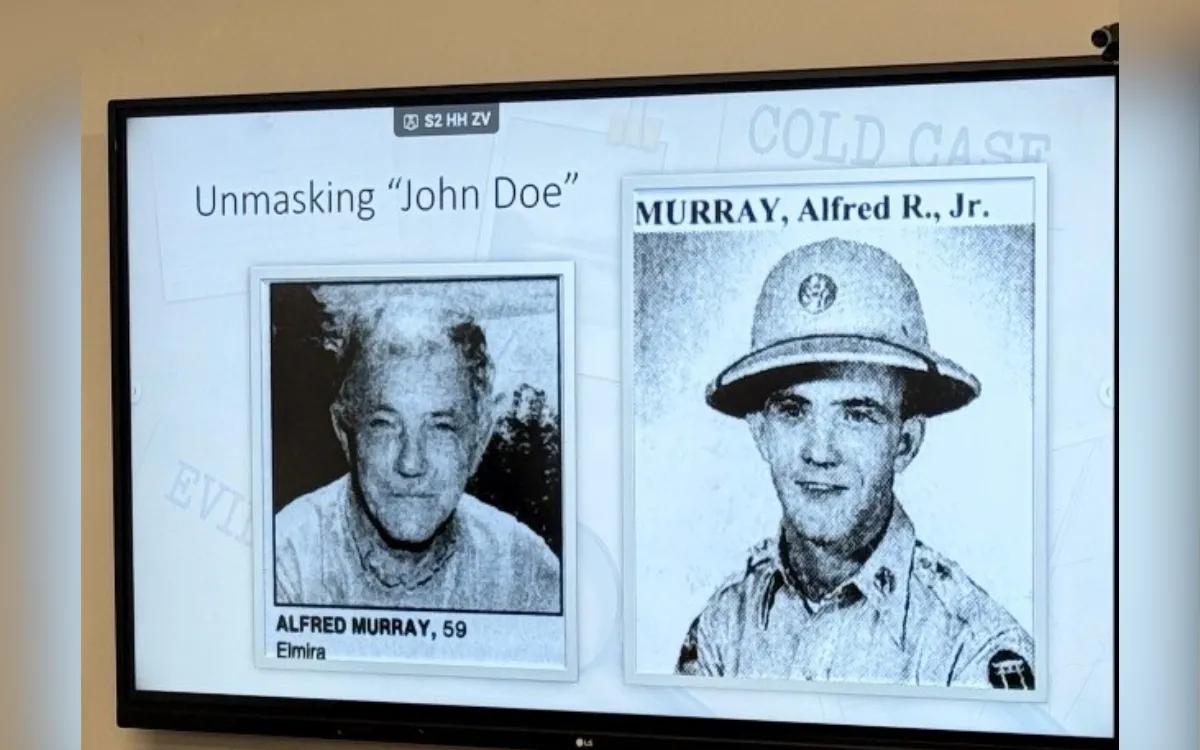
Incredibly, this time, there was a match. The sample shared a familial link to one given by a man later identified as their son. That was when Alfred Raymond Murray Jr., a truck driver who lived with his family in Elmira, emerged as the prime suspect.
By then, Murray had already passed away, aged 73 in 2004, of natural causes. But he was buried in Elmira. Jensen was working for NCMEC by then and, through the organization, got funding and the necessary expertise to have Murray’s remains exhumed.
That exhumation took place three months ago and confirmed Murray as Simpson’s killer. There would be a 1 in 320 billion chance the DNA belonged to someone else. As a result, this week Elmira Police Department announced the closure of one of the City of Elmira’s oldest cold cases, the 1964 homicide of Mary Theresa Simpson.
...
A U.S. Army veteran who served during the Korean War and was married with three children and two grandchildren, Murray was never considered a suspect by police during their investigations into Simpson’s murder; however, Goodwin noted Murray had a criminal history.
"His record shows repeated criminal involvement over decades, involving offenses involving children," Goodwin told reporters. "While no single incident proves responsibility, this history is consistent with the forensics findings and the circumstances of this homicide."
Though Murray has been dead for more than two decades now, Simpson’s sister, Galpin, finally has some sense of closure, at age 78, over what happened to her. After so long, that is more than she ever thought possible.
"I’m just glad justice was finally done," Galpin told NCMEC. "I always said it would never happen in my lifetime."
View 0 Comments
Submit Correction
View Editorial & AI Guidelines