...

By Brendan Cole
Senior Reporter
0
Share
Newsweek is a Trust Project member
See more of our trusted coverage when you search.Prefer Newsweek on Googleto see more of our trusted coverage when you search.
The U.S. has imposed new sanctions on Cuba in the Trump administration's latest move to ramp up pressure on the Communist-led Caribbean island, which is already facing fuel shortages and an economy in free fall.
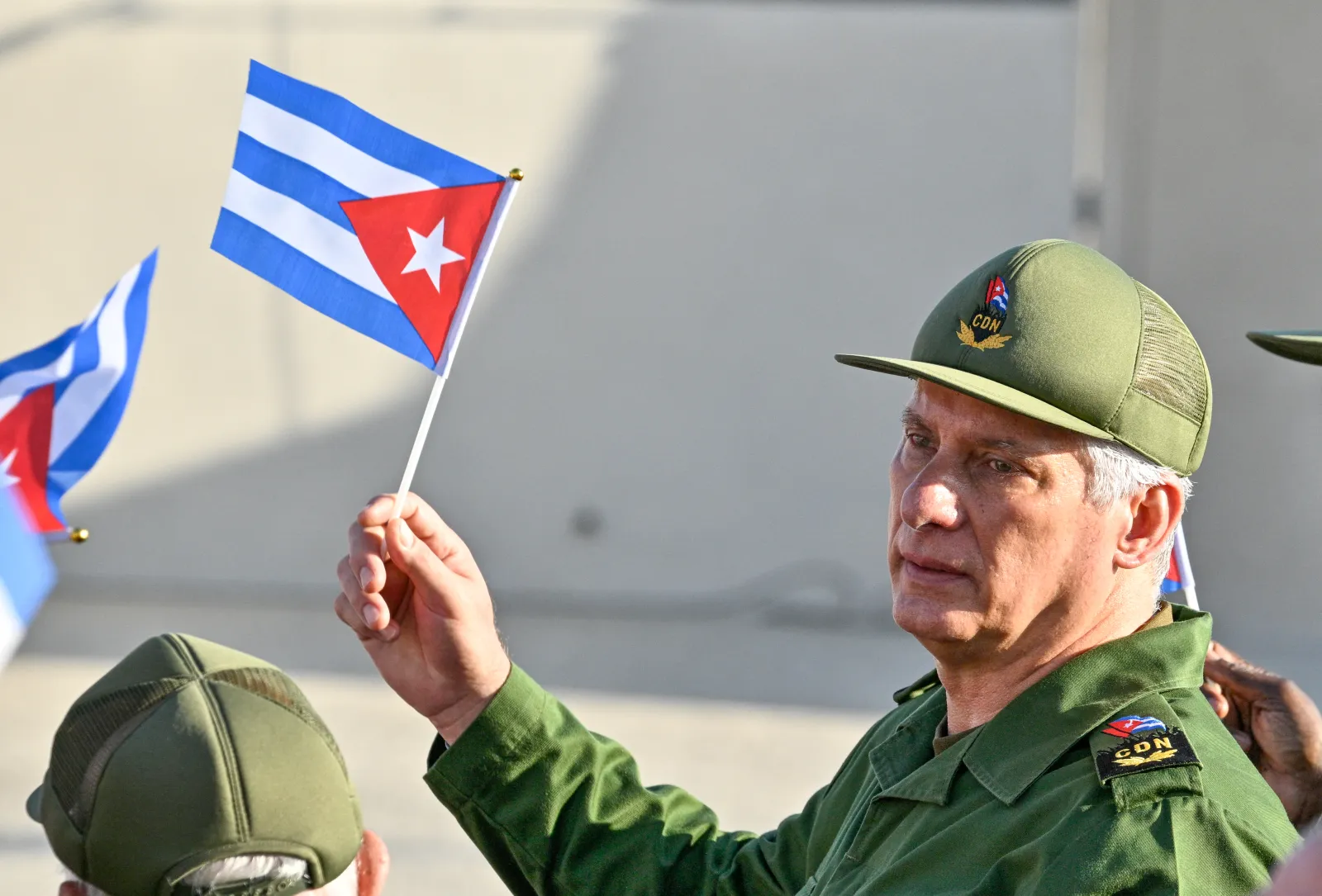
The fresh sanctions are set to be imposed on five entities as well as Cuban President Miguel Díaz-Canel, his wife and three other individuals. The measures are likely to stoke fears of a U.S. intervention on the island following a monthslong oil blockade.
"We are targeting the network that enables and funds Cuba's subversive and radical operations," U.S. Secretary of State Marco Rubio wrote on X Thursday. In response, Díaz-Canel said the sanctions were aimed at "escalating the conflict between Cuba and the United States."
Read More on World
Emily Morris, a Cuba expert from University College London's Institute of the Americas (UCLIA) told Newsweek Friday it was another move by the U.S. to ramp up pressure, but "it's not having the required effect."
"The Cubans are suffering terribly, and a lot of people in Cuba do think that their government's partly to blame," she said, but each time the sanctions are increased, "they're actually demonstrating that the hardships come from the United States."
"They might be increasing the hardship. They're also increasing the average level of resolve," said Morris, a UCLIA senior research associate. "It's not persuading everybody, but it becomes more and more difficult to blame your own government when clearly the United States has decided this is a war of choice, from their point of view."

...
Cuban Entities, Individuals Facing Fresh Sanctions
On May 1, U.S. President Donald Trump signed an executive order imposing secondary sanctions on foreign companies and banks doing business in Cuban sectors, including energy, defense and mining.
The sanctions announced Thursday apply to the Ministry of the Revolutionary Armed Forces of Cuba, the Cuban Institute of Friendship With the Peoples, Amistur Cuba and the Committees for the Defense of the Revolution. The latter two help coordinate travel and meetings with government officials for foreign activists who support the government in Havana.
Also sanctioned was Minera La Victoria, a joint venture mining project between Antilles Gold Limited in Australia and Cuba's GeoMinera SA.
"Anyone providing services to these sanctioned actors is at risk of sanctions themselves," Rubio wrote on social media.
Also targeted were Alejandro Castro Espín, the son of former president Raúl Castro, whom the U.S. indicted last month in connection with the murder of four people in the 1996 shootdown of two planes of the exile organization Brothers to the Rescue.
Castro Espín was an adviser to Cuba's Defense and National Security Commission and was present when his father greeted then-U.S. President Barack Obama in Havana during a meeting in March 2016.
Raúl Alejandro Castro Calis, Castro Espín's son, was also listed in the latest Treasury Department sanctions, along with Diaz-Canel, first lady Lis Cuesta Peraza and Manuel Anido Cuesta, Díaz-Canel's stepson.
The sanctions block the assets of these individuals and entities in the U.S. and prevent U.S. banks, companies and individuals from dealing with them.
"The United States have built up a kind of a myth about Cuba, and it's very distorted. So they're constantly surprised by the reaction that they get from Cuba and indeed by the resilience of the economy," Morris said.
US Pushes Cuba to Collapse
Before the latest sanctions, Lee Schlenker, a research associate at the Quincy Institute for Responsible Statecraft think tank, told Newsweek the Trump administration's attempts to bring Cuba's economy to its knees were "indiscriminately punishing the island's population just as much as military action would."
"The vast majority of Cubans do not see foreign intervention or tutelage as the solution to their problems, which require Cuban-led efforts that the United States can support," he said last month.
Trump said Thursday that Cuba "is starving and it's got no energy, it's got no oil, it's got no money," and it has "sort of collapsed." The U.S. president added, "We're going to handle that as soon as we've finished" military operations in Iran.
Schlenker added: "A comprehensive deal that advances U.S. commercial interests, bolsters national security and helps rebuild the Cuban economy is well within reach if the administration's saber-rattling and maximalist demands for regime change can be put to the side."
Update 6/5/26, 12:02 p.m. ET: This article was updated with a comment from Emily Morris.
View 0 Comments
Submit Correction
View Editorial & AI Guidelines