10
Loading video...

By Daniella Gray
Reporter
0
Share
Newsweek is a Trust Project member
See more of our trusted coverage when you search.Prefer Newsweek on Googleto see more of our trusted coverage when you search.
A mom who was told her unborn son had severe abnormalities at her 20-week anatomy scan never wavered in her choice to continue her pregnancy despite doctors giving him little chance of survival.
Amelia Schulte, 28, and her husband Trent, 29, told Newsweek they were excited to finally be able to see 3D images of their baby boy during the appointment.
But when the sonographer cut the scan short, alarm bells started to ring.
Read More on Family & Parenting
...
The couple were escorted back to her obstetrician's office and when the doctor entered the room alongside a nurse carrying a box of tissues, Amelia's anxiety rose.
"He just got straight to the point and said, 'We saw some severe abnormalities on the scan that don't appear to be compatible with life, and I'm sorry to tell you this, but your son isn't going make it much longer.'"
The diagnosis left Amelia reeling.
"I feel like I experienced a true out of body experience," she said. "When I remember that day, it's almost like I wasn't even there."
Doctors initially told the couple that their son had skeletal and neurological differences that were unlikely to be survivable.
Skeletal abnormalities identified on prenatal ultrasound can range from relatively mild limb differences to serious disorders affecting bone development, the chest or other organs, while neurological findings can involve the brain, spine or development of the nervous system.
Prenatal imaging can also be challenging to interpret, and some conditions evolve during pregnancy or cannot be confirmed until after birth or with additional genetic testing.
Over the coming weeks, the couple met with specialists, underwent additional scans and an MRI, and were repeatedly presented with worst-case scenarios.
The couple were told there was only a very small chance the pregnancy would reach the third trimester.
At one point, a neonatologist even prepared them for the possibility of stillbirth.
As a result, they began grieving while Amelia was still pregnant.
They canceled their baby shower and babymoon, stopped working on the nursery and deleted their baby registry.
The pain was compounded by the fact that their son was experiencing severe fetal growth restriction and measuring below the third percentile for much of the pregnancy.
Yet despite the bleak prognosis, Amelia never considered ending the pregnancy.
"There was just never a moment where I considered terminating," she said. "I was not going to give up on my son, no matter what happened."
Instead, she chose to continue carrying him, trusting that whatever happened would happen in its own time.
Each week brought uncertainty. Doctors repeatedly expressed surprise that the pregnancy was still progressing.
Even after reaching the third trimester, Amelia recalled one physician telling her: "I cannot believe you're still pregnant."
Then, around 32 to 33 weeks, Amelia and Trent finally received encouraging news.
"It was the first time that a doctor told us that he had a good chance of surviving," Amelia said.
Because of his growth restriction and breech position, Amelia underwent a planned C-section at 37 weeks.
The couple had been warned that the birth could be traumatic and that their son might require immediate intervention to breathe or eat.
Instead, they heard something they feared they might never hear.
"I could see my husband and the doctors standing around the little bassinet where they weigh him and do the initial test, and that was when we heard him start crying," Amelia said.
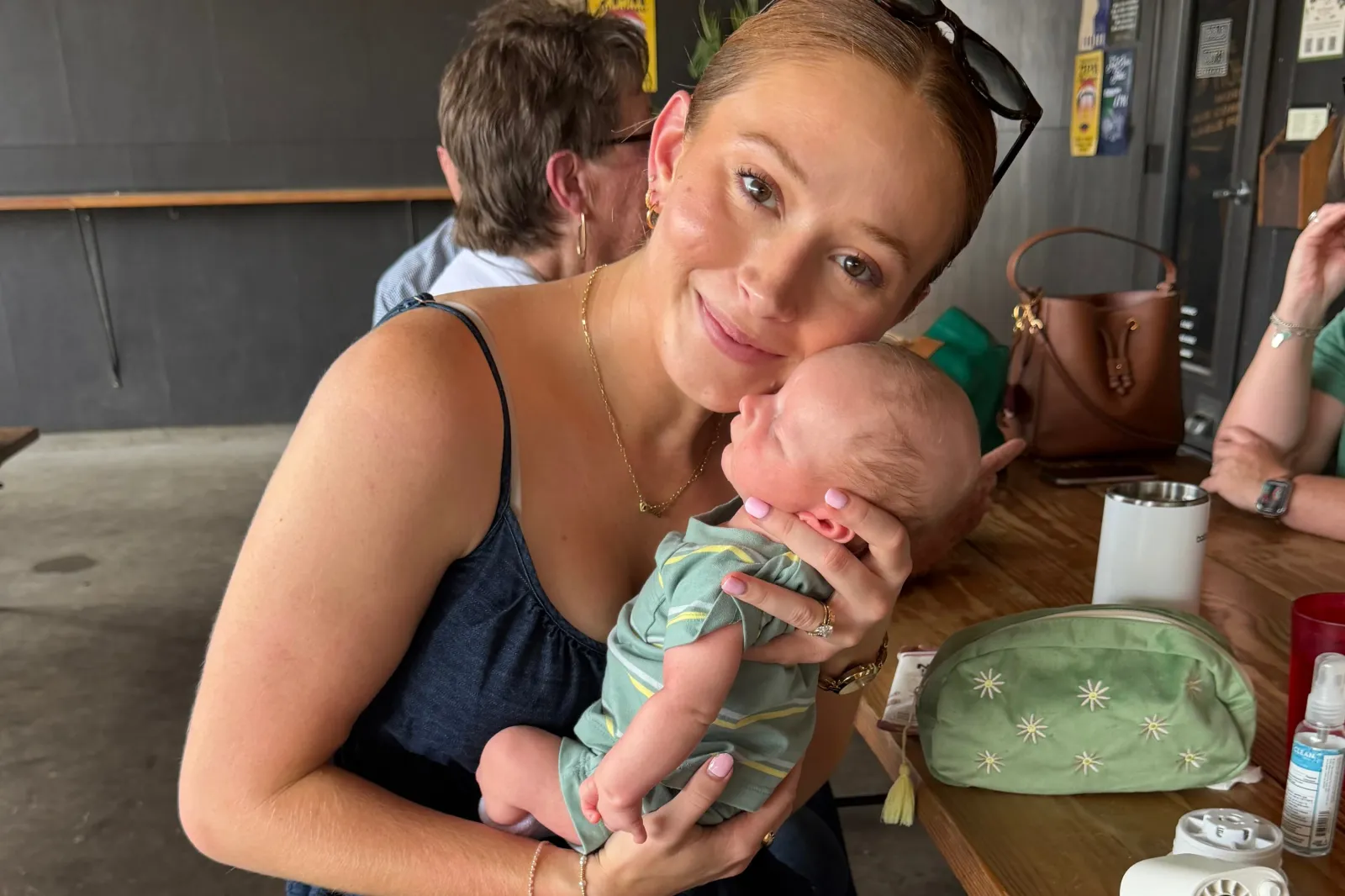
The baby, Lucas, weighed just 4.5 pounds. But to his parents' astonishment, he was breathing independently and took a bottle shortly after birth.
Lucas spent only a few days in the neonatal intensive care unit before going home with his parents.
Today, at seven weeks old, he continues to face medical challenges and therapies, but Amelia said sharing his story has become important to her.
"I didn't want to be ashamed of having a different kid," she said. "He is different, and that's going to bring challenges, but it's also going to bring so much joy, and we're so grateful that he's here."
Amelia also documents her journey as a medical mom online (@ameliabrettschulte), and in a recent clip on TikTok, wanted to show users that "limb differences are cool."
For parents receiving devastating prenatal news, Amelia's message is one of hope.
"Take the time to grieve, that's real," she said. "It's OK to grieve what you thought pregnancy and parenthood were going to look like. But just know that your story is not over. It is just beginning."
Contact Newsweek editors on this story: Charlotte Nisbet and James Debens
View 0 Comments
Submit Correction
View Editorial & AI Guidelines