Photo-illustration by Newsweek/Getty/Courtesy of Blake Turck

By Blake Turck
0
Share
Newsweek is a Trust Project member
See more of our trusted coverage when you search.Prefer Newsweek on Googleto see more of our trusted coverage when you search.
Our last weekend together, I treated my mother like a wounded bird. I unknowingly assumed that, with the doctor's care and my love, she’d heal, leave the hospital and soar back home, where she’d left her life, and me, waiting. I normalized our final Sunday together, ironically Mother’s Day, and tried to replicate past holidays. Our annual Saks Fifth Avenue lunch was replaced by takeout on a tray between us. The roses I’d brought were stuffed into a small, pink, plastic jug. We laughed at the oversized card I gave her, and I thought about all the responsibilities I’d have as her caregiver once she came home. But by Monday night I was motherless, confused by how life had changed so drastically in a short fraction of time.
It had been four years since my mother’s double mastectomy for breast cancer. It was an illness I didn’t understand, though I’d helped her through difficult chemotherapy and hair loss before she slowly returned to the loving, bright woman I recognized. I hadn’t yet learned the practice of catastrophizing, thankfully. (That would come years later, after a long chapter with infertility.) I lived, unaware, inside a bubble of disillusion—or, in retrospect, perhaps delusion. One my mother had crafted meticulously, unbeknownst to me.

...
Read More on My Turn
At 16 I Had the World at My Feet—Then in One Devastating Moment It Was Gone5 min read

I Went to the Hospital With a Baby in My Belly and Left With a Teddy Bear5 min read

I Had My Appendix Removed. At My Next Scan, the Room Went Quiet8 min read

To be fair, she’d briefly brought up her condition a few months earlier. On Valentine's Day weekend, on the crosstown bus on our way to the movies, she simply said, “Oh, by the way, the doctors found something small. I’ll have radiation to get rid of it. I’ll be fine.” Her complete nonchalance predicated my own, and with those three words, I felt reassured.
She barely mentioned it again unless I asked, and when I did, she brushed it off. I never knew about any doctor's appointments. At one of our lunches a few months later, my mom wasn’t gaunt, or frighteningly thin. She looked like herself—deep blue eyes; white, silvery short hair. But, a few pounds lighter. When I asked if she’d lost weight, she laughed and said it was a new diet, which was believable, because as long as I’d known my mother, she’d been on or off one. Looking back, I wish more than anything I’d pushed harder. But the magnitude of the situation simply didn’t register. I was 29 years old, and my mom didn’t appear to be worried. So neither was I.
I didn’t hear the words “recurrence” or “metastasized” until four months later, in the emergency room. I was told, not by her, but by doctors I didn’t know, about my mother’s jaundice (a yellowing of the skin) from liver cancer. Little emotion occupied their sentences as they told me, but as they exchanged sympathetic glances, I realized how little I really knew of my mother’s condition.
As I listened, uncontrollable anger ran through me. My mom, who I trusted more than anyone, had kept a secret. She’d robbed me of crucial time spent with her that, as her daughter, I deserved. Why had she kept this from me? I knew that, technically, she had told me that day on the bus, but I felt that she’d been dishonest, or at least misleading, about the seriousness of her condition, and I was hurt by that.

...
The more I grieved, I began to think her privacy was a form of protection. Shielding me from a frightening reality. A final act of selflessness from a mother who adored me and wanted to keep me safe. I could accept that. But my healing, even years later, would hit occasional barriers, and lasting reminders of my mom’s decision.
When I began in vitro fertilization in 2021, I was at a loss for answers to simple family health and genetics questions. My mother was lovely, but not one for the finer details. Now that she was gone, it left a mystery, and few answers to the many questions that can come up in a lifetime.
Recent celebrity deaths due to cancer have made me revisit my mom’s passing, and the shock I felt after learning how sick she was. The news of Catherine O’Hara and James Van Der Beek’s passing reflects the very different ways we each approach and discuss this disease. James Van Der Beek spoke openly about his cancer after announcing it in 2024, a year after his diagnosis. O’Hara’s death was more shocking, not only to the public, but reportedly to her closest friends and family. Like my mother, she’d kept her cancer diagnosis private.
The reasons people may keep a health secret are vast. In a recent, rare interview, Simone Ledward Boseman, Chadwick Boseman’s widow, revealed that the actor, who died from colorectal cancer in 2020, kept his diagnosis hidden mostly from fear of judgement of his work, or ability.
The loved ones they leave behind, however, must grapple with their choice to disclose (or not) without them.
Sixteen years after her death, and now a new mom to an almost 2-year-old daughter, I have an entirely new perspective. Yes, I still believe my mother’s decision to keep things quiet was maternal protection. But it also may have been self-preservation. She had to handle a new life suddenly different from the one she knew. Maybe she needed to figure out how to navigate that new life on her own before she could bring me into the story.
Or, maybe she didn’t realize the end was coming so soon. I can’t know for sure, but I’m fairly certain that she was unaware of how few days left there were. There was no will to be found anywhere. And since my mother had never added me to her lease like we’d once discussed, I had to empty out and release my childhood home, her apartment, shortly after she died. But I was surprised when I received a life insurance payout I knew nothing about, and which my mother had never mentioned. Her final gift, both a secret and a sacrifice.
I’d kept one of her last used belongings: her little daily planner. Inside, I found her last entry—that final, unseasonably warm May day in 2010. Next to vital notes about doctor appointments and prescription info, she had written things like, “Pick up Bee’s shoes”, or “Call Blake about her doctor.” I couldn’t fathom how these inconsequential things sat next to ones of such importance.
But as a parent now, I understand.
I can appreciate how hard it must have been for my 64-year-old mother to not only endure her diagnosis alone, but continue with daily life alongside it.

...
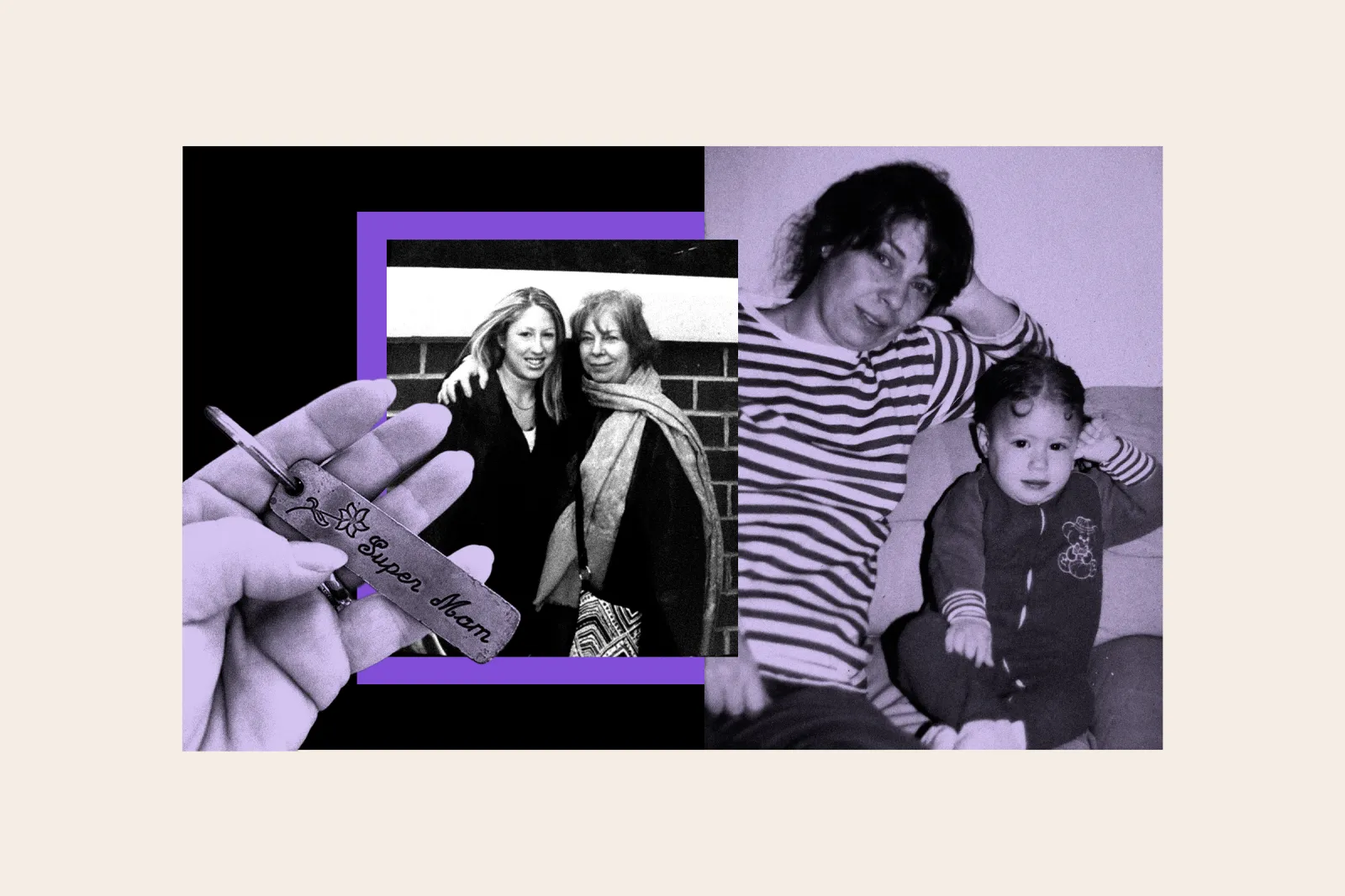
The other day I found my daughter playing in my bedroom. She’d discovered a box in my nightstand filled with old trinkets, and was loudly shaking something. In her hand, I found my mother’s old keychain that I’d saved from her bag the night she died. I hadn’t seen it in years, and it was rusted over now, the words beginning to fade yet still powerful: Super Mom.
Blake Turck is a freelance writer and native New Yorker whose work has appeared in Huffington Post, Washington Post, Slate, LA Times and others.
All views expressed in this article are the author’s alone.
Do you have a personal essay you want to share with Newsweek? Send your story to MyTurn@newsweek.com.
View 0 Comments
Submit Correction
View Editorial & AI Guidelines