...

By Amira El-Fekki
Middle East News Reporter
0
Share
Newsweek is a Trust Project member
See more of our trusted coverage when you search.Prefer Newsweek on Googleto see more of our trusted coverage when you search.
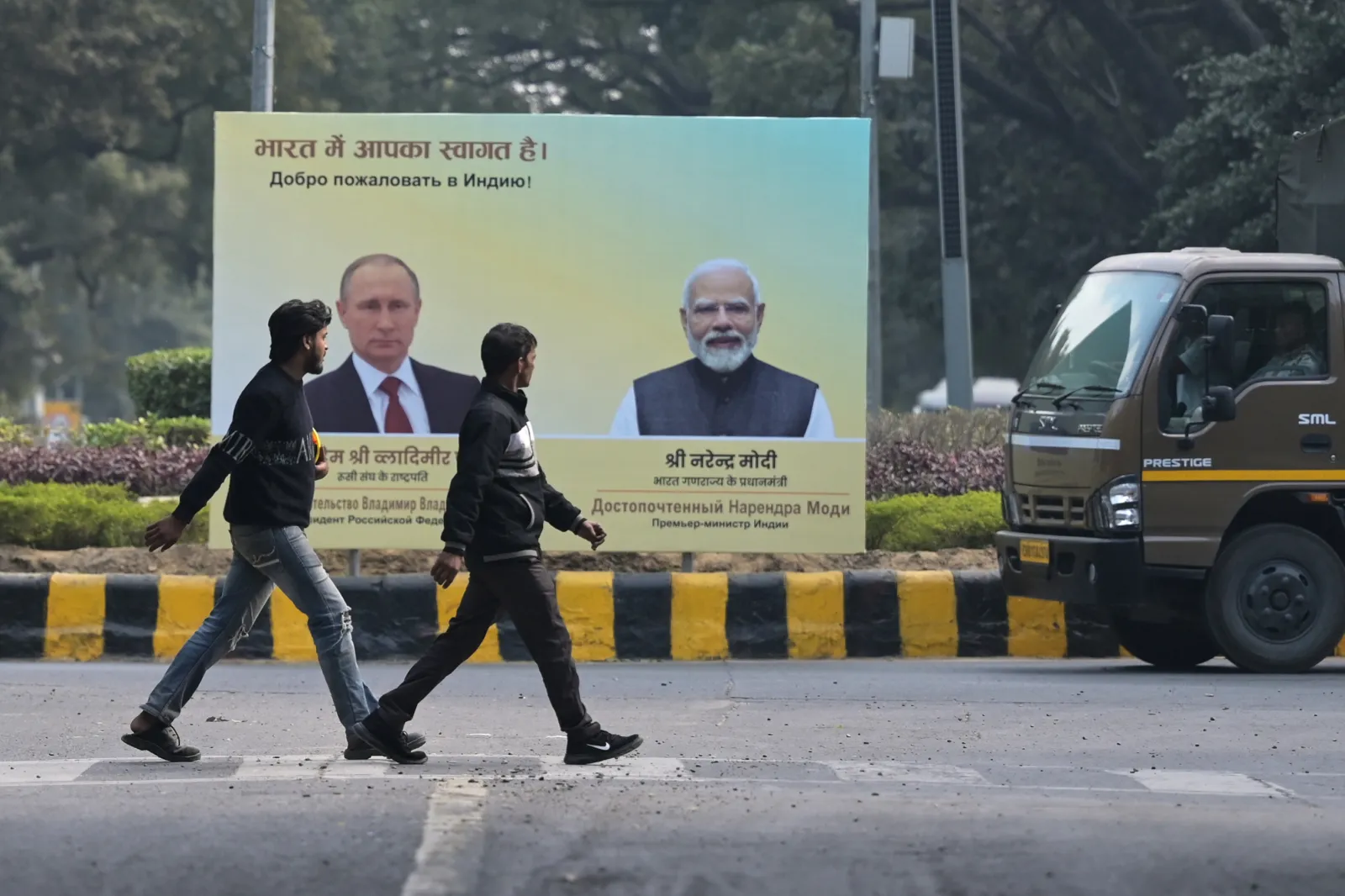
India moved to lock in major defense deals with both the United States and Russia as Russian President Vladimir Putin arrived in New Delhi on Thursday for official talks with Prime Minister Narendra Modi, in his first visit to India since the invasion of Ukraine in 2022.
Newsweek reached out to the U.S. State Department, as well as the Russian and Indian foreign ministries, for comment.
Why It Matters
India continues to deepen defense ties with Russia, even amid U.S. pressure, straining relations between Modi and President Donald Trump in recent months.
Read More on World
Trump hit India with tariffs of up to 50 percent on August 27, after imposing an additional 25 percent tariff on the country related to its purchases of Russian oil, which helps Moscow pay for its war in Ukraine. Russia is India’s top oil supplier.
...
What To Know
India's government said Thursday that the delayed delivery of a Russian nuclear-powered submarine is scheduled for 2028, based on a 2019 deal, the Press Information Bureau said on X. India had signed a $3 billion contract to lease an Akula-1-class nuclear-powered attack submarine from Russia.
Putin is visiting India on Thursday and Friday to attend the 23rd India-Russia Annual Summit. Modi, who visited Moscow last year and met Putin briefly at a Shanghai Cooperation Organization (SCO) summit in September, has refrained from condemning Russia over Ukraine, emphasizing a peaceful resolution, according to The Associated Press.
On Wednesday, India and the U.S. signed a $946 million deal to acquire sustainment services for its 24 MH-60R Seahawk helicopters, according to the State Department's Bureau of South and Central Asian Affairs.
In mid-November, the U.S. State Department approved the sale of Excalibur projectiles in a $47.1 million deal and the Javelin missile system, including 25 launch units, for about $45.7 million, marking India’s first U.S. defense purchase since the tariffs increase.
This followed India and the United States signing a landmark 10-year defense framework in October, aimed at significantly deepening military cooperation, and a meeting in Kuala Lumpur between U.S. Defense Secretary Pete Hegseth and Indian Defense Minister Rajnath Singh.
India is navigating a delicate path, seeking to maintain strong ties with both Moscow and Western powers while preserving strategic autonomy, analysts say. But India’s relations with Moscow, which are coming under closer scrutiny in Washington, make it harder for New Delhi to maintain full independence, Chietigj Bajpaee, a senior research fellow for South Asia in the Asia-Pacific Programme at Chatham House, noted in a recent analysis.
What People Are Saying
U.S. State Department's Bureau of South and Central Asian Affairs on X Wednesday: "This $946 million dollar package will enhance the Indian Navy’s maritime capabilities, build interoperability with the U.S. and regional partners, and makes both our nations safer and more prosperous."
Chietigj Bajpaee, senior research fellow for South Asia in the Asia-Pacific Programme at Chatham House, wrote in an analysis Tuesday: "India was initially optimistic about the second Trump administration, believing that it would lead to a less confrontational relationship between Washington and Moscow, removing a key thorn in India’s engagement with the West. This proved overly optimistic. Even if a peace deal is eventually reached in Ukraine, scrutiny of India’s Russian relations will likely remain."
What Happens Next
Reports indicate that India may seek to acquire Russia’s fifth-generation Su‑57 fighter jets and the advanced S‑500 missile defense system during Putin’s visit.
View 0 Comments
Submit Correction
View Editorial & AI Guidelines