10
Loading video...

By Andrew Stanton
Reporter
0
Share
Newsweek is a Trust Project member
See more of our trusted coverage when you search.Prefer Newsweek on Googleto see more of our trusted coverage when you search.
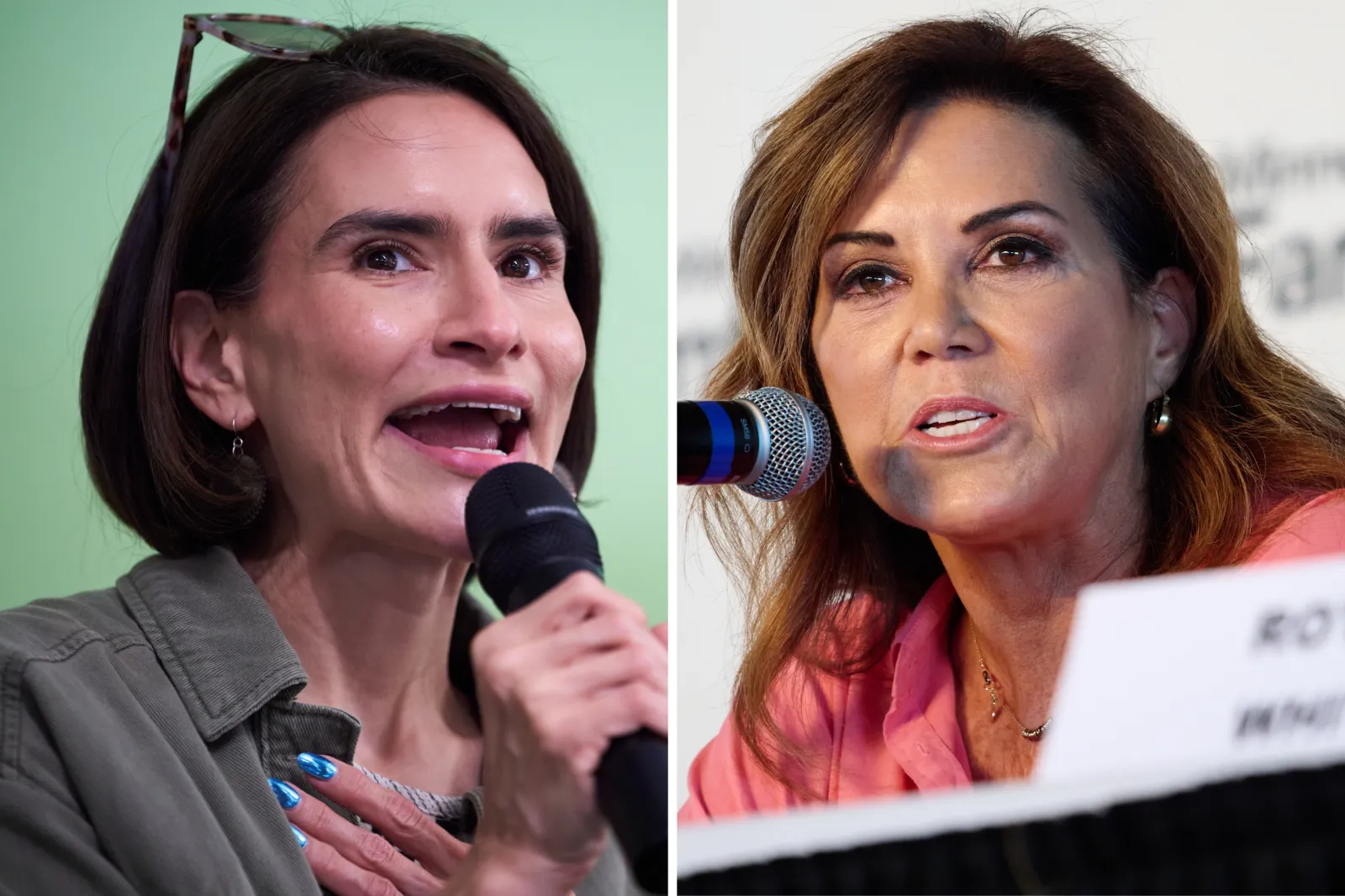
Democratic Lieutenant Governor Peggy Flanagan and Republican Michele Tafoya won their respective primaries in Minnesota’s Senate race on Tuesday ahead of an election Republicans hope to make competitive in the general election despite the state’s Democratic lean.
Flanagan’s victory over Representative Angie Craig is a win for the party’s progressive flank, which has secured a series of victories in recent primaries. Flanagan was viewed as the more left-leaning candidate in the race, winning endorsements from Vermont Senator Bernie Sanders and Minnesota Representative Ilhan Omar in what became the latest proxy war between progressives and moderates within the Democratic Party.
The race was called for Flanagan by the Associated Press at 11:27 p.m. ET. As of midnight, she had nearly 59 percent of the vote with 87 percent of the votes counted. Polls showed a tight race between the two Democrats in the final stretch.
Read More on Politics
Tafoya, meanwhile, emerged victorious from the Republican Party, winning nearly 53 percent of the vote as of 12:02 a.m. ET Wednesday. She had led in polls heading into Election Day and was viewed as the front-runner in the primary.
Republicans hope Tafoya could be a strong candidate who could help them compete in Minnesota, though Democrats believe the state’s history of voting for Democrats and a favorable environment for them driven by President Donald Trump’s declining national approval rating will give their candidate an edge in the general election.
Minnesota Senate Race: Peggy Flanagan vs. Michele Tafoya
Democrats are set to begin the general election with a polling edge, according to the latest poll of the race from Mason-Dixon Polling & Research. It did not poll specific candidates but found that Democrats lead Republicans on the generic ballot in the Senate race, 49 percent to 41 percent.
...
It was sponsored by KARE-TV, The Minnesota Star Tribune and the University of Minnesota Hubbard School of Journalism and Mass Communications, surveying 800 likely voters from June 8-10, 2026.
An Impact Research poll, sponsored by Craig’s campaign, found that Flanagan led Tafoya by 7 points, 51 percent to 44 percent. It surveyed 808 likely voters from May 26-28, 2026, with a margin of error of plus or minus 3.5 percentage points.
Meanwhile, an Emerson College poll found Flanagan up 6 points over Tafoya, 47 percent to 41 percent. It surveyed 1,000 Minnesota voters from February 6-8, 2026 and had a margin of error of plus or minus 3 percentage points.
David Schultz, a professor of political science at Hamline University, told Newsweek he sees Democrats as having an advantage in the general election.
“When it comes to the general election for the Senate seat, Democrats will still have an advantage over Republicans. Reaction to the Metro Surge, anti-Trump sentiment, and the fact that approximately 55 to 56 percent of Minnesota voters are in the Twin Cities metropolitan area all point toward a Democratic advantage,” he said.
Still, Tafoya “could nevertheless be a competitive candidate,” he said.
Prediction markets also favored Democrats to win against Republicans in the general election, with 93.5 percent chance of victory on Kalshi in the race. On Polymarket as of Tuesday evening, Democrats have a 93 percent chance of victory in the race.
Prediction markets allow traders to buy and sell contracts tied to political outcomes and current events, aggregating real‑money wagers into probability estimates.
Prices fluctuate as traders react to polling, fundraising, candidate developments and broader political trends. They measure trader sentiment at a given moment but do not always accurately predict the future.
Forecasters like the Cook Political Report and Sabato’s Crystal Ball consider the race to be Likely Democratic.
Immigration Will Be Major Issue
Immigration is likely to emerge as a key sticking point in the Minnesota race.
The North Star State became the epicenter of the Trump administration’s ramped-up immigration enforcement earlier this year. Two American citizens, Renee Nicole Good and Alex Pretti, were fatally shot by federal immigration officers in January amid protests in Minneapolis, fueling anger over the White House's hard-line approach to immigration and border security.
Democrats Craig and Flanagan sparred over the matter in the primary, with Craig facing criticism over her vote in support of the Laken Riley Act, and Craig suggesting Flanagan would be vulnerable to attacks over Democratic Governor Tim Walz’s handling of a fraud scandal in the general election.
Tafoya, however, has been more supportive of U.S. Immigration and Customs Enforcement (ICE). In January, she said during a Fox News interview that Democratic leaders in the state “fanned the flames” amid turmoil over the shootings. She wrote in a March post on X that she would vote to reauthorize the Laken Riley Act if elected.
The Republican candidate has emphasized cracking down on fraud throughout her campaign.
“The Democrat leadership in Minnesota continues to fail the people of Minnesota. They have prioritized fraud over the people who make our state great. Something must change,” she wrote in a July 9 post on X.
Republican attacks have centered around a nonprofit called Feeding Our Future, which was implicated in a $250 million COVID-era scheme involving fraudulent claims for child nutrition programs. The Justice Department’s probe, which began under the Biden administration, has led to dozens of indictments, including members of Minnesota’s Somali community. Estimates of the cost to taxpayers have ranged from $250 million to $1 billion.
Republicans accused Walz of inadequately responding to the scandal. They argued that his administration did not do enough to prevent the alleged fraud, but Walz’s office previously told Newsweek that he has “worked for years to crack down on fraud and asked the state Legislature for more authority to take aggressive action.”
Related Story

Mike Lindell Steps Down From MyPillow to Campaign for Governor of Minnesota
Is Minnesota a Blue State?
Republicans have targeted Minnesota in recent elections but have fallen short, as the state has retained its light blue state status.
Minnesota last voted for a Republican at the presidential level in 1972 but has still given Democrats narrow margins in the latest presidential races. Harris carried the state by only about 4 points in 2024, a narrower win than former President Joe Biden’s 7-point victory in 2020.
In 2016, Minnesota backed former Secretary of State Hillary Clinton by less than 2 percentage points. Former President Barack Obama did better in the state, carrying it by nearly 8 points in 2012 and more than 10 points in 2008.
Minnesota last elected a Republican senator in 2002, backing Republican Norm Coleman. In 2008, he lost reelection to Democrat Al Franken.
Republicans have gained ground in the state’s vast, rural areas, but Democrats have been able to make up those losses in the suburbs of Minneapolis and St. Paul, areas of the country that have quickly shifted blue over the past few election cycles. Minnesota consistently votes to the left of other competitive Great Lakes states like Michigan, Pennsylvania and Wisconsin.
Minnesota Senate Race Is a Must-Win for Democrats
Democrats are facing an uphill battle to win control of the Senate this year, even with a boost from the national environment. If Republicans flip the seat in Michigan, that would severely complicate Democrats’ path to victory in November.
Republicans hold a 53-47 Senate majority, so Democrats must flip four seats to win control if they win every race in a seat they currently hold.
They are defending two seats in Trump-won states—Georgia, where Senator Jon Ossoff is running for reelection, and Michigan, where progressive Abdul El-Sayed won the party’s nomination to take on Republican Mike Rogers.
Democrats also view GOP-held states in Maine, which Trump lost by 7 points in 2024, and North Carolina, which he won by 3 points, as top flip opportunities.
But there are no other Senate races in Harris-won or single-digit Trump states, meaning Democrats have to expand the Senate battleground and compete in more conservative areas if they want to win the majority. They are targeting GOP-held seats in Alaska, Iowa, Ohio and Texas as potential states to flip.
A loss in Minnesota would severely complicate Democrats’ path to reelection. To secure 51 seats, they must win two races in double-digit Trump seats. That becomes three needed victories if they lose Minnesota or another seat they currently hold.
The Cook Political Report classifies races in Alaska, Maine, Michigan and Ohio as tossups.
Contact Newsweek editors on this story: Jason Lemon, Sam Wilson and Anna Commander
View 0 Comments
Submit Correction
View Editorial & AI Guidelines