...


By Billal Rahman and Shane Croucher
0
Share
Newsweek is a Trust Project member
See more of our trusted coverage when you search.Prefer Newsweek on Googleto see more of our trusted coverage when you search.
White House border czar Tom Homan said the surge of federal immigration enforcement officers into Minnesota is ending.
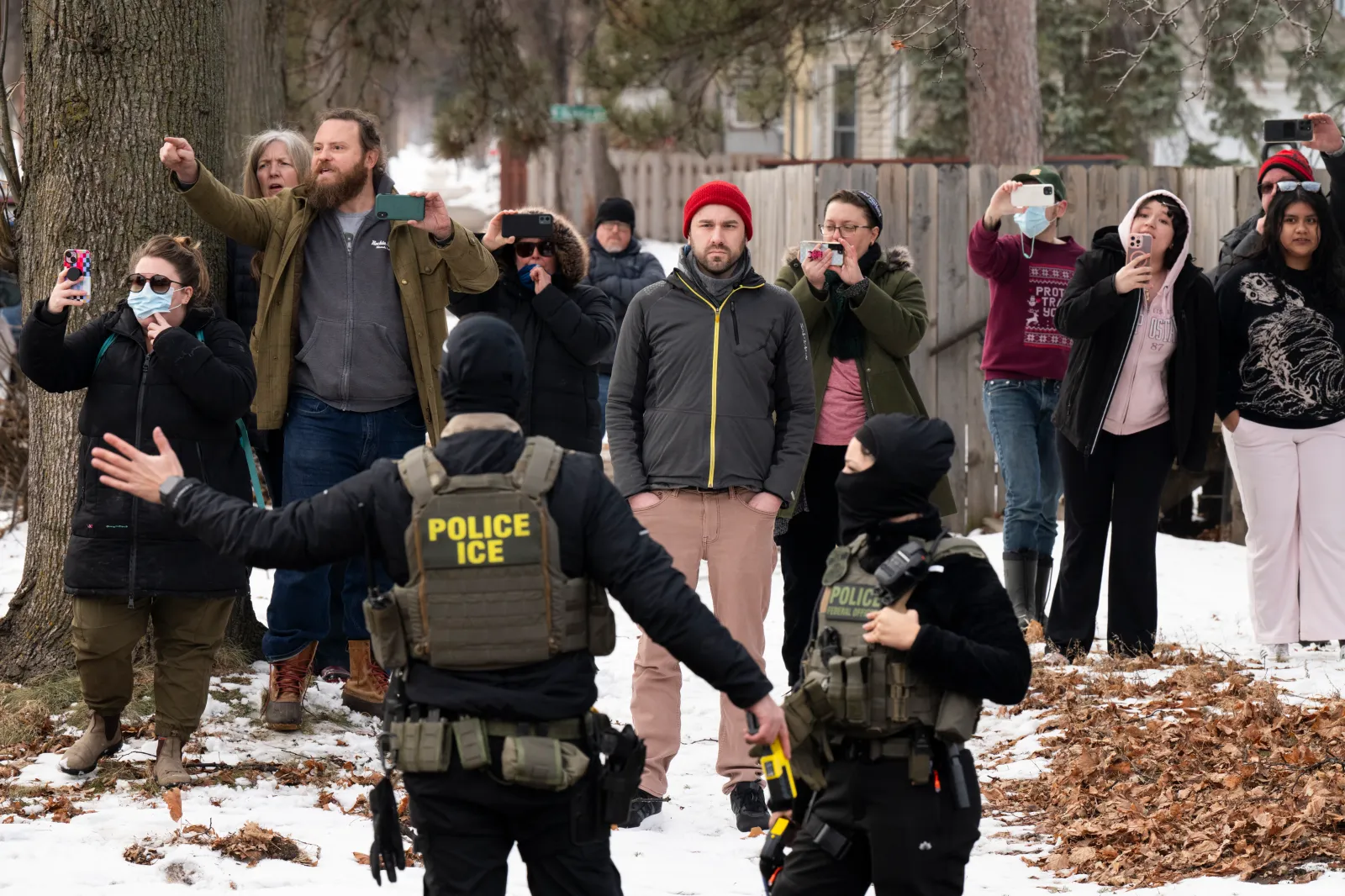
It follows weeks of disorder and protest over the mass presence of Immigration and Customs Enforcement (ICE) and Border Patrol agents in the state, there to target migrants without legal status under the Trump administration's widespread deportation policy.
Clashes between activists and federal officers twice turned deadly in Minneapolis, with two U.S. citizens shot dead.
Read More on U.S.
“As a result of our efforts here, Minnesota is now less of a sanctuary state for criminals,” Homan said at a news conference in Minneapolis on Thursday morning.
Homan said during the press conference that the immigration crackdown in the state had “yielded the successful results” the administration was seeking.
Homan also said that ICE officers did not conduct arrests at hospitals, elementary schools, or churches during the enforcement effort. However, he added that such locations are not categorically exempt in cases involving individuals considered significant public safety or national security threats. In 2025, the Trump administration removed restrictions from sensitive locations, sparking fears among immigration communities and advocates.
“Those locations are not off the table,” Homan added. “I said on day one, there’s no sanctuary for a significant public safety threat or national security threat.”
“A small footprint of personnel will remain for a period of time to close out, and transition full command and control back to the field office, as well as to ensure agitator activity continues to decline," he said.
...
Homan said the Minnesota operation resulted in approximately 4,000 arrests, though he did not provide a detailed breakdown of how many of those individuals were specifically targeted by ICE for alleged criminal activity while undocumented.
“We’ve had great success with this operation, and we’re leaving Minnesota safer,” Homan said.
Operation Metro Surge, which launched on December 1, 2025, was initially described by federal officials as a targeted enforcement effort focused on investigating alleged fraud within segments of Minnesota’s Somali community.
The narrative surrounding the operation shifted after two back-to-back killings, thrusting ICE and Border Patrol into the national spotlight and bringing widespread scrutiny of immigration enforcement tactics from both Democrats and Republicans. Renée Nicole Good, a poet and mother of three, was shot and killed by an ICE agent on January 7, during an enforcement action, sparking local outrage and national attention. Alex Pretti, an ICU nurse, was shot and killed by Customs and Border Protection agents on January 24, amid a confrontation during a protest.
President Donald Trump had sent Homan into Minnesota to take control of ICE operations on the ground in the aftermath of the deaths, replacing Border Patrol Commander Greg Bovino, after public outrage and bipartisan pressure. Bovino was reassigned to his previous role as the commander of a southern California sector near the U.S.–Mexico border.
Late last month, nationwide anti‑ICE protests emerged in across the nation as outrage grew over the deaths of Good and Pretti at the hands of federal agents and the tactics used during the immigration enforcement surge. In early February, the Trump administration announced a partial pullback, ordering about 700 federal immigration agents to be withdrawn from Minnesota even though thousands remained. On February 10, Minnesota Governor Tim Walz said the federal immigration crackdown could end within days.
"I want to thank Governor Walz … I also want to thank Mayor Frey … I want to thank Police Chief O'Hara. We've seen a big change here in the last couple weeks. It's all good change," Homan said.
Walz issued a statement on social media that read "Thank you, Minnesota."
“They thought they could break us, but a love for our neighbors and a resolve to endure can outlast an occupation,” Minneapolis Mayor Jacob Frey said in a press release after Homan announced the withdrawal. “These patriots of Minneapolis are showing that it’s not just about resistance — standing with our neighbors is deeply American. This operation has been catastrophic for our neighbors and businesses, and now it’s time for a great comeback. We will show the same commitment to our immigrant residents and endurance in this reopening, and I’m hopeful the whole country will stand with us as we move forward together.”
Update, 02/12/2026, 10:37 a.m. ET: This article was updated with additional information.
Update, 02/12/2026, 11:00 a.m. ET: This article was updated with additional information.
In a polarized era, the center is dismissed as bland. At Newsweek, ours is different: The Courageous Center—it's not "both sides," it's sharp, challenging and alive with ideas. We follow facts, not factions. If that sounds like the kind of journalism you want to see thrive, we need you.
When you become a Newsweek Member, you support a mission to keep the center strong and vibrant. Members enjoy: Ad-free browsing, exclusive content and editor conversations. Help keep the center courageous. Join today.


View 0 Comments
Submit Correction
View Editorial & AI Guidelines