...

By Dan Gooding
Associate News Editor
0
Share
Newsweek is a Trust Project member
See more of our trusted coverage when you search.Prefer Newsweek on Googleto see more of our trusted coverage when you search.
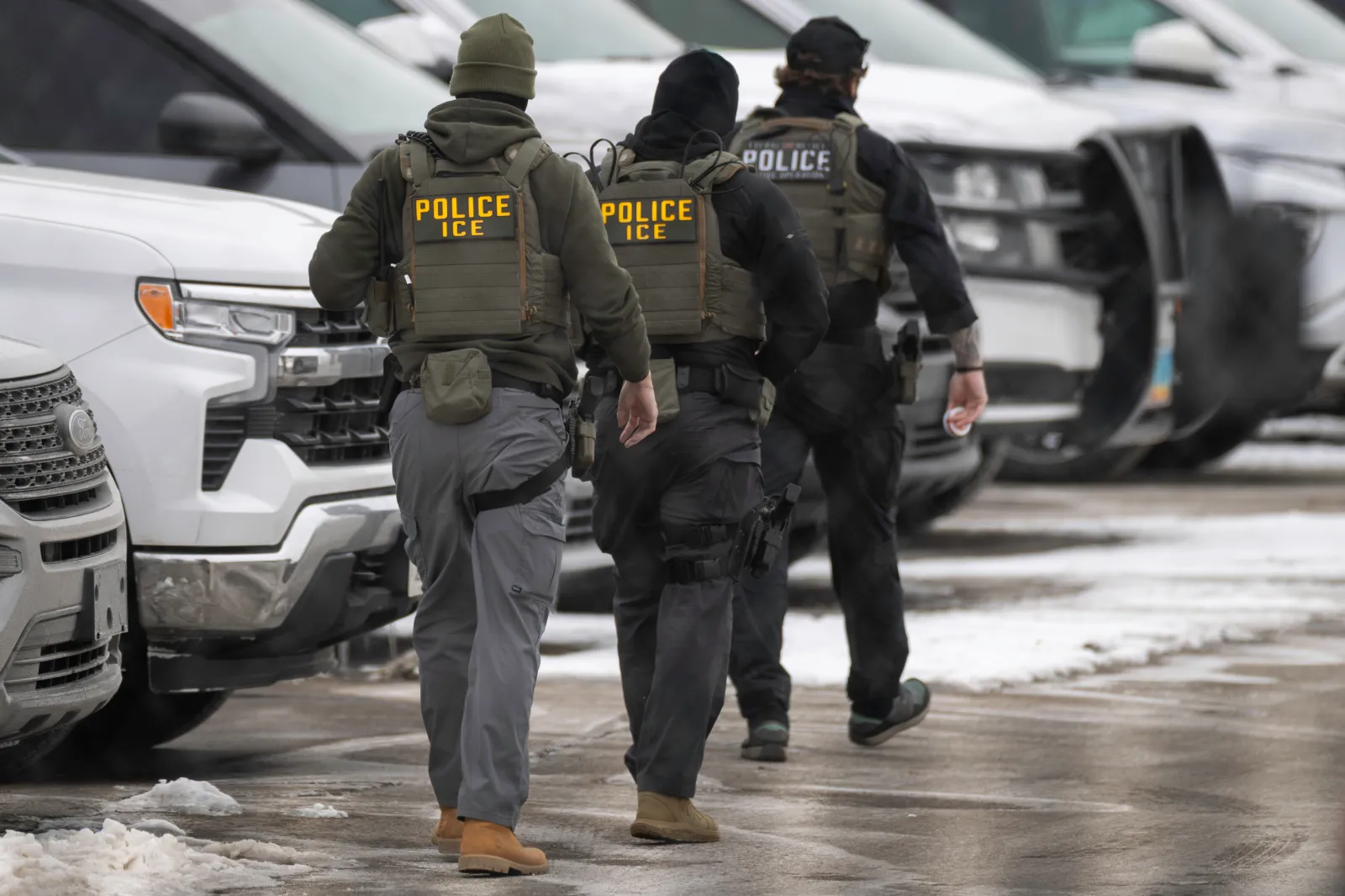
A U.S. Immigration and Customs Enforcement (ICE) agent has been charged, and a warrant has been issued for his arrest over the shooting of a Venezuelan man in Minneapolis in January, officials in Minnesota announced Monday.
The non-fatal shooting happened in the days between the deadly incidents involving U.S. citizens Renee Nicole Good and Alex Pretti, and the move by Hennepin County Attorney Mary Moriarty comes after local authorities have struggled to seek prosecutions for the federal agents connected with their deaths.
Moriarty charged Christian Castro with four counts of second-degree assault and one count of falsely reporting a crime in connection with the January 14 incident. A warrant was issued for his arrest.
Read More on U.S.
"There’s no modern precedent for what happened to the people here in Minnesota," Moriarty said at a press conference. "So it requires a lot of us to dig in and look at ways to hold people accountable that we probably never thought we would be looking at in our careers."
A spokesperson for ICE told Newsweek that Moriarty's actions were "unlawful and nothing more than a political stunt."
Christian Castro Charges: What To Know
Castro, 52, was charged in connection with the shooting of Julio Cesar Sosa-Celis in Minneapolis on January 14.
The agent and another officer had chased another man, Alfredo Alejandro Aljorna, into a duplex apartment where the pair lived. Both had legal status, Moriarty said.
Officers initially alleged that Aljorna violently resisted arrest and that Sosa-Celis and another man allegedly tried to intervene by attacking the officer with a shovel and broom handle, per an FBI investigator's affidavit. At that point, Sosa-Celis was shot in the leg by a federal agent before fleeing into a nearby apartment. He was then detained.
“Mr. Castro fired his weapon through the front door of the home while standing alone in the front yard, under no physical threat or duress, and knowing there were people who had just run inside,” Moriarty said in a press release. “Mr. Castro is an ICE agent. But his federal badge does not make him immune from state charges for his criminal conduct in Minnesota.”
...
Agents were later accused of lying under oath and were placed under investigation. Video published in April appeared to contradict the original official version of events.
“Lying under oath is a serious federal offense. The U.S. Attorney’s Office is actively investigating these statements," the ICE spokesperson said. "Upon conclusion of the investigation, the officers may face disciplinary action, including termination of employment, as well as potential criminal prosecution.
"The men and women of ICE are entrusted with upholding the rule of law and are held to the highest standards of professionalism, integrity, and ethical conduct. Violations of this sacred sworn oath will not be tolerated.”
Investigations into Renee Good and Alex Pretti's Deaths
The Sosa-Celis' incident fell between the fatal shootings of Good and Pretti, on January 7 and January 24, respectively.
Good was shot by an ICE agent while trying to flee the scene of an enforcement action, as locals protested federal agents' sweeping arrests as part of Operation Metro Surge. The Trump administration accused her of trying to strike an agent with her vehicle, prompting the agent to shoot.
Protests erupted across the country following Good's death, with heightened tensions between ICE, the Border Patrol and Minnesota locals. Pretti was shot by a Border Patrol officer during one of the protests, again accused of seeking to obstruct agents, which his friends and family denied.
Officials in the state sought to investigate the shootings but saw their efforts blocked, with Trump administration officials saying they had authority over the case.

...
Will Minnesota Prosecutors Succeed?
State and local prosecutors can bring criminal charges against federal officers, but the cases face a uniquely high legal bar.
Under the Constitution’s Supremacy Clause, federal agents can argue they are immune from state prosecution if they were performing their official duties and used force that was “necessary and proper” under the circumstances—a doctrine that dates back to a Supreme Court decision in 1890.
Federal courts, not state courts, typically decide that question after defendants move to shift the case out of state jurisdiction, giving the officer an early opportunity to seek dismissal before a jury ever hears the facts.
The immunity is not absolute, and prosecutions can proceed if authorities show the officer acted outside the bounds of reasonable force or federal authority. Minnesota officials said Monday they expected an attempt to move the case, but that prosecution would proceed anyway, because Castro was outside the home and had not been attacked.
This article contains reporting by The Associated Press.
View 0 Comments
Submit Correction
View Editorial & AI Guidelines