...

By Amanda Greenwood
Associate News Editor
0
Share
Newsweek is a Trust Project member
See more of our trusted coverage when you search.Prefer Newsweek on Googleto see more of our trusted coverage when you search.
Millions of residents in communities across four states—Pennsylvania, Texas, New Mexico, and California—have been advised to stay inside and “keep windows and doors closed” due to “harmful levels” of fine particle pollution known as PM2.5, according to the National Weather Service (NWS) and the Environmental Protection Agency (EPA).
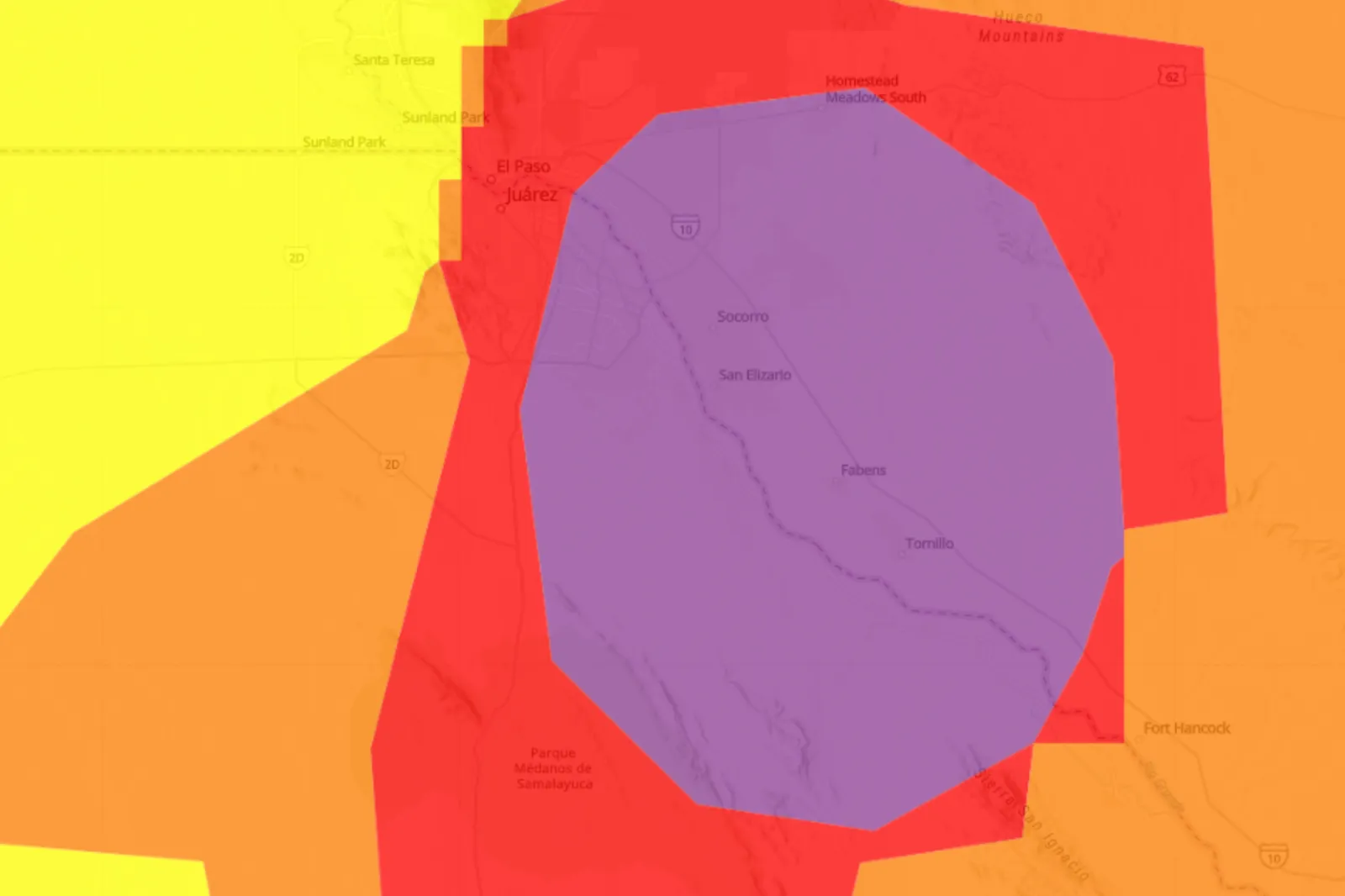
The EPA’s AirNow map, which monitors air quality across America, has shown pockets of PM2.5 ranging from “very unhealthy” to “unhealthy for sensitive groups” as of Thursday, February 19, at 2.15 a.m. ET.
...
Read More on News
Areas Affected By Poor Air Quality
The NWS has issued air quality alerts for Pennsylvania and California, and the EPA has warned that areas in certain parts of Texas and New Mexico are facing “unhealthy and very unhealthy” air quality alerts.
Pennsylvania
The Susquehanna Valley, including Dauphin, Lebanon, Cumberland, York, and Lancaster counties are under a “code orange air quality alert” through Thursday, according to the NWS alert.
This means that those in sensitive groups—which include the elderly, children, and those with existing heart or lung conditions—should take steps to reduce their exposure to the polluted air, as it could trigger or worsen heart and lung issues, such as asthma, or cause symptoms ranging from coughing and eye, throat, and nose irritation to shortness of breath and chest tightness.
California
According to the NWS air quality alert, Indio, Palm Springs, Cathedral City, Palm Desert, La Quinta, and Coachella are all facing harmful levels of PM2.5 and have been urged to monitor local air quality forecasts through Thursday.
Texas and New Mexico
The EPA has reported “unhealthy” and “very unhealthy” levels of air quality across parts of Texas and New Mexico, including Socorro, San Elizario, Fabens, and Tornillo, meaning everyone is likely to be impacted by polluted air.
What Can Residents Do To Limit Exposure To Poor Air Quality
Alongside keeping their windows and doors closed, residents across all four states—especially those in sensitive groups—should take steps to reduce their exposure to the poor air quality, which involves reducing or avoiding strenuous outdoor activities and avoiding other sources of potential pollution, such as fireplaces, candles, incense, and grilling.
Residents in affected areas should use air purifiers or filters to keep the air clean indoors, and have been told not to use whole-house fans or swamp coolers because they could bring the polluted outdoor air inside.
To help reduce the levels of PM2.5, communities have also been urged to reduce vehicle use; they should make use of public transport instead. If they must drive, they should drive slowly on dusty, dirt roads.
What’s Causing Poor Air Quality In California, Texas, New Mexico, And Pennsylvania
In California, the NWS says that elevated levels of PM2.5 are due to dust which are being blown in by strong winds.
Neither the NWS nor the EPA has established the cause of PM2.5 in the other three states, but PM2.5 can be caused by smoke from wildfires or smokestacks, dust from unpaved roads—dirt tracks—or construction sites, and emissions from vehicles or power and industrial plants.
View 0 Comments
Submit Correction
View Editorial & AI Guidelines