10
Loading video...

By Jesus Mesa
Reporter
0
Share
Newsweek is a Trust Project member
See more of our trusted coverage when you search.Prefer Newsweek on Googleto see more of our trusted coverage when you search.
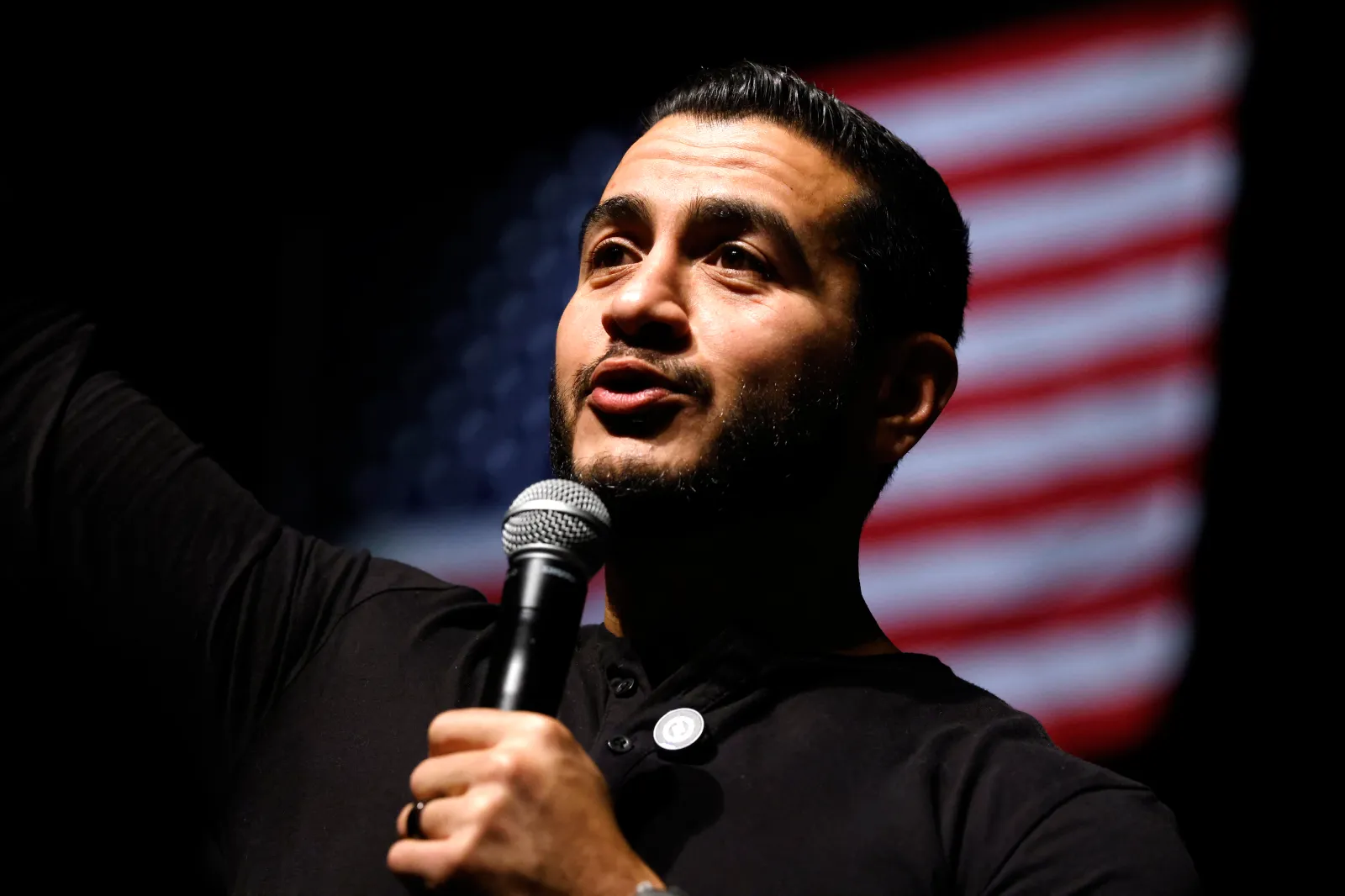
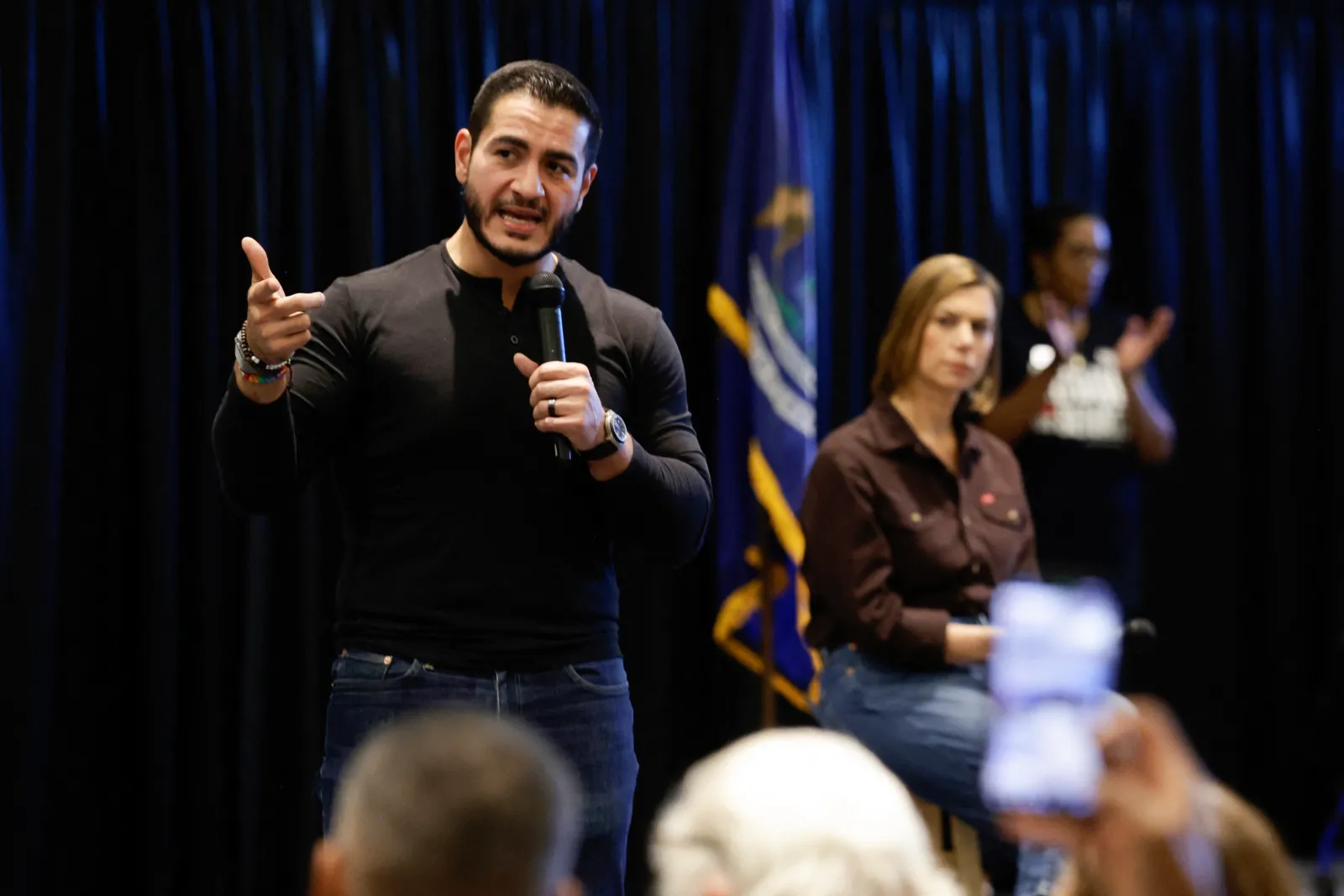
Michigan's Senate nominees share a stage for the first time Thursday night as Republican Mike Rogers and Democrat Abdul El-Sayed debate in Grand Rapids in one of the midterms' most closely watched races.
Republicans haven't won a Senate race in Michigan since 1994. They think Rogers, who lost to Elissa Slotkin in 2024 by fewer than 20,000 votes, has a better shot this time against a progressive opponent, while Democrats count the seat among the handful they need to retake the chamber.
Michigan Senate Debate: How to Watch Mike Rogers vs. Abdul El-Sayed Live
WOOD-TV will host the hourlong debate at 7 p.m. ET, moderated by political reporter Rick Albin and anchor Amber Krycka. The event will air nationally on NewsNation and stream on NewsNationNow.com, as well as WOOD TV8, WOOD TV+ and woodtv.com.
Read More on Politics
Under rules agreed to by both campaigns, candidates will get 60 seconds to answer questions and 30 seconds each for follow-ups, rebuttals and closing statements. Debate order was determined in advance during a Zoom call with campaign representatives.
The matchup comes after weeks of sparring over debates. El-Sayed has repeatedly dubbed the former congressman "Mike Dodgers" for skipping earlier forums. Last month, he appeared beside an empty podium after Rogers declined a FOX 2 debate in Detroit, accusing the moderator of favoring El-Sayed.
Rogers later fired back on X, writing that "Michiganders will learn just how much of a Conman you really are."
The candidates are scheduled to meet again in late October, less than two weeks before Election Day, in a debate hosted by WXYZ Channel 7.
The Five Key Issues That Are Defining the Michigan Senate Race
Michigan voters keep naming a shortlist of concerns in polling: what things cost, the tariff fight with Canada, data centers and health care. With most surveys showing the race inside the margin of error, how each candidate handles those subjects Thursday could carry real weight.

...
1. Cost of Living
In a CNN poll conducted by SSRS from late August into early September, Michigan voters ranked the economy and cost of living as their top issues. Nearly half of likely voters said a candidate's positions would decide their vote. Far fewer, 31 percent, cited which party controls the Senate, and 22 percent pointed to character and experience.
El-Sayed's pitch on costs leans on Medicare for All and higher taxes on the wealthy. At the FOX 2 debate, he said he cared more about childcare, health care, schools and roads than about letting a billionaire make a second billion.
Business groups have lined up behind Rogers. The Detroit Regional Chamber and the National Federation of Independent Business both endorsed him, and his campaign says he would fix education, bring down housing costs and return manufacturing jobs to the state.
2. Tariffs and the Trade War With Canada
Canada bought $23.2 billion in Michigan goods in 2025, about 39 percent of the state's goods exports. After trade talks collapsed, President Donald Trump said he would double tariffs on Canadian cars to 50 percent and slap a 50 percent tariff on auto parts. The National Taxpayers Union Foundation, a conservative free market group, puts the cost of the president's tariffs at an extra $5,600 a year for Michigan households.
For Rogers, it may be the trickiest subject of the night, and on Wednesday he changed course. In a new ad shot in a sports bar, a Labatt in hand and the Red Wings on TV, he said, "Here in Michigan, we know that Canada is not our enemy," and called for an end to the tariff war. He never named Trump.
As recently as August, Rogers had said tariffs were "necessary, but are not a one-size-fits-all solution," and argued Michigan needed a senator who would work with the president on a deal with Canada. It is the second time this fall he has split with Trump on a major issue, after data centers.
El-Sayed, endorsed by the United Auto Workers, accused Trump in a statement of failing Michigan with chaotic tariffs and bad trade deals. The union supports targeted tariffs but opposes the 50 percent levy on Canada.
...
3. AI and Data Centers
Rogers' position on data centers has already moved once this fall. He used to echo the Trump administration, calling for faster permitting for artificial intelligence companies and leaving the decision to local communities. Then, The Lever reported he had raised nearly $150,000 from people with AI and data center investments, and within days he endorsed a statewide moratorium on new construction.
"People really effing hate data centers," El-Sayed told a campaign crowd before the primary. He wants development halted until the federal government writes new rules, and his campaign keeps pointing to Rogers' personal investments, worth up to $2.6 million, in companies riding the AI boom.
Plenty of voters seem to agree. Support for data centers fell across the board in Michigan in a July Politico/Public First poll, with the steepest drop among Democrats, and at least 14 candidates who ran against the facilities won their August primaries.
Rogers' position has also changed during the campaign. In January, he declined to take a position on data centers. By March, he said Michigan should compete for AI jobs and investment, while arguing that data centers should pay for their own electricity so residents would not face higher bills. In April, he cited tax revenue from a proposed data center in Saline Township as a potential way to lower property taxes.
By August, Rogers had changed his position. He told The Detroit News, "I think we need a pause, probably," and later called for a one-year moratorium on new data centers.
A September New York Times/Siena University poll found that 46 percent of Michigan voters trust El-Sayed to handle AI and data centers, compared with 35 percent who favor Rogers. Voters are also skeptical of the technology, with 66 percent opposing the construction of AI data centers and 29 percent supporting it.

...
4. Health Care and Drug Prices
Single-payer health care is El-Sayed's signature cause. In September, his campaign put $2.3 million behind a statewide ad attacking Rogers' record on opioids and prescription drug prices from his years in the House.
Rogers answered with a populist turn of his own. Filmed with Ontario visible across the river, his recent ad accuses drugmakers of ripping off American families and says Michiganders pay four times what Canadians do for the same heart medication. El-Sayed earlier falsely claimed that Rogers had lobbied for the drug industry, then walked it back.
Republicans see Medicare for All as a liability for El-Sayed, and the National Republican Senatorial Committee's first general election ad accused him of wanting to raise taxes on seniors.
5. Trump, Hasan Piker and Antisemitism
Each campaign has spent the fall tying the other man to a polarizing ally. El-Sayed has said Rogers doesn't want to answer for the policies of "Daddy Trump," who endorsed him. Rogers has hammered El-Sayed over Hasan Piker, the leftist Twitch streamer who campaigned with him in the primary and once said America deserved the September 11 attacks.
Both lines seem to land. In an August Fox News poll, 54 percent of Michigan voters called El-Sayed too extreme for the state, while 51 percent said Rogers is too close to Trump.
Republican-affiliated groups had spent nearly $3 million on ads tying El-Sayed to Piker by mid-September, according to AdImpact data cited by Axios. Piker keeps supplying material; last month he told Axios the United States had committed more terrorism than Al-Qaeda "pound for pound."
The association has cost El-Sayed most with Jewish voters. After Piker made comments in August that some Democrats read as justifying threats against American Jews, El-Sayed called antisemitism a scourge without naming him. Some Michigan Jewish leaders have since urged Jewish Democrats and independents to back Rogers, who said El-Sayed "fans the flames of antisemitism." Michigan Democratic Party Chair Curtis Hertel has accused Rogers of Islamophobic attacks.
El-Sayed has refused to formally disavow Piker, though he said in August he had no plans to campaign with him again. Behind the scenes, he has pushed harder: El-Sayed recently called Piker and warned his rhetoric was costing votes, CNN reported Wednesday, citing two people El-Sayed told about the call.
Related Story
Trump Voters Back Abdul El-Sayed 5 to 1 in TV Panel Poll
What Polls Show
Polls released in the days before the debate show a race that has tightened into a near tie, with El-Sayed holding narrow leads.
A Quantus Insights poll of 744 likely voters conducted October 5 to 6 found El-Sayed at 48 percent and Rogers at 47 percent, with the Libertarian and Green Party candidates each at 1 percent. A YouGov survey of 3,947 likely voters, conducted from September 22 to October 4, showed the same one-point margin, 49 percent to 48 percent.
A Fox News poll conducted by Beacon Research and Shaw & Company Research from September 24 to 28 had El-Sayed at 50 percent and Rogers at 49 percent among 1,028 likely voters. Rogers had led by four points in Fox News' August survey of registered voters.
Mitchell Research & Communications, polling 682 likely voters on October 1, had El-Sayed up five, 46 percent to 41 percent, with 6 percent undecided. Trafalgar Group, a Republican pollster, also put El-Sayed ahead, 47 percent to 45 percent, in a survey conducted September 28 to 30.
Earlier in September, Suffolk University gave El-Sayed a seven-point lead, and its polling director, David Paleologos, tied the shift among independents to the Canada tariffs and unhappiness over data centers. "Abdul El-Sayed is popular with unaffiliated Michigan voters," he said. A Detroit News/WDIV-TV poll by the Glengariff Group, released September 8, was among the few to show Rogers ahead, 45.8 percent to 44.4 percent.
The two coalitions look very different. Voters without a four-year degree favored Rogers in a Hill/Emerson College survey, while college graduates went for El-Sayed. Age cuts even deeper: an August AARP poll had El-Sayed down 9 points among voters over 50 and up 16 among those 18 to 49.
The Cook Political Report rates the contest a toss-up.
Latest Developments in the Michigan Senate Race Between Mike Rogers and Abdul El-Sayed
Rogers is trying to keep independents without losing Trump's base, a balance that has gotten harder as voters sour on parts of the president's agenda. Leaning on Trump risks the first group; breaking with him could keep Republicans home in November.
Enthusiasm numbers don't help him. A New York Times/Siena poll in September found 61 percent of likely Democratic voters nationwide almost certain to vote, compared with 56 percent of Republicans.
Former President Barack Obama will rally with El-Sayed and Jocelyn Benson, the Democratic nominee for governor, in Detroit on October 24, the Michigan Democratic Party announced Monday. The rally falls on the first day of in-person early voting in Michigan.
The stop takes Obama to Detroit, where El-Sayed struggled in the Democratic primary. Detroit is more than three-quarters Black, and Obama remains highly popular there. It had been unclear whether Obama would back El-Sayed, who has called the Affordable Care Act, one of Obama's signature achievements, an "incremental" policy.
Money is pouring in on both sides. Disclosed spending has topped $205 million, putting the race on pace to become Michigan's most expensive election.
Contact Newsweek editors on this story: Jenna deJong and Sam Wilson.
View 0 Comments
Submit Correction
View Editorial & AI Guidelines