...


By Anna Commander and Ellie Cook
0
Share
Newsweek is a Trust Project member
See more of our trusted coverage when you search.Prefer Newsweek on Googleto see more of our trusted coverage when you search.
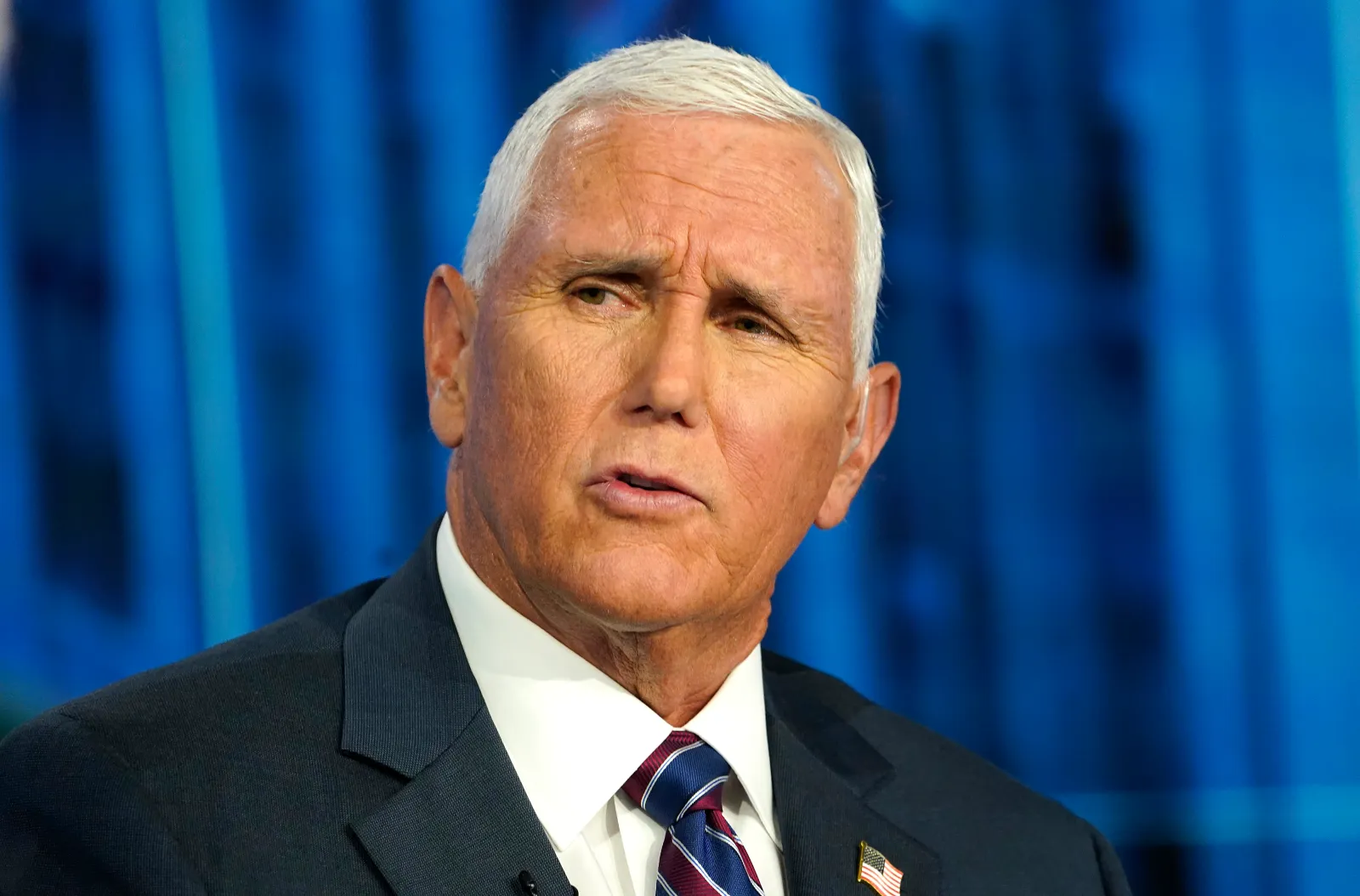
Former Vice President Mike Pence has warned the terms of America's deal with Iran are "much bigger than a mistake," adding to the chorus of early Republican criticism of the agreement touted by President Donald Trump.
The details of the signed memorandum of understanding reached by the U.S. and Iran were made public on Monday, including sanctions relief for Tehran, a $300 billion reconstruction fund for the country and an Iranian pledge to not pursue nuclear weapons.
But Pence, who served as Trump's right-hand man during his first administration, said the emerging terms of the agreement could "essentially be a lifeline to the Iranian regime" and that it "smacks of appeasement."
Read More
Will Iran Get $300B in Trump’s Iran Deal? What Officials Have Said8 min read

Why the Iran Deal Is Criticized and Called ‘Surrender’ 7 min read

What’s Needed for Iran Nuclear Elimination Deal in 60 Days 7 min read

"We ought to keep the pressure on, keep the blockade on, and if need be, let our armed forces get back to work," he told CNN's Kaitlan Collins on Tuesday.
...
Newsweek reached out to the White House via email on Tuesday night for comment.
While Trump has lauded the "great" deal, Republicans are among those questioning whether the emerging terms justify the more than three months of war, the deaths of 13 U.S. service members and global concerns over oil prices, food supplies and travel disruption. More than 7,000 people have been killed across the Middle East, largely in Iran and Lebanon.
U.S. officials say the nitty-gritty of the agreement is still being hammered out, and with skepticism swirling in the Republican camp as well as in Democratic circles, Trump has said he will eventually send the deal to Congress.
"If it’s a secret deal then how can I take it seriously?" Republican Senator Thom Tillis from North Carolina said Tuesday.
"Even the people who follow this stuff closely up here don’t know that much about," added South Dakota Republican Senator John Thune in comments to reporters on Capitol Hill.
"I want to see it myself," said Senator Lindsey Graham from South Carolina, a staunch Trump ally. "The way Iran describes it is awful. The way we describe it makes sense to me. Let’s look at it and see what it actually is."
Republican Senator Bill Cassidy, who was successfully primaried amid Trump's pressure, rebuked the deal in a post to X on Wednesday. The Louisiana lawmaker said, "Reagan is rolling over in his grave. Iran’s nuclear ambitions were not curbed, and they have learned that threatening the Strait of Hormuz works and will undoubtedly leverage it in the future. Now, Iran gets to build brand-new infrastructure under this deal. Before the war, the strait was open, Iran was being crushed by sanctions, and 13 service members were still alive. Now, 13 Americans are dead, families have paid billions at the pump, sanctions will be lifted, and the bombing has stopped. This is the worst foreign policy blunder in decades."
Conversely, Republican Senator Josh Hawley of Missouri praised Trump while speaking with Fox News on Wednesday, saying in part, "I think the fact that the president is getting the strait reopened, that he's got their nuclear program buried. Those are big achievements ... It remains to be seen whether we will actually give them any money."
The agreement also appears to have chafed in Israel. Multiple outlets reported Israel had been blocked from viewing the document as Trump vocally criticized his close ally, Israeli Prime Minister Benjamin Netanyahu.
What Do We Know About the Deal?
U.S. officials have painted the memorandum of understanding as a "framework" agreement, leaving the details to be decided at a later date.
Earlier, tight-lipped comments, conflicting statements from Iranian and U.S. officials, and information glimpsed by reporters drew a vague outline of the deal.
Trump has said it will include a commitment from Iran that it will never have a nuclear weapon.
"That’s about 99.9 percent of what I wanted," Trump said.
Tehran's access to nuclear technology has been at the heart of the conflict between the U.S., Iran and Israel and one of the main reasons the U.S. launched its strikes on Iran from February. Iran has long said its nuclear program is peaceful and geared to generate energy for a civilian population using an increasing amount of electricity.
But international experts say Iran has more than 400 kilograms (over 880 pounds) of uranium enriched to between 20 and 60 percent, which is close to the level needed to make a nuclear bomb. It's generally accepted uranium enriched to 3.67 percent works for civilian reactors, which is the limit imposed by the former Iran nuclear deal between the U.S. and Iran in 2015.
Trump was a vocal critic of this deal, also known as the Joint Comprehensive Plan of Action (JCPOA), which was negotiated under former President Barack Obama. Trump withdrew from JCPOA during his first term and Iran openly abandoned provisions of the agreement.
Further talks on the Iranian nuclear program are thought to be included in the deal as part of a 60-day extension to the ceasefire already in place. This two-month period would be used to negotiate the final peace agreement.
It's not clear yet how the U.S. will verify Iran is abiding by any of its nuclear commitments under this deal, nor how the hundreds of kilograms of highly enriched uranium will be removed from Iran.
The stockpile is thought to be buried deep underground in nuclear sites targeted by the U.S. in the brief war between Iran and Israel in June 2025.
Strait of Hormuz to Reopen?
The deal includes the temporary reopening of the Strait of Hormuz shipping route to global oil flows, and a stipulation the U.S. will remove its own blockade of Iranian ports that it imposed in April.
Iran has effectively controlled the narrow waterway since early March, through which a fifth of the world's oil and gas usually flows, as well as roughly a third of seaborne shipments of fertilizer needed to keep the world's agricultural industry going.
Trump said on Monday ships "loaded up with Oil" were making their way out of the Strait of Hormuz. On Tuesday, Iranian state media reported that at least three Iranian oil tankers and two cargo vessels had passed the U.S. blockade.
The Lebanon Question
Iran's foreign minister, Abbas Araghchi, said the deal calls for Israel to pull out of Lebanon, where Israel has been fighting Iran-backed militant group Hezbollah.
Israel's government has already ruled out a withdrawal from southern Lebanon. An anonymous U.S. official told The Associated Press the agreement doesn't mandate an Israeli withdrawal from Lebanon.
But Trump said Israel had been fighting Hezbollah for "too long," and publicly berated Netanyahu for Israel's operations in Lebanon. Fresh Israeli attacks on the Lebanese capital, Beirut, over the weekend drew instant criticism from Trump, visibly frustrated by the violent flare-up as negotiators neared an agreement.
Earlier in June, Israeli attacks on Beirut prompted Iran to launch fresh missile salvos at Israel.
Confusion Over Reconstruction Funds
Some reports indicate the U.S. would agree to a $300 billion reconstruction fund for Iran, although Trump has called this "Fake News."
Reuters reported earlier, citing an anonymous source, that a $300 billion private fund is outlined in the deal, noting that it is a private investment vehicle rather than a reconstruction or reparations program. The source said companies based in the U.S., the Gulf, Asia, South America, and Africa have all agreed to commit financing.
"It'll only be created once the final deal is signed," the source told Reuters. "During these 60 days the fund administrators will work with Iranians and investors to plan and scope projects."
Vice President JD Vance said while speaking with Fox News on Tuesday that "not a single cent of American money under any circumstance, no matter what the Iranians do, goes to Iran, not a single cent of American money."
But on Monday he had said Iran could have access to $300 billion for reconstruction under the peace agreement that was funded by other countries such as Arab states in the Gulf.
He told CBS News’s Ed O’Keefe "that’s the sort of thing they could have access to, funded by the Gulf Coast coalition, so long as they honor their end of the obligation.”
View 0 Comments
Submit Correction
View Editorial & AI Guidelines