...

By Nick Mordowanec
Staff Writer
0
Share
Newsweek is a Trust Project member
See more of our trusted coverage when you search.Prefer Newsweek on Googleto see more of our trusted coverage when you search.
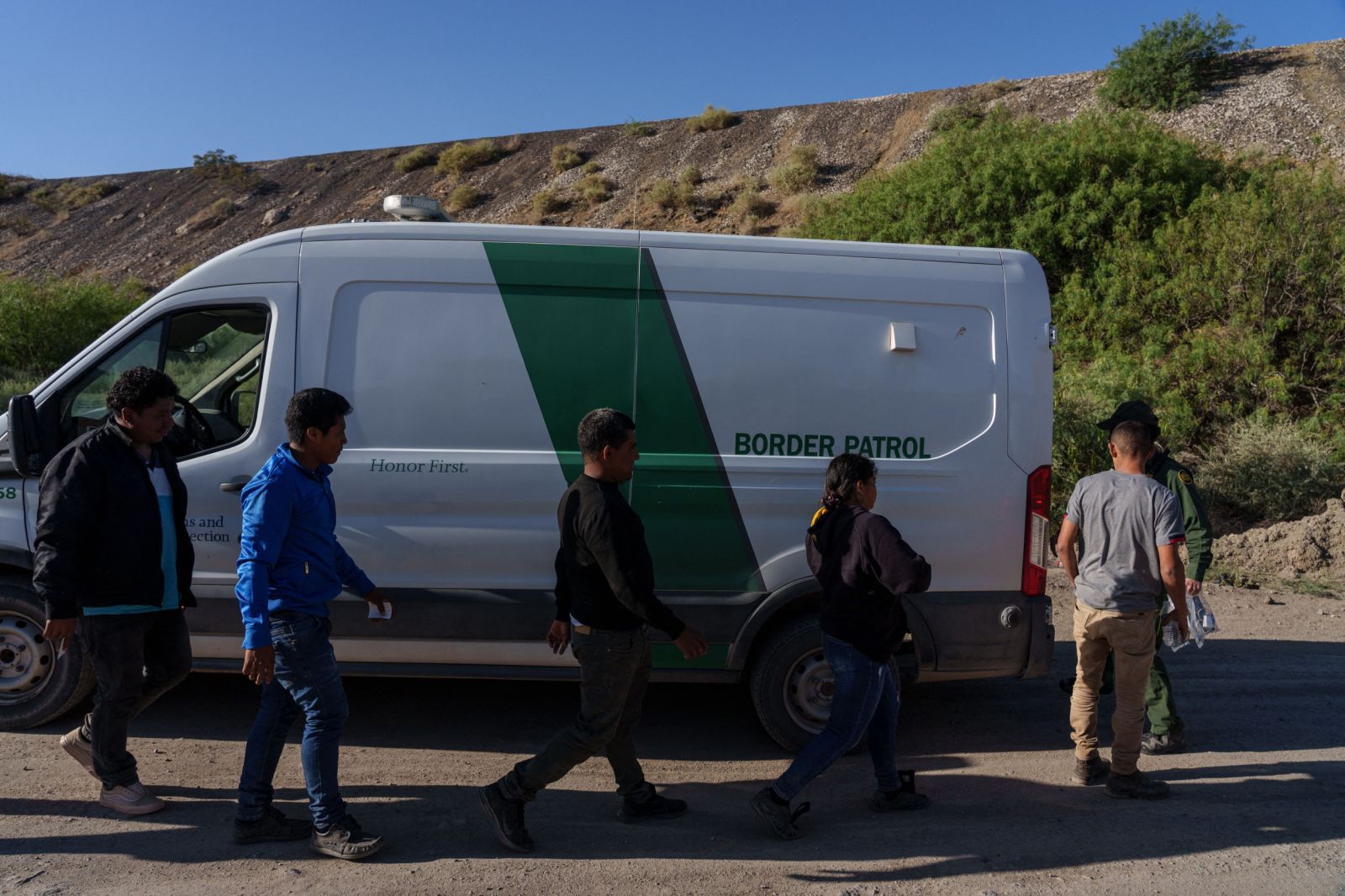
Fire officials in Sunland Park, New Mexico, have told Newsweek that heat-related injuries experienced by migrants crossing the southern border will continue "without a doubt" as temperatures soar.
Temperatures in Sunland Park are expected to exceed 100 degrees Fahrenheit on Monday, Tuesday and Wednesday, the Weather Channel reported. They are expected to decrease to the upper 80s on Thursday and Friday before rising again to the mid-to-upper 90s.
The city, in the state's southeastern region, borders Texas and the Mexican state of Chihuahua. Since March, the Sunland Park Fire Department has recorded 13 migrant deaths, with officials saying that number includes only the incidents that directly involved someone from the SPFD. There have been at least 60 known heat-related deaths in the general area, responded to by Border Patrol agents and other enforcement agencies, the department said.
Read More on News
"[Last year] caught us by surprise, to be honest with you," Sunland Park Fire Department Chief Daniel Medrano told Newsweek via phone on Monday. "We live in a very hot climate. We have heat exhaustion and heat stroke, but not the numbers we saw last year."
Rescues have continued on a rolling basis as migrants who successfully scale border walls are welcomed by an unforgiving desert ridden with "very, very sandy, very, very desolate areas," Medrano said. But the exact number of rescues is unknown because of the various departments and authorities involved.
"Unfortunately, they're very hard to track," Medrano said. "I track them here locally, but our management system does not help me to segregate deaths. It's a really hard system to keep track of."
...
The humidity in the Sunland Park region ranges from 7 percent to 10 percent, Medrano added, which can more easily lead to dehydration. He said that of his department's 24 uniformed firefighters, the norm is to have a minimum of six persons per shift plus a couple of staff personnel.
There are jurisdictional lines that also determine search-and-rescue missions.
"Border Patrol will come across a corpse, a body, and won't necessarily report it to us if the office of the medical examiner can pick it up themselves," he said.
If authorities need a vehicle with four-wheel drive that can pick up victims and take them to the medical examiner in a location paved with asphalt, the department will assist.
Medrano said most of the migrants they see are not Mexican nationals but are from Venezuela, Ecuador and Columbia.
On June 15, Sunland Park and Border Patrol officials tended to a migrant found in the desert off Highway 9, the fire department reported in a post on X, formerly Twitter. The individual, described as having life-threatening heat injuries, was cooled down with an ice bath and ice sheets before being transported to the hospital.
Ice baths are part of new training mechanisms employed by SPFD in recent years to combat heat exhaustion and potential strokes. They involve placing migrants with temperatures of 104 degrees and above into body bags filled with ice and water to decrease their internal temperature as quickly as possible.
Medrano said his department successfully dropped that person's temperature and transported them to a nearby hospital.
But after being transported, Medrano and his team essentially lose all contact with the migrants.
"It's hard to track," he said. "Nine times out of 10, we don't know if they survive in the hospital or not. There are several successes and failures. No accurate numbers."
On June 12, Sunland Park and Border Patrol officials worked together to perform CPR on a female migrant in her 20s who was pulled out of the Rio Grande. She did not survive, the fire department said.
On June 7, the same authorities worked together to rescue two migrants on Mount Cristo Rey. One, a woman, was treated with an ice bath for rapid cooling and then transported to a hospital. She was listed in critical condition, a post said. The other migrant, a man, was treated on scene and released to Border Patrol for booking.
The Centers for Disease Control and Prevention and the National Institute for Occupational Safety and Health have stressed the differences between heat exhaustion and heat stroke, specifying the signs officials should look for when encountering victims.
Heat exhaustion is the lesser of the two in terms of personal danger, with signs including dizziness, dehydration, heavy sweating, nausea and physical weakness. Those experiencing heat exhaustion should be moved immediately to a cooler location, drink water, loosen clothing and seek medical attention if symptoms do not subside.
Heat stroke, which is what heat exhaustion can turn into, includes signs of confusion, dizziness, profuse sweating, seizures and loss of consciousness. In such situations, 911 should be called immediately, while those suffering the effects drink liquids and loosen clothing. Not treating heat stroke with urgency can lead to permanent disability or death.
"It occurs when the body can no longer control its temperature: the body's temperature rises rapidly, the sweating mechanism fails, and the body is unable to cool down," the CDC says on its website. "When heat stroke occurs, the body temperature can rise to 106 degrees Fahrenheit or higher within 10 to 15 minutes."
Medrano has partnered with Spanish media outlets on both sides of the border to warn migrants against crossing illegally given the conditions. He said many of the migrants originally come from tropical climates to very arid climates and do not have enough time to acclimate.
"It's a difficult journey," he said. "One-hundred five degrees is the ambient temperature. The sand temperature is upwards of 125 degrees."
Medrano continued: "It's not easy. It's taxing on the body. Aside from being dehydrated to begin with, it doesn't help them with their trek."
View 0 Comments
Submit Correction
View Editorial & AI Guidelines