
...

By Jesus Mesa
Reporter
0
Share
Newsweek is a Trust Project member
See more of our trusted coverage when you search.Prefer Newsweek on Googleto see more of our trusted coverage when you search.
Miami Mayor Eileen Higgins is blunt about what she thinks voters rewarded in her election: competence over ideology and results over messaging. Democrats, she argues, don’t need rebranding. They need to deliver.
“Run on things that matter to the people you need to vote for you,” Higgins told Newsweek in an exclusive wide-ranging interview. “Then, when you get elected, do those things. Deliver on your promises.”
Higgins’ victory returned the mayor’s office to Democratic hands for the first time in three decades, defeating a Trump-backed Republican in a city long seen as moving right. But she resists framing the result as some kind of national ideological statement. Instead, she points to a focused campaign centered on housing affordability, city services and ethics in government.
Read More on Politics
“There has to be a real connection between what the candidate says and what the candidate does,” Higgins said.
Higgins, who defeated former city manager Emilio González in a 15 landslide, was part of a broader Democratic surge in November’s off-year elections. Reflecting on the result, she pushed back on calls for ideological moderation, arguing that Democrats don’t need to abandon who they are to win.
“There are many ways to be a Democrat,” she said. “What matters is whether people see their lives getting better.”
...
On ICE, Mayor Drawing Clear Lines
Higgins, a former mechanical engineer who later served in the Peace Corps and as a U.S. diplomat, said her career shaped how she views immigration in Miami. “We have more immigrants than almost anywhere else,” she said, arguing that diversity has strengthened—not weakened—the city.
“You can live in it safely, and you can prosper.”
Now, as mayor of one of the country’s largest hubs for immigration, she finds herself navigating a national debate sharpened by recent events. After the fatal shooting of a Minnesota woman by an ICE agent intensified scrutiny of federal immigration operations, Higgins said Miami will comply with Florida law but limit cooperation with ICE beyond what is required.
“We have to follow the law,” she said, “but we’re not helping if we don’t have to.” In a city where immigrants are deeply woven into daily life, she added, trust is essential. “No matter what your status, you should feel safe.”
...
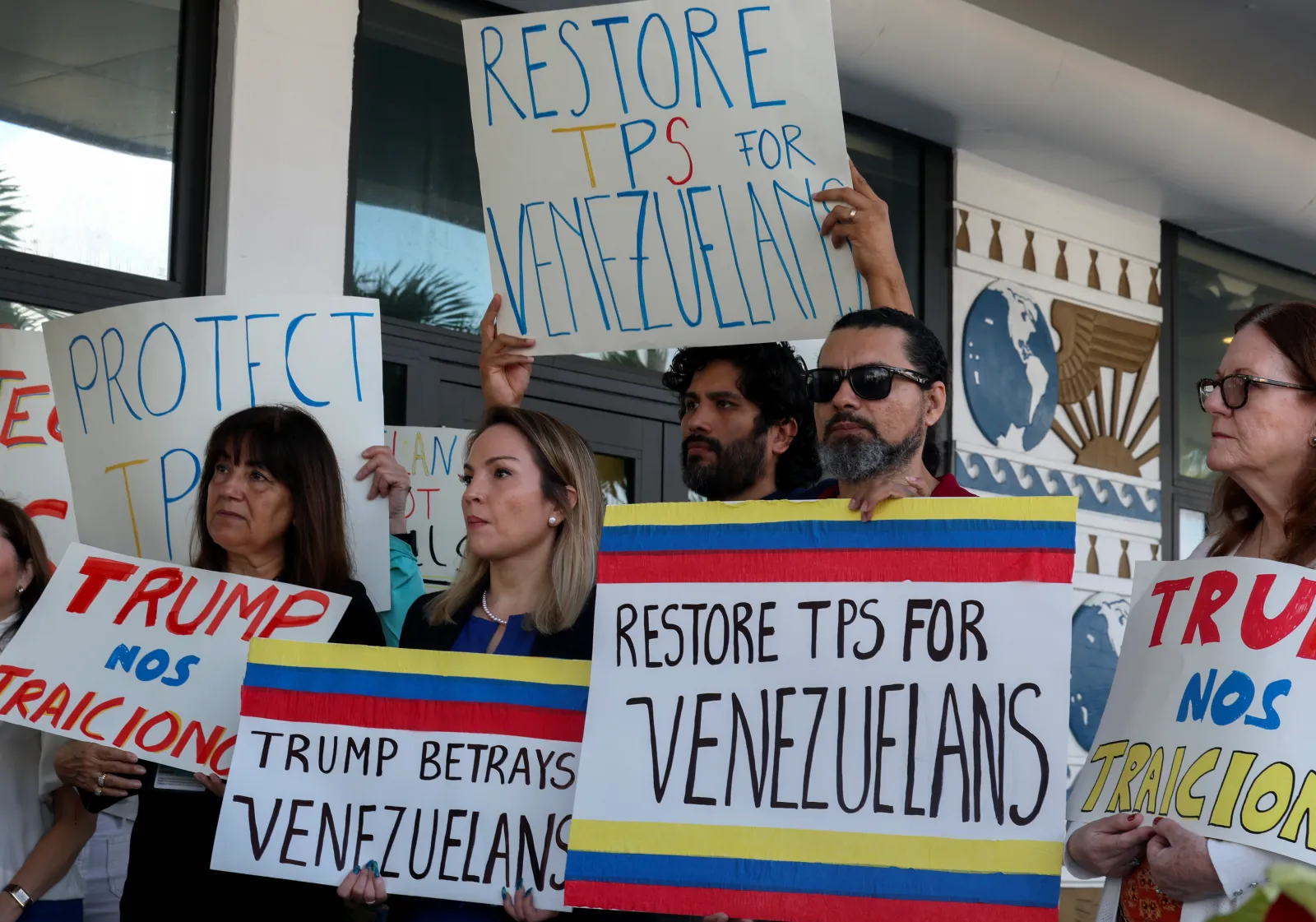
Higgins also called for the immediate restoration of Temporary Protected Status (TPS) for Venezuelans, arguing that Washington cannot tighten enforcement while treating Venezuela as an unresolved crisis, particularly after U.S. forces removed Nicolás Maduro from power in an action that has left many Venezuelans both hopeful and uncertain about their futures.
In a region with roughly 254,000 members of the Venezuelan diaspora spread across the broader Miami metropolitan area, she said it’s an issue local leaders cannot ignore.
“Venezuela is not safe,” she said, pointing to ongoing repression and instability. Many Venezuelans in Miami, she added, are working families whose legal status was stripped with little warning.
Big Promises, Big Events, and Uncomfortable Fights
Higgins said her approach as mayor is rooted in execution, whether the issue is housing, global events, or politically charged controversies. She framed her agenda around making the city work more efficiently while not sidestepping fights she knows will draw backlash.
“This is about delivery,” Higgins said. “If the city works, people feel it.”
That balance is already being tested. One early flashpoint is the proposal to locate a Donald J. Trump Presidential Library on prime public land in downtown Miami, a plan that has drawn legal challenges and public criticism over transparency and the transfer of valuable Miami-Dade College property near the landmark Freedom Tower.
Higgins said she is not opposed to the idea of Trump's presidential library being in her city — calling it “a great honor for any community” — but sharply criticized how the project has been handled.

...
“People should not steal land. They should buy it. They should pay for it.” The issue, she added, is about accountability and public assets, not politics.
Asked about the Everglades immigration detention facility known as “Alligator Alcatraz,” promoted by Florida Governor Ron DeSantis and backed by the federal government, Higgins did not soften her language. “Putting people in cages in the middle of a swamp is a sin,” she said, arguing that policy should focus on serious criminals rather than families with deep ties to the community.
At the same time, Higgins is preparing Miami for the global spotlight as a host city for this summer's World Cup, where it is set to stage seven matches. She said the city is coordinating with local, state and federal agencies on security, transportation and crowd management, while also planning fan events beyond the stadium.
“Not everyone is going to have a ticket,” she said. “We want the whole city to feel part of it.”
For Higgins, the through line is delivery — on day-to-day governance, major events, and politically charged issues. She tied that approach back to her election, framing it as both an explanation for her win and a warning for Democrats nationally. “When we say we’re going to do something,” she said, “we have to do it.”
View 0 Comments
Submit Correction
View Editorial & AI Guidelines