...

By Jesus Mesa
Reporter
0
Share
Newsweek is a Trust Project member
See more of our trusted coverage when you search.Prefer Newsweek on Googleto see more of our trusted coverage when you search.
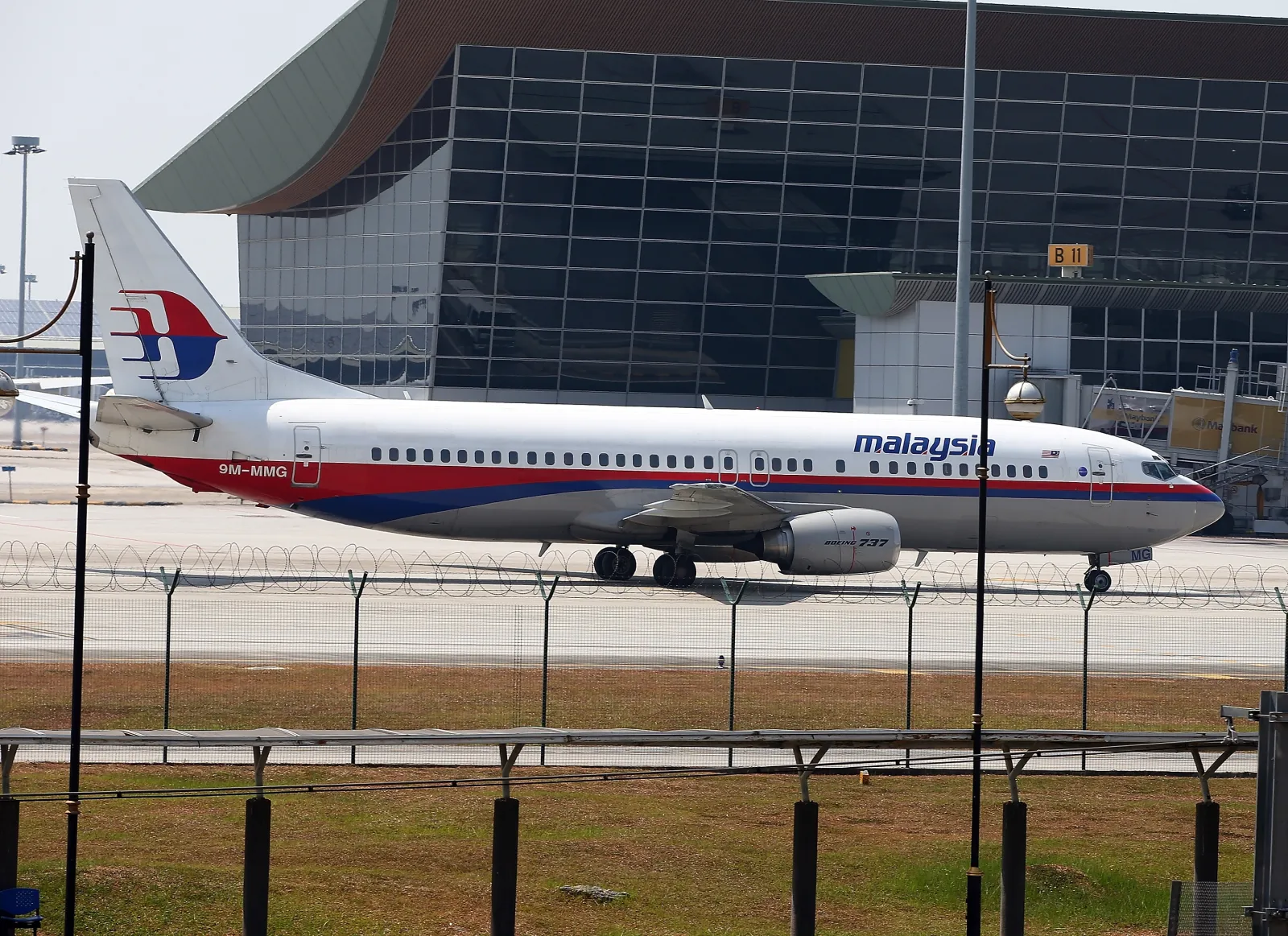
Researchers in the UK have made a potential breakthrough in the search for Malaysia Airlines Flight MH370, which vanished without a trace from radar a decade ago in an incident that became a worldwide media phenomenon.
The discovery of a signal from an underwater microphone has renewed hopes of locating the Boeing 777, potentially solving one of aviation's greatest mysteries. The new development comes from Cardiff University researchers exploring underwater acoustic signals created by aircraft crashes, like the one that presumably killed all 239 people aboard MH370 on March 8, 2014.
...
Read More on World
"Our research investigates using hydroacoustic technology to solve this aviation mystery," said Usama Kadri, a researcher of Applied Mathematics at Cardiff University, wrote in The Conversation. "By refining our methods and conducting further experiments, we could provide new insights into MH370's fate."
The study analyzed data from the Comprehensive Nuclear-Test-Ban Treaty Organization's (CTBTO) hydroacoustic stations at Cape Leeuwin, Western Australia and Diego Garcia in the Indian Ocean. The Cardiff team identified a signal at Cape Leeuwin that coincided with MH370's likely crash time, which was not detected at Diego Garcia.

...
"This raises questions about its origin," said Dr. Kadri. "Given the sensitivity of hydrophones, it's highly unlikely a large aircraft impacting the ocean wouldn't leave a detectable pressure signature, especially on nearby hydrophones."
To further analyze the's acoustic signal, controlled explosions along the "seventh arc" (the area of MH370's possible positions in the Indian Ocean as determined by its last satellite communications) could help determine the origin, similar to those done for the Argentine ARA San Juan submarine. The ARA San Juan went missing in November 2017, and an underwater CTBTO signal eventually led to its discovery.
"A similar exercise, using explosions or airguns, could be conducted along the seventh arc," Kadri suggested. "If the signals from these explosions matched the signal of interest, it would support focusing future searches on that signal."
Flight MH370 was en route from Kuala Lumpur to Beijing, China, when it vanished from radar. Investigations suggest it deviated southwest over the Indian Ocean. Despite extensive multinational search efforts, including underwater searches near the seventh arc, the main wreckage has not been found — though smaller pieces of what is believed to be the fuselage have washed ashore in various locations.
View 0 Comments
Submit Correction
View Editorial & AI Guidelines