10
Loading video...

By Hollie Silverman
News Editor
0
Share
Newsweek is a Trust Project member
See more of our trusted coverage when you search.Prefer Newsweek on Googleto see more of our trusted coverage when you search.
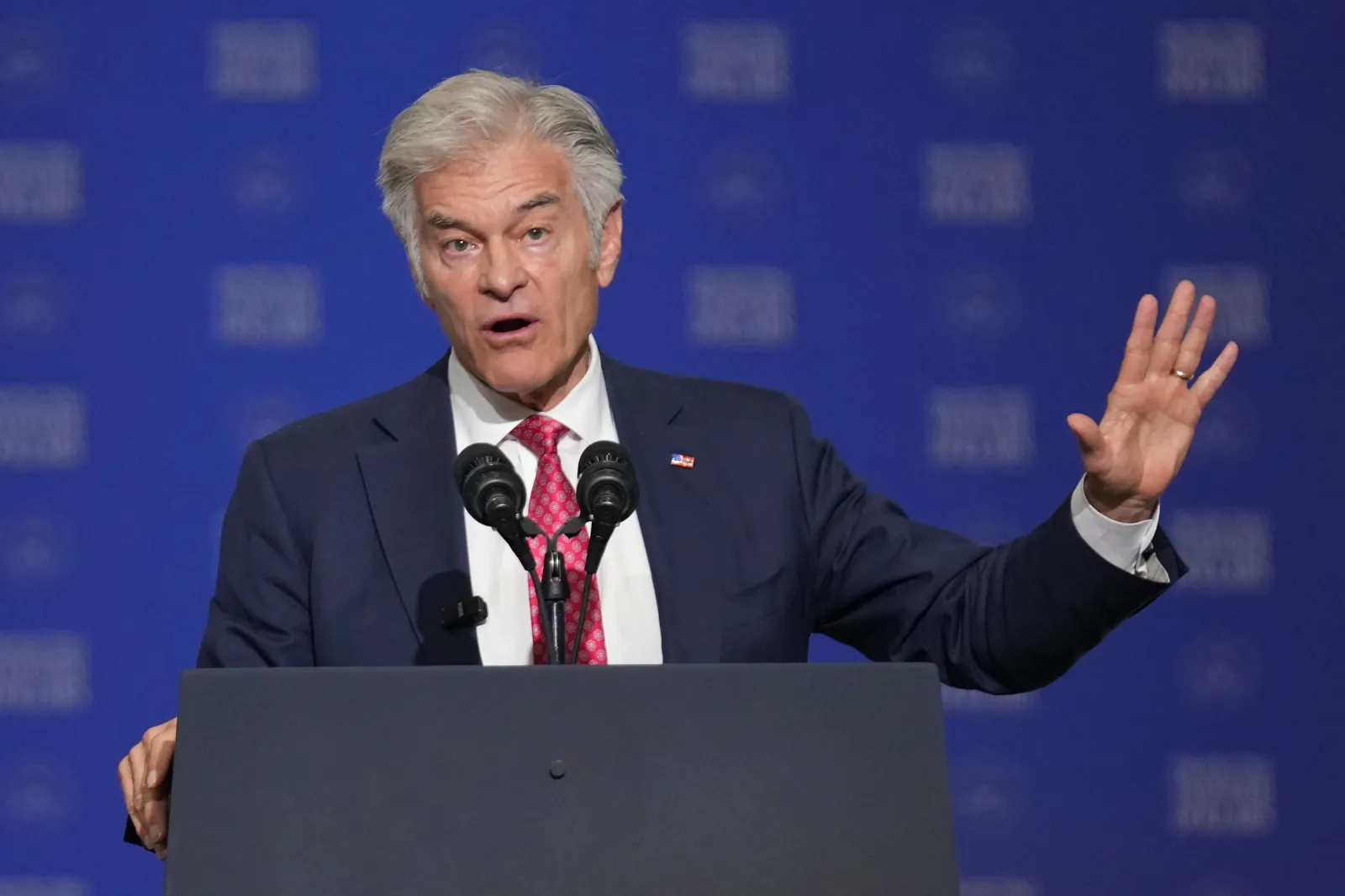
Centers for Medicare and Medicaid Services administrator Dr. Mehmet Oz pushed back against the administration's messaging on Sunday, stating that the combined measles, mumps, and rubella (MMR) vaccine is "not a lethal vaccine."
Appearing on CBS News' Face the Nation, Oz addressed remarks made by President Donald Trump earlier in the month when the president signed an executive order to overhaul the government’s vaccine recommendations, including splitting the MMR vaccine into multiple shots, despite concerns around measles outbreaks around the nation. During that White House executive order signing ceremony regarding childhood immunization policy, Trump suggested that the combined MMR shot "could be quite lethal" and argued that the components should instead be administered in three separate doses. The president provided no evidence to support that claim.
Merck, which produces the MMR vaccine that has been in use for more than 40 years, said it couldn't offer separate shots for at least another 10 years.
Read More on News
When pressed repeatedly by host Margaret Brennan to clarify the president's use of the word "lethal," Oz responded: "No, the MMR vaccine is not a lethal vaccine, and it is offered in other countries, the measles, in particular, separately, like in Japan."
Japan banned the combination MMR vaccine in 1993 after it was discovered to use a strain of mumps that caused some children to develop aseptic meningitis. The government continued to give a separate measles and rubella vaccine, with a separate optional mumps vaccine. However, health officials only began inoculating children with measles booster shots in 2006, leaving older generations, who only had a single dose, with less protection.
The exchange marked one of the most prominent instances of a senior health official in the administration publicly drawing a line against the president's vaccine rhetoric. While Oz also emphasized that parents have a choice, he rejected the characterization of the combination shot as deadly.
...
Public Health Context and Recent Trends
Oz’s remarks arrive as federal health authorities continue urging high immunization coverage amid declining childhood vaccination rates nationwide. According to data from the Centers for Disease Control and Prevention (CDC) that was highlighted during Face the Nation on Sunday, approximately 92 percent of U.S. kindergarteners received the MMR vaccine during the prior school year, falling short of the estimated 95 percent threshold required to establish herd immunity against measles.
Public health agencies, including the CDC, have closely monitored a significant resurgence of measles cases across the country. Medical experts and major health organizations maintain that the combined MMR vaccine is safe, highly effective, and clinically superior to administering components separately. Trump has also suggested that separating the vaccine components could affect autism rates, despite extensive research finding no credible link between the MMR vaccine and autism.
Meanwhile, the country is experiencing its highest measles caseload in more than three decades. As of August 20, CDC data shows 2,777 confirmed measles cases nationwide, including 36 new outbreaks this year—94 percent of all cases.
Related Story

Map of Measles Cases Spiking as Trump Admin Overhauls Vaccine Advice
Trump’s New Vaccine Schedule
The administration’s executive order directs the Department of Health and Human Services (HHS) to split the MMR vaccine into three separate shots—measles, mumps and rubella—once manufacturers can produce them domestically. It also encourages spacing out all childhood vaccines into separate appointments “to the maximum extent feasible.”
"We want it in three separate vaccinations given at separate times," Trump said. "Together, there could be a possibility they're quite lethal. And separately, it looks like they are not at all lethal, but just very effective."
The order moves several vaccines—including RSV monoclonal antibodies, hepatitis A and B, meningococcal B and ACWY—into a high‑risk category, narrowing routine access. It also instructs states to review school‑entry immunization laws and consider updates aligned with the new federal recommendations.
Public health groups say the order is not grounded in new evidence. The Partnership to Fight Infectious Disease warned that rewriting vaccine guidance during the largest measles resurgence in decades “will only leave more American children vulnerable to preventable illness.”
Senator Bill Cassidy, a Louisiana Republican and physician, criticized the order, saying the president “does not have the expertise to make these changes” and warning that splitting the MMR shot would increase hesitancy and leave children exposed longer.
Are Individual MMR Shots Available?
Despite the administration’s directive, single‑antigen MMR vaccines are not currently available in the United States. Manufacturers have not announced plans to produce them, and pediatric experts say there is “little incentive” to create separate products.
The CDC’s vaccine schedule, updated monthly, has not changed since the executive order. The agency continues to recommend the combined MMR shot at 12–15 months and 4–6 years. When asked why the schedule has not been updated, CDC officials said they are reviewing the order and awaiting HHS guidance.
State health departments continue to advise families to follow the existing CDC schedule, citing the ongoing outbreak and the high effectiveness of the combined MMR vaccine.
Contact Newsweek editors for this story: Steve Mollman and Anthony Murray.
View 0 Comments
Submit Correction
View Editorial & AI Guidelines